
Search Results
73 Results Found for “Cardiovascular diseases”

Duchenne muscular dystrophy (DMD) is an X-linked myopathy resulting from inactivating dystrophin mutations that cause progressive muscle breakdown, affecting 1:5,000 live male births globally. Boys with DMD are typically diagnosed at ~4 years of age, lose ambulation as preteens and die of ...

Dear Editor, I read with great interest the recent comprehensive article by Tonko et al. regarding the dynamic and substrate-specific mechanisms that sustain ventricular fibrillation (VF).1 The authors deserve credit for moving past the archaic dichotomy of the ‘multiple wavelet ...
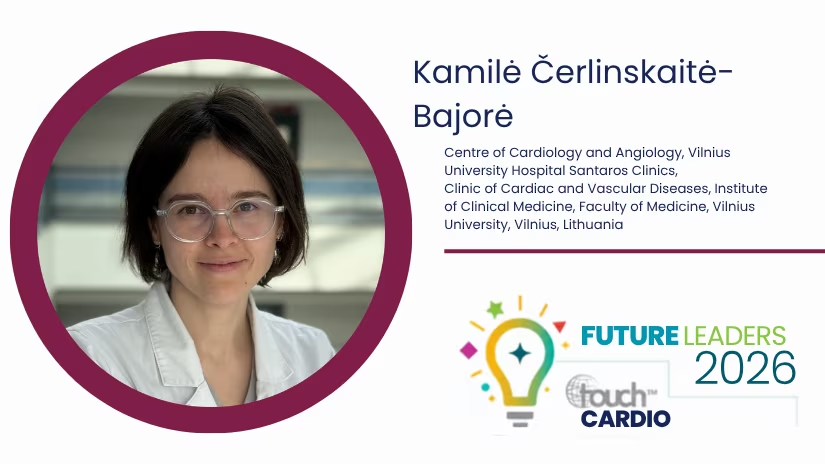
Dr Kamilė Čerlinskaitė-Bajorė is a cardiologist and touchCARDIO Future Leader 2026. In this interview, she discusses her journey into cardiology and heart failure, the mentors who have shaped her career, the challenges of caring for complex patients, and the importance of resilience and support from colleagues. She also shares her enthusiasm for advances in heart failure treatment and emerging research into heart failure with preserved ejection fraction.
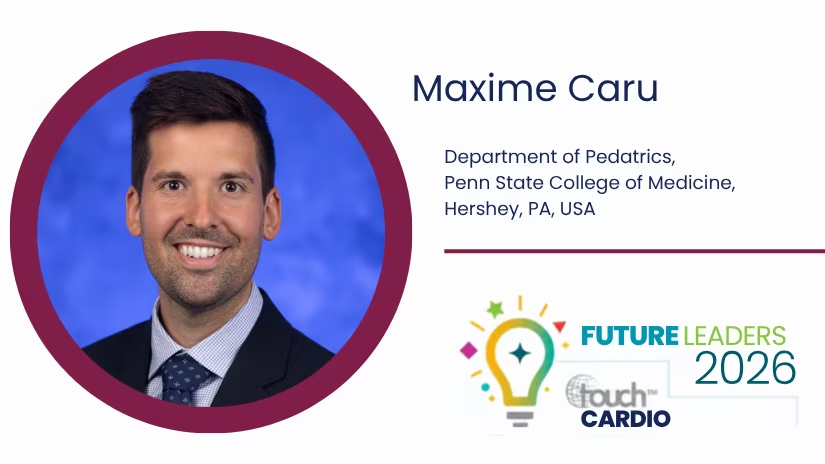
Dr Maxime Caru is a pediatric exercise physiologist, researcher and touchCARDIO Future Leader 2026. In this interview, he discusses his journey into cardio-oncology, the mentors who shaped his career, the role of physical activity in reducing treatment-related cardiotoxicity in pediatric cancer survivors and his vision for integrating exercise and supportive care into standard pediatric oncology practice.
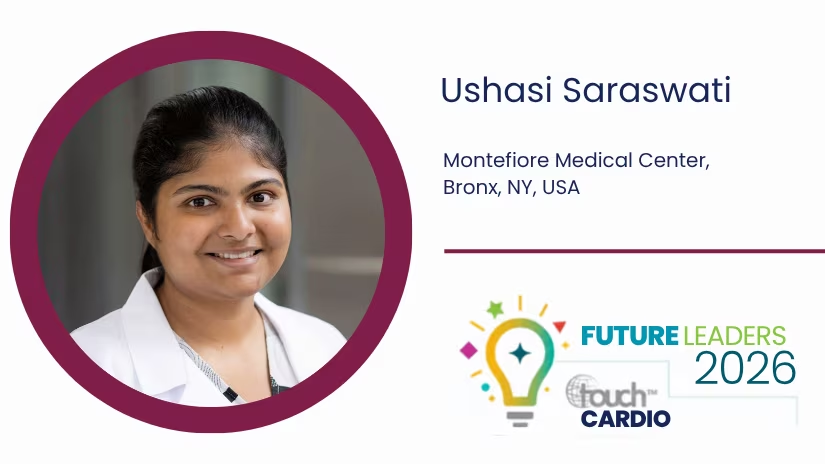
Dr Ushasi Saraswati is a physician specialising in cardiovascular medicine and touchCARDIO Future Leader 2026. In this interview, she discusses her journey into cardiology, the mentors who shaped her approach to medicine, the rewarding experience of caring for a patient with a complex diagnosis, and the importance of combining scientific curiosity and clinical expertise with compassion, clear communication and a commitment to patient-centred care.

Cardiovascular diseases (CVDs) are the leading cause of morbidity and mortality worldwide.1 High systolic blood pressure (SBP) remains one of the top risk factors for CVD burden globally.2 Despite being a modifiable risk factor, hypertension (HTN) remains largely undiagnosed and ...

Prof. Maria Bäck discusses the first dedicated ESC Guidelines on cardiac rehabilitation, why personalization and multidisciplinary care are central to their recommendations, and the importance of increasing referral to rehabilitation programs.

The first dedicated ESC Guidelines on the management of cardiovascular disease and chronic kidney disease recommend kidney function and urine albumin testing in all patients with cardiovascular disease, with an emphasis on identifying CKD early and initiating effective treatment without delay.

At EHRA 2026, Professor Claudio Tondo presents his highlights on advances in ablation and device technologies, led by pulsed field ablation, showcasing a rapidly evolving landscape in the treatment of complex arrhythmias.

Hypertension is the leading modifiable risk factor for global cardiovascular disease, responsible for an estimated 10.8 million deaths and more than 200 million disability-adjusted life years annually.1 Despite the availability of effective pharmacological and lifestyle interventions, prevalence continues to rise, particularly in ...

Sudden cardiac arrest (SCA) in young adults (typically defined as individuals younger than 40 years) has emerged as an important yet under-recognized public health concern. Recent estimates suggest an incidence of approximately 1–4 cases per 100,000 person-years, underscoring the clinical and epidemiological relevance ...

We often focus on clinical excellence, but spend less time developing broader skills that could help us better lead with purpose and build more fulfilling, impactful careers. In this episode, part of a mini-series in partnership with LEADderm, Dr Jennifer Soung and Denise Mann explore how clinicians can engage with the media to educate, empower and extend their impact beyond the clinic.

Europe loses 1.7 million lives each year to cardiovascular disease, a burden that costs billions and affects millions more. The Safe Hearts Plan sets out an ambitious shift toward prevention, earlier detection and recognition of lifelong genetic risk. As expectations rise, debate is already growing over whether the strategy can translate bold goals into measurable improvements in care and outcomes across the EU.
We are delighted to welcome Dr Sushant Saluja, NIHR Clinical Lecturer in Cardiology at the University of Manchester, to our Editorial Board. Dr Saluja brings a distinguished record in interventional cardiology, population genetics and precision medicine, with research published in leading journals including Nature Genetics, Nature Communications, European Heart Journal and the Journal of Hypertension.

As 2025 draws to a close, we’re celebrating another remarkable year of growth, collaboration and innovation at touchCARDIO. From thought-provoking expert interviews and peer-reviewed research to dynamic conference coverage and an expanding portfolio of medical education, this year has been defined by meaningful conversations and impactful learning. We’ve had the privilege of engaging with leading clinicians, researchers and partner societies across the globe - bringing together diverse voices to support the cardiology community with timely, accessible and authoritative content. As we reflect on the past 12 months, we’re proud to highlight the moments, milestones and stories that shaped our year.

Heart failure (HF) is a global health burden, with a 2019 prevalence of 711.90 per 100,000 population, totalling 56.19 million cases and 5.05 million years lived with disability, despite only modest declines since 1990.1 Recent years have shown an uptick in prevalence, driven by ageing populations ...

Epicardial adipose tissue (EAT) is a fat collection directly adjacent to the myocardium and coronary vasculature, lacking any separation and sharing the same circulation.1,2 This anatomy enables direct signalling between EAT and the surrounding tissue, positioning EAT as a central ...

Cardiovascular disease (CVD) is one of the major causes of morbidity and mortality throughout the world.1,2 While traditional risk factors are managed intensively, many individuals continue to have considerable residual risk, and emerging factors such as inflammatory mediators are being ...
Log into your Touch Account
Keep track of your clinical interests and newsletter subscriptions.
Sign up with an Email
Or use a .
Register now for FREE access
Already registered? Login below.
