
Search Results
259 Results Found for “diagnosis”
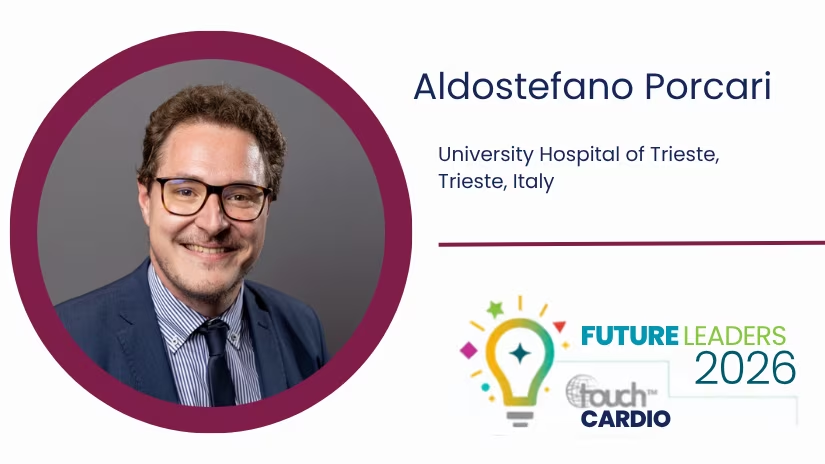
Dr Aldostefano Porcari is a Consultant Cardiologist and touchCARDIO Future Leader 2026. In this interview, he discusses his journey into cardiology, the mentors and experiences that shaped his career, the clinical reasoning that drives his interest in complex cases, and the importance of understanding your strengths and finding a specialty that aligns with who you are.
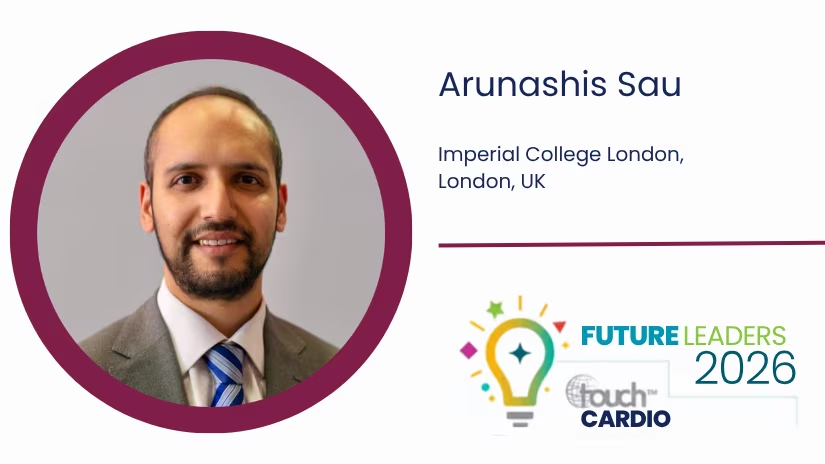
Dr Arunashis Sau is a cardiologist, electrophysiologist and touchCARDIO Future Leader 2026. In this interview, he discusses his journey into electrophysiology, the mentors who shaped his career, combining clinical training with research, and his work using artificial intelligence to unlock new insights from ECGs and other clinical data.
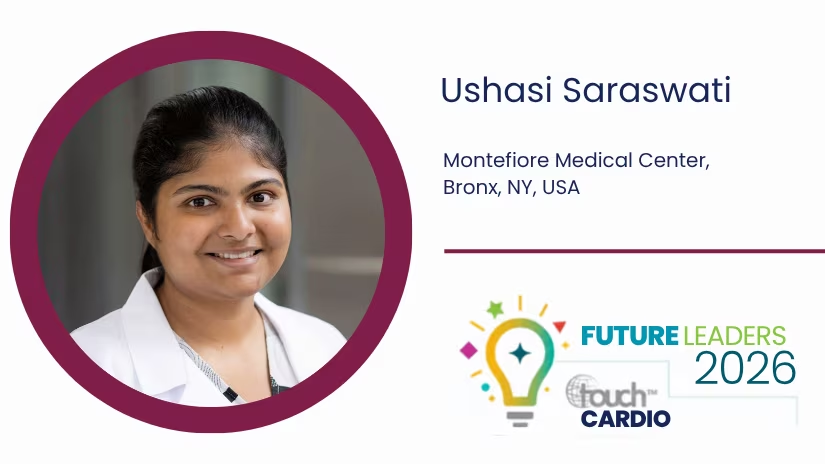
Dr Ushasi Saraswati is a physician specialising in cardiovascular medicine and touchCARDIO Future Leader 2026. In this interview, she discusses her journey into cardiology, the mentors who shaped her approach to medicine, the rewarding experience of caring for a patient with a complex diagnosis, and the importance of combining scientific curiosity and clinical expertise with compassion, clear communication and a commitment to patient-centred care.


Immediate 14-day ambulatory ECG monitoring did not significantly reduce recurrent syncope at 1 year in the ASPIRED trial, but it more than doubled the detection of clinically significant arrhythmias and enabled earlier diagnosis and treatment. Following the presentation, Prof. Matthew Reed, from the Usher Institute, University of Edinburgh, and the Emergency Medicine Research Group Edinburgh, spoke about the origins of ASPIRED, the importance of earlier investigation for patients with syncope, and how this approach might be incorporated into routine care.

The PRESC1SE-MI trial found that a 0/1-hour pathway for assessing patients with suspected myocardial infarction was non-inferior to a more conservative 0/3-hour pathway for safety, but did not reduce the time patients spent in the emergency department.

Cardiovascular diseases (CVDs) are the leading cause of morbidity and mortality worldwide.1 High systolic blood pressure (SBP) remains one of the top risk factors for CVD burden globally.2 Despite being a modifiable risk factor, hypertension (HTN) remains largely undiagnosed and ...

Prof. George Stergiou discusses wearable, cuffless and screening technologies for blood pressure measurement, where they may add value, and why accuracy remains critical for clinical decision-making.

The first dedicated ESC Guidelines on the management of cardiovascular disease and chronic kidney disease recommend kidney function and urine albumin testing in all patients with cardiovascular disease, with an emphasis on identifying CKD early and initiating effective treatment without delay.

New heart failure guidelines, practice-changing Hot Line data, artificial intelligence and new evidence in atrial fibrillation and cardiac amyloidosis are among the highlights to look out for on the opening day of ESC Congress 2026.

ESC Congress 2026 begins in Munich on August 28, bringing four days of new cardiovascular research, clinical guidance and discussion. Early data released ahead of the meeting provide a first look at some of the science to come.

Dr Arasi Maran explores practical strategies for integrating lifestyle interventions into the management of complex coronary artery disease, including how to prioritise modifiable risk factors, communicate recommendations effectively and support sustained behaviour change. She also discusses the role of imaging, reliable health information and patient-centred approaches to improving adherence.

New clinical guidelines, late-breaking trials, artificial intelligence, and an increasing focus on cardiometabolic and precision medicine are set to shape discussions at ESC Congress 2026 in Munich.


Native valve infective endocarditis (IE) is rare, with an incidence of 3–7 cases per 100,000 person-years.1,2 Cardiac structural complications from local infection extension include valvular destruction, peri-annular abscess and fistula formation. Left ventricular pseudoaneurysm (LVP) from IE is exceedingly rare, occurring in &...

Longer diagnosis-to-ablation time (DAT) was associated with a higher risk of atrial arrhythmia recurrence following de novo radiofrequency catheter ablation (RFA) for atrial fibrillation (AF), according to a prospective, multicenter cohort study published in JAMA Network Open.1

Ionis Pharmaceuticals (Carlsbad, CA, USA) and AstraZeneca (Cambridge, UK) have announced that the phase 3 CARDIO-TTRansform trial (NCT04136171) of eplontersen (Wainua®; Ionis Pharmaceuticals and AstraZeneca) did not meet its primary efficacy endpoint in adults with transthyretin-mediated amyloid cardiomyopathy (ATTR-CM).

A new international expert consensus document has updated the universal definition of heart failure, with a greater focus on earlier detection, standardized classification and individualized risk reduction.
Log into your Touch Account
Keep track of your clinical interests and newsletter subscriptions.
Sign up with an Email
Or use a .
Register now for FREE access
Already registered? Login below.
