
Search Results
81 Results Found for “obesity”
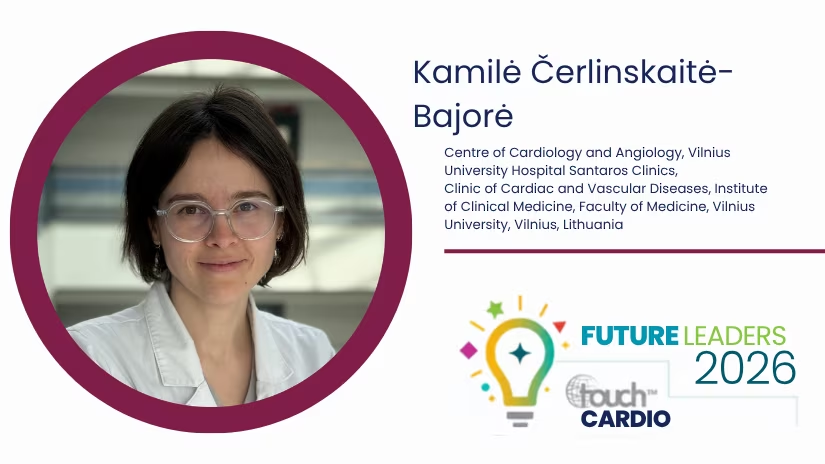
Dr Kamilė Čerlinskaitė-Bajorė is a cardiologist and touchCARDIO Future Leader 2026. In this interview, she discusses her journey into cardiology and heart failure, the mentors who have shaped her career, the challenges of caring for complex patients, and the importance of resilience and support from colleagues. She also shares her enthusiasm for advances in heart failure treatment and emerging research into heart failure with preserved ejection fraction.
Meet the cardiologists shaping the future of the specialty. Our touchCARDIO Future Leaders 2026 are rising stars nominated by the cardiology community for their contributions to research, clinical practice and innovation. Discover the clinicians and researchers challenging convention, advancing care and driving progress across cardiology.
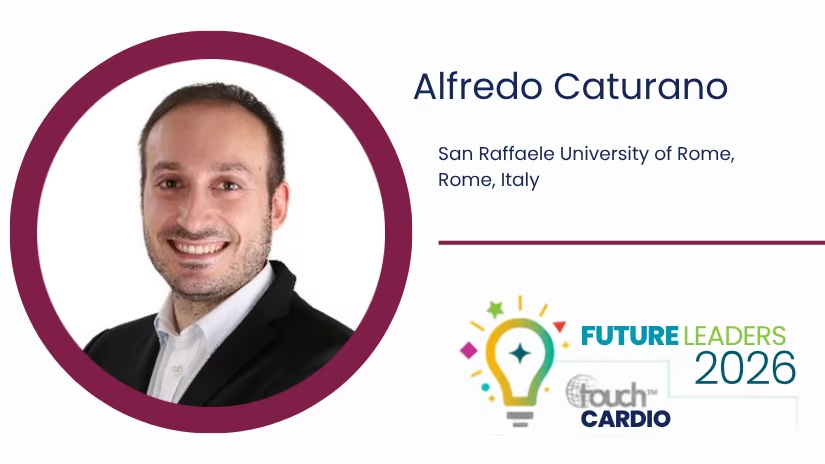
Dr Alfredo Caturano is an Assistant Professor of Internal Medicine and touchCARDIO Future Leader 2026. In this interview, he discusses his journey into cardiovascular and cardiometabolic medicine, the mentors who shaped his career, the challenges and rewards of clinical research, and the evolving links between diabetes, obesity and cardiovascular disease, as well as his vision for more personalised approaches to cardiometabolic care.

Cardiovascular diseases (CVDs) are the leading cause of morbidity and mortality worldwide.1 High systolic blood pressure (SBP) remains one of the top risk factors for CVD burden globally.2 Despite being a modifiable risk factor, hypertension (HTN) remains largely undiagnosed and ...

Prof. Adriaan Voors discusses the evolving role of GLP-1 receptor agonists in heart failure, the importance of patient selection and monitoring, and how emerging evidence and new guidelines could influence clinical practice.

New 2026 ESC Guidelines for the management of heart failure introduce major changes to the classification of heart failure and its treatment, with an increased focus on prevention, earlier intervention and timely referral of patients with advanced disease.

Dr Arasi Maran explores practical strategies for integrating lifestyle interventions into the management of complex coronary artery disease, including how to prioritise modifiable risk factors, communicate recommendations effectively and support sustained behaviour change. She also discusses the role of imaging, reliable health information and patient-centred approaches to improving adherence.

New clinical guidelines, late-breaking trials, artificial intelligence, and an increasing focus on cardiometabolic and precision medicine are set to shape discussions at ESC Congress 2026 in Munich.

Native valve infective endocarditis (IE) is rare, with an incidence of 3–7 cases per 100,000 person-years.1,2 Cardiac structural complications from local infection extension include valvular destruction, peri-annular abscess and fistula formation. Left ventricular pseudoaneurysm (LVP) from IE is exceedingly rare, occurring in &...

The American Heart Association (AHA), American College of Cardiology (ACC), American Diabetes Association (ADA) and American Society of Nephrology (ASN) have issued a new joint clinical practice guideline for the prevention, detection, evaluation and management of cardiovascular-kidney-metabolic (CKM) syndrome.

Hypertension is the leading modifiable risk factor for global cardiovascular disease, responsible for an estimated 10.8 million deaths and more than 200 million disability-adjusted life years annually.1 Despite the availability of effective pharmacological and lifestyle interventions, prevalence continues to rise, particularly in ...
touchCARDIO Future Leaders 2026 Following the successful introduction last year of our touchCARDIO Future Leaders, we are delighted to announce that nominations are now open for the 2026 edition. This initiative celebrates the next generation of pioneers in cardiology, those whose passion, ...

Sudden cardiac arrest (SCA) in young adults (typically defined as individuals younger than 40 years) has emerged as an important yet under-recognized public health concern. Recent estimates suggest an incidence of approximately 1–4 cases per 100,000 person-years, underscoring the clinical and epidemiological relevance ...
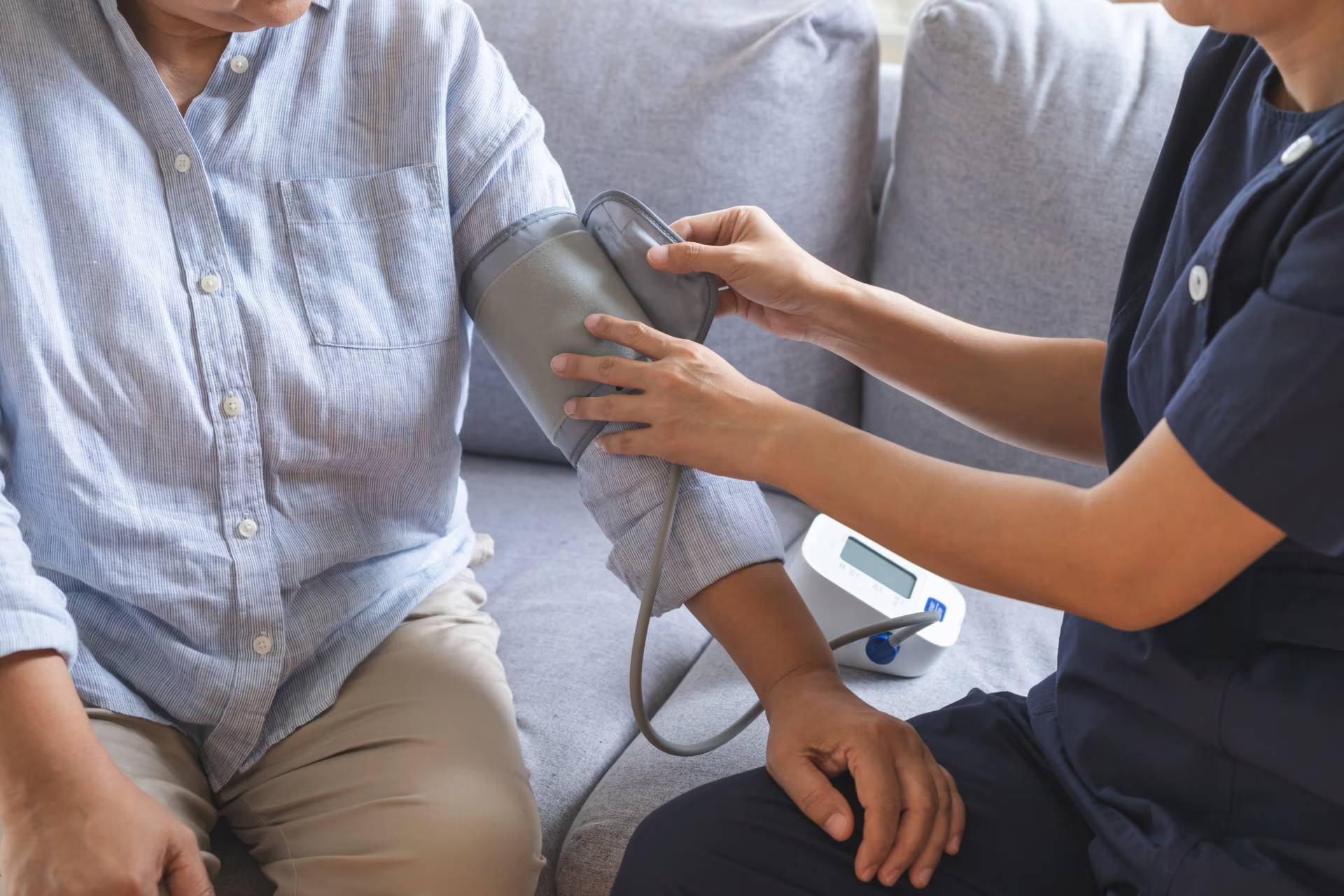
Hypertension affects over 1.4 billion adults worldwide and remains the leading modifiable risk factor for global cardiovascular (CV) morbidity and mortality. It is responsible for an estimated 10.8 million deaths annually and contributes significantly to the global burden of ischaemic heart disease, ...

We are delighted to welcome Dr Sushant Saluja, NIHR Clinical Lecturer in Cardiology at the University of Manchester, to our Editorial Board. Dr Saluja brings a distinguished record in interventional cardiology, population genetics and precision medicine, with research published in leading journals including Nature Genetics, Nature Communications, European Heart Journal and the Journal of Hypertension.

The American Diabetes Association has released its 2026 Standards of Care, reflecting major advances in diabetes and cardiometabolic management. In this Q&A, Dr Robert Gabbay (Joslin Diabetes Center, Boston, MA, USA) discusses expanded roles for GLP-1–based therapies, updated cardiovascular risk targets, and a growing emphasis on integrated, whole-person care with important implications for cardiovascular clinical practice.

The FDA has approved aficamten for the treatment of adults with symptomatic obstructive hypertrophic cardiomyopathy (oHCM), with the aim of improving functional capacity and symptoms.

Cardiovascular medicine in 2025 has been marked by rapid innovation and meaningful shifts in clinical practice. In this year-in-review, touchCARDIO brings together expert reflections highlighting paradigm-changing trial data, the emergence of pulsed field ablation and conduction system pacing, advances in imaging and prevention, and the accelerating integration of artificial intelligence. Collectively, these perspectives underscore a field evolving toward more precise, technology-enabled and preventive cardiovascular care, while emphasising the need to translate scientific progress into improved outcomes for patients worldwide.
Log into your Touch Account
Keep track of your clinical interests and newsletter subscriptions.
Sign up with an Email
Or use a .
Register now for FREE access
Already registered? Login below.
