
Search Results
15 Results Found for “oxygen saturation”

Cardiovascular diseases (CVDs) are the leading cause of morbidity and mortality worldwide.1 High systolic blood pressure (SBP) remains one of the top risk factors for CVD burden globally.2 Despite being a modifiable risk factor, hypertension (HTN) remains largely undiagnosed and ...

Native valve infective endocarditis (IE) is rare, with an incidence of 3–7 cases per 100,000 person-years.1,2 Cardiac structural complications from local infection extension include valvular destruction, peri-annular abscess and fistula formation. Left ventricular pseudoaneurysm (LVP) from IE is exceedingly rare, occurring in &...

Heart failure (HF) is a global health burden, with a 2019 prevalence of 711.90 per 100,000 population, totalling 56.19 million cases and 5.05 million years lived with disability, despite only modest declines since 1990.1 Recent years have shown an uptick in prevalence, driven by ageing populations ...

As clinicians and academics, we have at least three reasons for developing a simple stepwise algorithm for the management of atrial fibrillation (AF) with rapid ventricular response (RVR) in the emergency department (ED). First, AF is the most common rhythm ...

The current outbreak of coronavirus disease 2019 (COVID-19), caused by severe acute respiratory syndrome coronavirus-2 (SARS-CoV-2), has developed into a worldwide pandemic affecting millions of lives in one way or another.1 Over the period of 1 year since the disease was first ...

Drug reaction with eosinophilia and systemic symptoms (DRESS) syndrome is a severe cutaneous adverse drug reaction. Symptoms comprise fever, lymphadenopathy, rash, and eosinophilia, with or without visceral organ involvement. The extent of internal organ involvement, including hepatitis, myocarditis, pneumonitis, thyroiditis, ...
Background: Periodic breathing pattern is a poor prognostic factor of advanced systolic heart failure (HF). It can manifest as exercise-induced oscillatory ventilation (EOV) on cardio-pulmonary exercise testing (CPET); a result of impaired homeostasis. Atrial fibrillation (AF) is also associated with ...

...

Undiagnosed atrial fibrillation (AF) is common, especially in older populations. The European Society of Cardiology (ESC) therefore recommends in its 2016 guidelines1 that AF should be screened in all patients >65 years old by taking their pulse and, if irregular, diagnosed ...

Presentation A 73-year-old female with a history of recent bio-prosthetic aortic valve replacement, stroke, hypertension, breast cancer status post-lumpectomy and radiotherapy, and hyperlipidemia was admitted with shortness of breath and tachycardia. Her blood pressure (BP) was 147/65 and her pulse was 105/...
Ventricular tachycardia (VT) typically arises from structural heart disease and it is often associated with a high risk of sudden cardiac death. Catheter ablation therapy is a valuable treatment modality for recurrent VT and can reduce the incidence of implantable ...
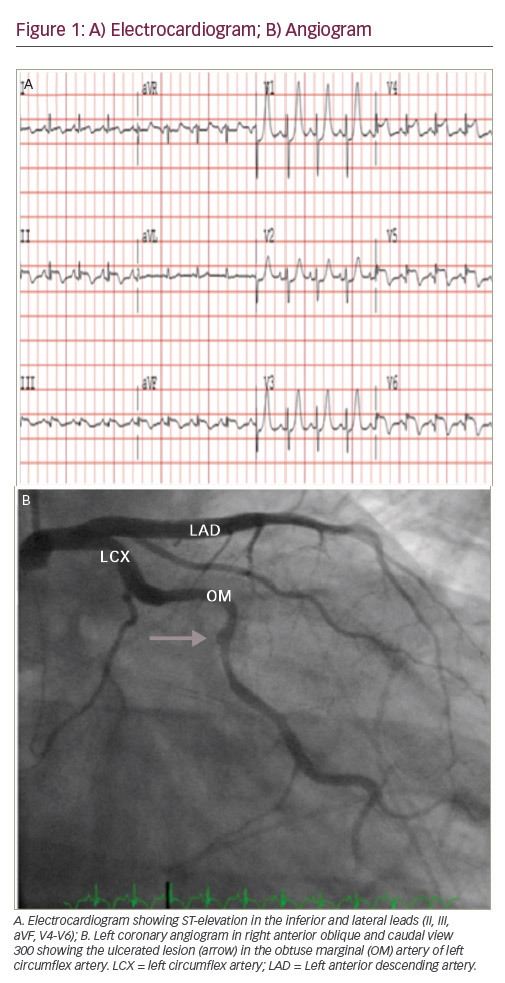
Chest pain evaluation during pregnancy or the post-partum period poses diagnostic and therapeutic dilemma. The differential diagnosis would include acute myocardial infarction, coronary spasm, dissection, myocarditis and non-cardiac chest pain. Spontaneous coronary artery dissection (SCAD) is a rare cause of ...

Background: Atrial fibrillation (AF) hospital admissions represent significant national health and economic burden. In the year 2019–2020 our hospital reported 1,333 admissions with a primary diagnosis of AF, with a 10% annual increase. A virtual AF ward providing multidisciplinary care could reshape the ...

Introduction: Atrial fibrillation (AF) is the commonest sustained cardiac arrhythmia. Acute hospital admissions are rising with significant cost and capacity implications. Recent pathway reviews led to service innovations to provide remote out-of-hospital care for patients with haemodynamically stable AF/atrial ...

Introduction: Successful pulmonary vein isolation (PVI) requires the creation of continuous and durable transmural ablation lesions encircling the pulmonary veins (PV). During contact force (CF) radiofrequency (RF) delivery, catheter stability is clearly an important determinant of lesion creation. However, the ...
Log into your Touch Account
Keep track of your clinical interests and newsletter subscriptions.
Sign up with an Email
Or use a .
Register now for FREE access
Already registered? Login below.
