
Search Results
44 Results Found for “physical activity”
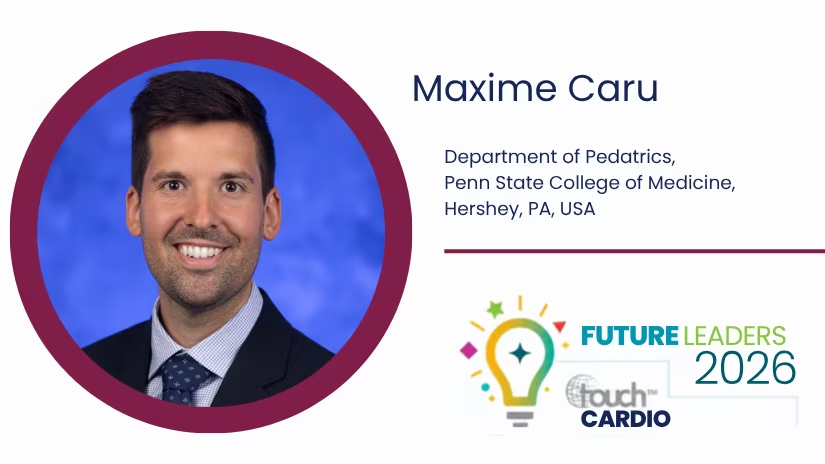
Dr Maxime Caru is a pediatric exercise physiologist, researcher and touchCARDIO Future Leader 2026. In this interview, he discusses his journey into cardio-oncology, the mentors who shaped his career, the role of physical activity in reducing treatment-related cardiotoxicity in pediatric cancer survivors and his vision for integrating exercise and supportive care into standard pediatric oncology practice.

Cardiovascular diseases (CVDs) are the leading cause of morbidity and mortality worldwide.1 High systolic blood pressure (SBP) remains one of the top risk factors for CVD burden globally.2 Despite being a modifiable risk factor, hypertension (HTN) remains largely undiagnosed and ...

The European Society of Cardiology (ESC) has published its first dedicated clinical practice guidelines on cardiac rehabilitation, calling for rehabilitation to be considered a core component of care across a broader range of cardiovascular conditions. Published in the European Heart ...

Dr Arasi Maran explores practical strategies for integrating lifestyle interventions into the management of complex coronary artery disease, including how to prioritise modifiable risk factors, communicate recommendations effectively and support sustained behaviour change. She also discusses the role of imaging, reliable health information and patient-centred approaches to improving adherence.

Long-term consumption of sugar-sweetened beverages and fruit juice, beginning in childhood, was associated with a higher likelihood of hypertension in adulthood, according to findings published in Circulation.

Ventricular fibrillation (VF) is characterized by rapid (>300 beats a per minute), irregular electrical activation with variable electrocardiographic waveforms that prevents coordinated myocardial contraction, resulting in immediate loss of cardiac output.1 It most commonly occurs in the context of coronary ...

Hypertension is the leading modifiable risk factor for global cardiovascular disease, responsible for an estimated 10.8 million deaths and more than 200 million disability-adjusted life years annually.1 Despite the availability of effective pharmacological and lifestyle interventions, prevalence continues to rise, particularly in ...

Sudden cardiac arrest (SCA) in young adults (typically defined as individuals younger than 40 years) has emerged as an important yet under-recognized public health concern. Recent estimates suggest an incidence of approximately 1–4 cases per 100,000 person-years, underscoring the clinical and epidemiological relevance ...

Hypertension affects over 1.4 billion adults worldwide and remains the leading modifiable risk factor for global cardiovascular (CV) morbidity and mortality. It is responsible for an estimated 10.8 million deaths annually and contributes significantly to the global burden of ischaemic heart disease, ...

Europe loses 1.7 million lives each year to cardiovascular disease, a burden that costs billions and affects millions more. The Safe Hearts Plan sets out an ambitious shift toward prevention, earlier detection and recognition of lifelong genetic risk. As expectations rise, debate is already growing over whether the strategy can translate bold goals into measurable improvements in care and outcomes across the EU.

Adult congenital heart disease is no longer a niche condition confined to childhood, but a lifelong and increasingly complex cardiovascular diagnosis. The new ACC/AHA guideline reframes care around continuity with specialised services, proactive mental health assessment, and encouragement of safe physical activity, signalling a shift from lesion-focused surveillance to holistic, life-course management that better reflects the realities facing today’s adult patients.

Heart failure (HF) is a complex and progressive clinical syndrome that significantly impacts morbidity, mortality and quality of life (QoL).1 On a global scale, HF has become an escalating public health concern, affecting more than 64 million individuals in 2017, and this ...

Heart failure (HF) is a global health burden, with a 2019 prevalence of 711.90 per 100,000 population, totalling 56.19 million cases and 5.05 million years lived with disability, despite only modest declines since 1990.1 Recent years have shown an uptick in prevalence, driven by ageing populations ...

Epicardial adipose tissue (EAT) is a fat collection directly adjacent to the myocardium and coronary vasculature, lacking any separation and sharing the same circulation.1,2 This anatomy enables direct signalling between EAT and the surrounding tissue, positioning EAT as a central ...

Despite advancements in mortality rates from cardiovascular disease (CVD) over the last 50 years, it remains the leading cause of death for women and the third leading cause for women aged 18 to 44.1 A 2011 report from the American Heart Association (AHA) starkly ...

S3E1_What impact does sleep have on physicians and their patients? We all know sleep is important, but what happens when physicians don’t get enough? In this episode of Visionary Voices, we welcome Associate Professor Grace Vincent from ...

Transthyretin amyloid cardiomyopathy (ATTR-CM) is an inexorably progressive and ultimately fatal cardiomyopathy characterized by the deposition of misfolded transthyretin (TTR) in the form of amyloid fibrils within the myocardium.1 Transthyretin amyloid (ATTR) fibrils are insoluble protease-resistant beta-pleated sheets that are ...

Functional status refers to an individual’s ability to carry out different levels of activities to meet the needs of daily living.1 Patients with heart failure (HF) commonly have poor functional status that is affected by a number of physical, ...
Log into your Touch Account
Keep track of your clinical interests and newsletter subscriptions.
Sign up with an Email
Or use a .
Register now for FREE access
Already registered? Login below.
