
Search Results
71 Results Found for “renal function”
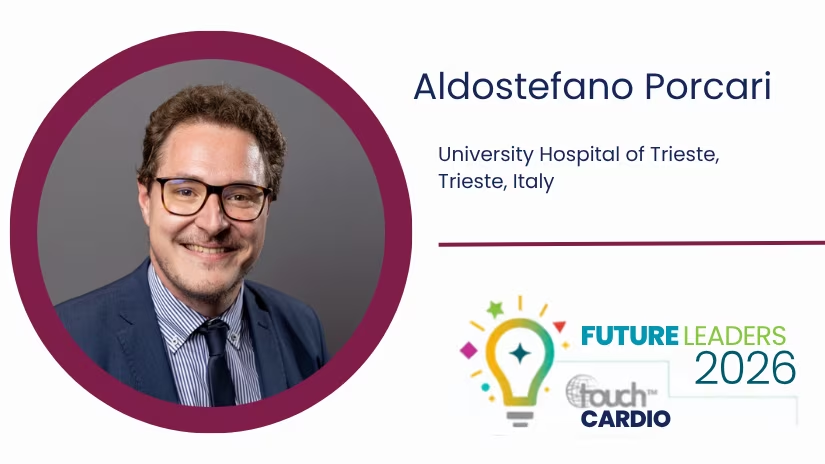
Dr Aldostefano Porcari is a Consultant Cardiologist and touchCARDIO Future Leader 2026. In this interview, he discusses his journey into cardiology, the mentors and experiences that shaped his career, the clinical reasoning that drives his interest in complex cases, and the importance of understanding your strengths and finding a specialty that aligns with who you are.

Prof. Adriaan Voors discusses the evolving role of GLP-1 receptor agonists in heart failure, the importance of patient selection and monitoring, and how emerging evidence and new guidelines could influence clinical practice.

The first dedicated ESC Guidelines on the management of cardiovascular disease and chronic kidney disease recommend kidney function and urine albumin testing in all patients with cardiovascular disease, with an emphasis on identifying CKD early and initiating effective treatment without delay.

The American Heart Association (AHA), American College of Cardiology (ACC), American Diabetes Association (ADA) and American Society of Nephrology (ASN) have issued a new joint clinical practice guideline for the prevention, detection, evaluation and management of cardiovascular-kidney-metabolic (CKM) syndrome.

Hypertension affects over 1.4 billion adults worldwide and remains the leading modifiable risk factor for global cardiovascular (CV) morbidity and mortality. It is responsible for an estimated 10.8 million deaths annually and contributes significantly to the global burden of ischaemic heart disease, ...

Hypertension has been associated with increased cardiovascular morbidity and mortality, as well as with overall elevated all-cause mortality.1 Prevalence increases with age, affecting 28.5% of US individuals aged 20–44 years, 58.6% of those aged 45–64 years and 76.5% of those aged 65 years and older.2 In ...

Heart failure (HF) is a global health burden, with a 2019 prevalence of 711.90 per 100,000 population, totalling 56.19 million cases and 5.05 million years lived with disability, despite only modest declines since 1990.1 Recent years have shown an uptick in prevalence, driven by ageing populations ...

Epicardial adipose tissue (EAT) is a fat collection directly adjacent to the myocardium and coronary vasculature, lacking any separation and sharing the same circulation.1,2 This anatomy enables direct signalling between EAT and the surrounding tissue, positioning EAT as a central ...

ObesityWeek® 2025 highlighted obesity as a chronic, multi-system disease that links cardiovascular, renal, and metabolic health. New data from clinical trials showcased therapies improving weight, blood pressure, and inflammation, signalling a shift toward integrated care where obesity management becomes central to cardiovascular risk reduction.

July 2025 marked continued progress in cardiovascular innovation, with notable regulatory decisions and clinical trial milestones. Approvals, designations, and data readouts during the month highlight the field’s ongoing shift toward targeted therapies, gene-based interventions, and outcome-driven evidence. These developments reflect growing momentum in addressing complex and underserved cardiovascular conditions.

Transthyretin amyloid cardiomyopathy (ATTR-CM) is an inexorably progressive and ultimately fatal cardiomyopathy characterized by the deposition of misfolded transthyretin (TTR) in the form of amyloid fibrils within the myocardium.1 Transthyretin amyloid (ATTR) fibrils are insoluble protease-resistant beta-pleated sheets that are ...

Functional status refers to an individual’s ability to carry out different levels of activities to meet the needs of daily living.1 Patients with heart failure (HF) commonly have poor functional status that is affected by a number of physical, ...

Cardiovascular disease (CVD) is a significant cause of morbidity and mortality in patients with type 2 diabetes mellitus (T2DM). An estimated 60–80% of patients with T2DM die of cardiovascular events.1,2 A bidirectional relationship has been noted between heart failure (HF) ...

Highlights The autonomic nervous system plays a critical role in the aetiopathogenesis of atrial fibrillation (AF). Neuromodulation of the autonomic nervous system has been a topic of increased interest in the management of AF. Ablation of ganglionated plexi, ethanol ablation ...

Infiltrative cardiomyopathies are a diverse group of cardiac diseases caused by the deposition of abnormal substances within the myocardium and include diseases, such as Fabry disease, sarcoidosis and less common genetic diseases, such as Friedreich’s ataxia and Danon disease.1 ...

Summary Few clinical studies have shown an association between coronary artery disease (CAD) and osteoporosis. This cross-sectional study has shown that, among Indian postmenopausal women, the prevalence of CAD increases across lower bone mineral density categories. Femoral neck osteoporosis confers ...

Clinically relevant tricuspid regurgitation (TR) is a common disorder, affecting approximately 4% of people 75 years of age or older.1 If left untreated, severe TR results in volume overload and right ventricular remodelling. This eventually leads to symptomatic right-sided heart failure, along ...

With the global increase in life expectancy, the proportion of elderly people in the community is expected to increase gradually. This is referred to as the 'Coming of the Gray Dawn' or the 'Gray Wave', and highlights the need for ...
Log into your Touch Account
Keep track of your clinical interests and newsletter subscriptions.
Sign up with an Email
Or use a .
Register now for FREE access
Already registered? Login below.
