
Search Results
560 Results Found for “Atrial fibrillation”

Meet the cardiologists shaping the future of the specialty. Our touchCARDIO Future Leaders 2026 are rising stars nominated by the cardiology community for their contributions to research, clinical practice and innovation. Discover the clinicians and researchers challenging convention, advancing care and driving progress across cardiology.
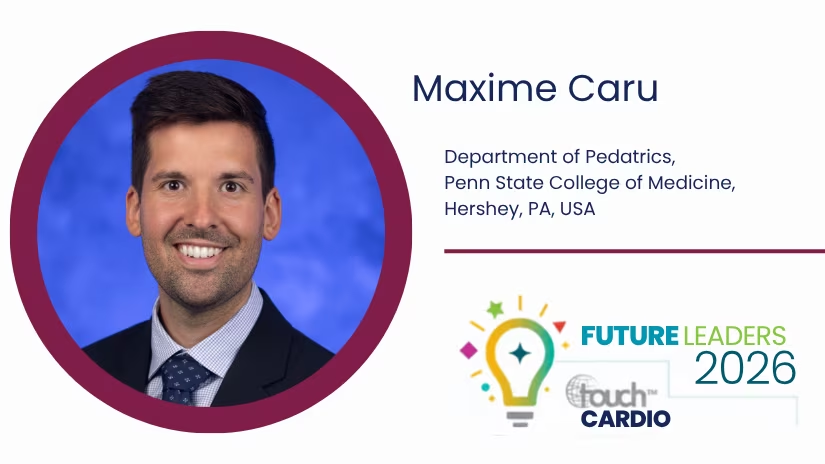
Dr Maxime Caru is a pediatric exercise physiologist, researcher and touchCARDIO Future Leader 2026. In this interview, he discusses his journey into cardio-oncology, the mentors who shaped his career, the role of physical activity in reducing treatment-related cardiotoxicity in pediatric cancer survivors and his vision for integrating exercise and supportive care into standard pediatric oncology practice.
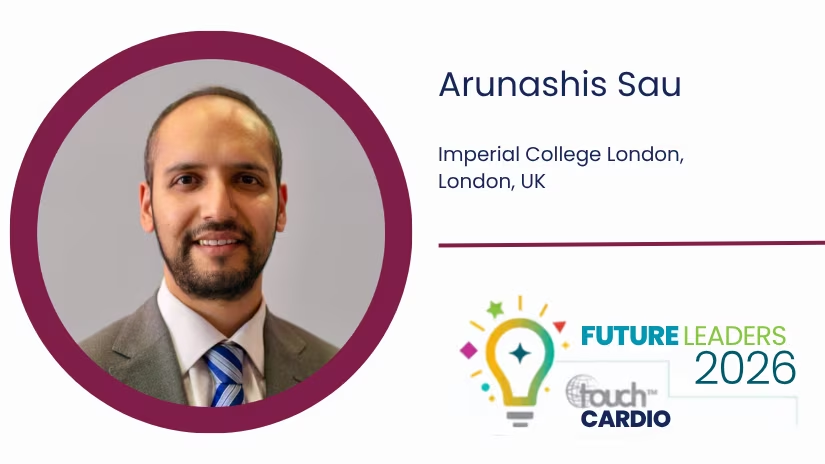
Dr Arunashis Sau is a cardiologist, electrophysiologist and touchCARDIO Future Leader 2026. In this interview, he discusses his journey into electrophysiology, the mentors who shaped his career, combining clinical training with research, and his work using artificial intelligence to unlock new insights from ECGs and other clinical data.

...

ABLATE versus PACE: Pacemaker strategy reduces clinically relevant events in older patients with persistent atrial fibrillation Randomised trial shows substantially fewer hospitalisations and repeat interventions than pulmonary vein isolation. The benefit was partly offset by more heart failure events and ...

Immediate 14-day ambulatory ECG monitoring did not significantly reduce recurrent syncope at 1 year in the ASPIRED trial, but it more than doubled the detection of clinically significant arrhythmias and enabled earlier diagnosis and treatment. Following the presentation, Prof. Matthew Reed, from the Usher Institute, University of Edinburgh, and the Emergency Medicine Research Group Edinburgh, spoke about the origins of ASPIRED, the importance of earlier investigation for patients with syncope, and how this approach might be incorporated into routine care.

Dr Jonathan Piccini discusses rhythm control in patients with atrial fibrillation and heart failure with preserved ejection fraction, the growing role of catheter ablation, and the evidence still needed to define its impact on cardiovascular outcomes.

The European Society of Cardiology (ESC) has published its first dedicated clinical practice guidelines on cardiac rehabilitation, calling for rehabilitation to be considered a core component of care across a broader range of cardiovascular conditions. Published in the European Heart ...

Prof. Jonathan Kalman discusses the rapid uptake of pulsed field ablation, its potential advantages over thermal ablation, and how the role of AF ablation may continue to expand.

Dr Bjarne Nes discusses findings from the NEXAF trial, which showed that a one-year exercise program reduced atrial fibrillation burden in patients with non-permanent AF.

Direct oral anticoagulant (DOAC) therapy reduced adverse clinical events compared with no anticoagulation in patients with atrial fibrillation (AF) at intermediate risk of stroke, according to results from the SINGLE-AF trial presented during a Hot Line session at ESC Congress 2026.1

New heart failure guidelines, practice-changing Hot Line data, artificial intelligence and new evidence in atrial fibrillation and cardiac amyloidosis are among the highlights to look out for on the opening day of ESC Congress 2026.


Dr Arasi Maran explores practical strategies for integrating lifestyle interventions into the management of complex coronary artery disease, including how to prioritise modifiable risk factors, communicate recommendations effectively and support sustained behaviour change. She also discusses the role of imaging, reliable health information and patient-centred approaches to improving adherence.

Longer diagnosis-to-ablation time (DAT) was associated with a higher risk of atrial arrhythmia recurrence following de novo radiofrequency catheter ablation (RFA) for atrial fibrillation (AF), according to a prospective, multicenter cohort study published in JAMA Network Open.1

At EHRA 2026, Professor Claudio Tondo presents his highlights on advances in ablation and device technologies, led by pulsed field ablation, showcasing a rapidly evolving landscape in the treatment of complex arrhythmias.
Professor Amir Jadidi presented results from SOLVE-AF at EHRA 2026, showing that sinus rhythm–guided substrate ablation significantly improves outcomes in persistent AF patients with atrial fibrosis and supporting a more personalized ablation strategy.

touchCARDIO Future Leaders 2026 Following the successful introduction last year of our touchCARDIO Future Leaders, we are delighted to announce that nominations are now open for the 2026 edition. This initiative celebrates the next generation of pioneers in cardiology, those whose passion, ...
Log into your Touch Account
Keep track of your clinical interests and newsletter subscriptions.
Sign up with an Email
Or use a .
Register now for FREE access
Already registered? Login below.
