
Search Results
901 Results Found for “Rhythmia”

Duchenne muscular dystrophy (DMD) is an X-linked myopathy resulting from inactivating dystrophin mutations that cause progressive muscle breakdown, affecting 1:5,000 live male births globally. Boys with DMD are typically diagnosed at ~4 years of age, lose ambulation as preteens and die of ...

Dear Editor, I read with great interest the recent comprehensive article by Tonko et al. regarding the dynamic and substrate-specific mechanisms that sustain ventricular fibrillation (VF).1 The authors deserve credit for moving past the archaic dichotomy of the ‘multiple wavelet ...

Meet the cardiologists shaping the future of the specialty. Our touchCARDIO Future Leaders 2026 are rising stars nominated by the cardiology community for their contributions to research, clinical practice and innovation. Discover the clinicians and researchers challenging convention, advancing care and driving progress across cardiology.
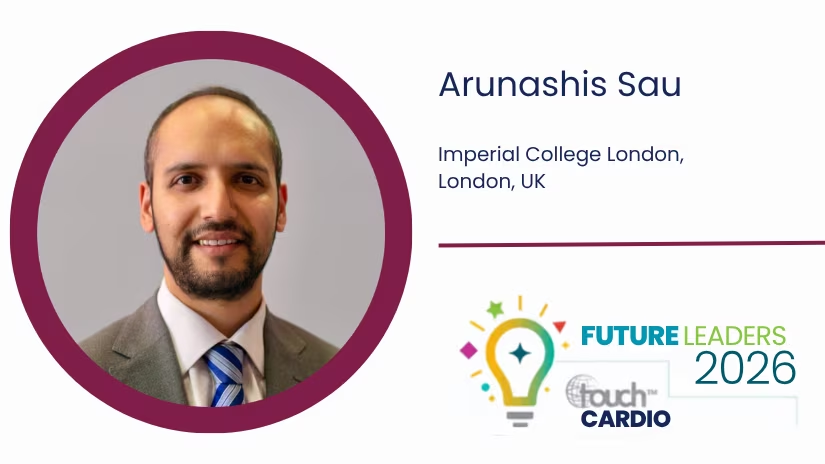
Dr Arunashis Sau is a cardiologist, electrophysiologist and touchCARDIO Future Leader 2026. In this interview, he discusses his journey into electrophysiology, the mentors who shaped his career, combining clinical training with research, and his work using artificial intelligence to unlock new insights from ECGs and other clinical data.
...

ABLATE versus PACE: Pacemaker strategy reduces clinically relevant events in older patients with persistent atrial fibrillation Randomised trial shows substantially fewer hospitalisations and repeat interventions than pulmonary vein isolation. The benefit was partly offset by more heart failure events and ...

Immediate 14-day ambulatory ECG monitoring did not significantly reduce recurrent syncope at 1 year in the ASPIRED trial, but it more than doubled the detection of clinically significant arrhythmias and enabled earlier diagnosis and treatment. Following the presentation, Prof. Matthew Reed, from the Usher Institute, University of Edinburgh, and the Emergency Medicine Research Group Edinburgh, spoke about the origins of ASPIRED, the importance of earlier investigation for patients with syncope, and how this approach might be incorporated into routine care.

Dr Jonathan Piccini discusses rhythm control in patients with atrial fibrillation and heart failure with preserved ejection fraction, the growing role of catheter ablation, and the evidence still needed to define its impact on cardiovascular outcomes.

Prof. Jonathan Kalman discusses the rapid uptake of pulsed field ablation, its potential advantages over thermal ablation, and how the role of AF ablation may continue to expand.

Dr Bjarne Nes discusses findings from the NEXAF trial, which showed that a one-year exercise program reduced atrial fibrillation burden in patients with non-permanent AF.

Direct oral anticoagulant (DOAC) therapy reduced adverse clinical events compared with no anticoagulation in patients with atrial fibrillation (AF) at intermediate risk of stroke, according to results from the SINGLE-AF trial presented during a Hot Line session at ESC Congress 2026.1


ESC Congress 2026 begins in Munich on August 28, bringing four days of new cardiovascular research, clinical guidance and discussion. Early data released ahead of the meeting provide a first look at some of the science to come.

Longer diagnosis-to-ablation time (DAT) was associated with a higher risk of atrial arrhythmia recurrence following de novo radiofrequency catheter ablation (RFA) for atrial fibrillation (AF), according to a prospective, multicenter cohort study published in JAMA Network Open.1

At EHRA 2026, Professor Claudio Tondo presents his highlights on advances in ablation and device technologies, led by pulsed field ablation, showcasing a rapidly evolving landscape in the treatment of complex arrhythmias.

Ventricular fibrillation (VF) is characterized by rapid (>300 beats a per minute), irregular electrical activation with variable electrocardiographic waveforms that prevents coordinated myocardial contraction, resulting in immediate loss of cardiac output.1 It most commonly occurs in the context of coronary ...
Professor Amir Jadidi presented results from SOLVE-AF at EHRA 2026, showing that sinus rhythm–guided substrate ablation significantly improves outcomes in persistent AF patients with atrial fibrosis and supporting a more personalized ablation strategy.
Log into your Touch Account
Keep track of your clinical interests and newsletter subscriptions.
Sign up with an Email
Or use a .
Register now for FREE access
Already registered? Login below.
