Hypothyroidism, defined as a state of deficient thyroid hormone production characterized biochemically by elevated thyroid-stimulating hormone with low or inappropriately normal circulating thyroxine, is a common endocrine disorder affecting 4–5% of the U.S. population.1,2 Pericardial effusion occurs in 30–80% of patients with severe hypothyroidism or myxedema, although estimates vary across studies.3–6 While most hypothyroidism-associated pericardial effusions remain asymptomatic and resolve with thyroid hormone replacement, progression to cardiac tamponade occurs rarely and carries significant morbidity if unrecognized.7,8
Cardiac tamponade develops when fluid accumulation within the pericardial space increases intrapericardial pressure sufficiently to impair cardiac filling, leading to reduced stroke volume, hypotension and circulatory collapse.9–11 In classic tamponade, rapid fluid accumulation triggers compensatory tachycardia and heightened sympathetic tone.12,13 Hypothyroidism-associated tamponade differs from classic tamponade due to slow, insidious accumulation of protein-rich pericardial fluid, allowing gradual pericardial distention and atypical hemodynamic presentations despite large effusions.14–16
Hypotension and reduced cardiac output in this setting may reflect the direct metabolic and cardiovascular effects of severe hypothyroidism (including reduced myocyte contractility, bradycardia and decreased systemic vascular resistance), rather than hemodynamically significant pericardial constraint alone.17,18 The metabolic effects of thyroid hormone deficiency, including blunted adrenergic responsiveness, can mask typical compensatory mechanisms and result in atypical clinical presentations that challenge traditional diagnostic paradigms.19,20
Despite its clinical importance, hypothyroidism-associated cardiac tamponade has not been systematically synthesized. Most available data consist of case reports and small series, with limited integration of clinical patterns, diagnostic features and outcomes. This systematic review aims to: (1) characterize the demographic and clinical features of patients presenting with cardiac tamponade secondary to hypothyroidism; (2) describe the diagnostic findings and pathophysiologic mechanisms; (3) evaluate management strategies and their effectiveness; and (4) assess clinical outcomes and prognostic factors.
Methods
Design
This systematic review was conducted and reported according to the Preferred Reporting Items for Systematic Reviews and Meta-Analyses (PRISMA) guidelines. The PRISMA framework ensures comprehensive and transparent reporting through a standardized 27-item checklist. All steps of identification, screening, eligibility assessment and inclusion were documented using the PRISMA flow diagram.
Search strategy
A comprehensive, systematic search was conducted across four major bibliographic databases to identify all published reports of cardiac tamponade occurring in the setting of hypothyroidism. The search was performed on November 27, 2025 and covered all records from database inception to that date. No language restrictions were applied during the initial search, although non-English articles without available full-text translations were subsequently excluded during screening.
The search strategy incorporated multiple synonym variations and spelling conventions to maximize comprehensiveness. Pericardial disease terms included ‘cardiac tamponade,’ ‘pericardial tamponade,’ ‘pericardial effusion’ and ‘tamponade’ to capture the full spectrum of disease severity. Hypothyroidism terms included ‘hypothyroidism,’ ‘myxedema,’ ‘myxoedema,’ ‘myxedema coma,’ ‘severe hypothyroidism’ and ‘thyroid hormone deficiency’ to ensure capture of all terminology variations. Study design terms included ‘case report,’ ‘case series’ and ‘case study’ to identify appropriate publication types.
In PubMed, the title/abstract search used the following string: (‘cardiac tamponade’[Title/Abstract] OR ‘pericardial tamponade’[Title/Abstract] OR ‘pericardial effusion’[Title/Abstract] OR ‘massive pericardial effusion’[Title/Abstract] OR ‘tamponade’[Title/Abstract]) AND (‘hypothyroidism’[Title/Abstract] OR ‘myxedema’[Title/Abstract] OR ‘myxoedema’[Title/Abstract] OR ‘myxedema coma’[Title/Abstract] OR ‘severe hypothyroidism’[Title/Abstract] OR ‘thyroid hormone deficiency’[Title/Abstract]) AND (‘case report’[Publication Type] OR ‘case series’[Title/Abstract] OR ‘case study’[Title/Abstract] OR ‘case reports’[Title/Abstract]) NOT (‘review’[Publication Type] OR ‘systematic review’[Title/Abstract] OR ‘meta-analysis’[Publication Type] OR ‘abstract’[Publication Type]). Publication type filters were used to exclude reviews, editorials, letters and abstracts. No date, language or species restrictions were applied at the search stage.
In Scopus, the following search was conducted: TITLE-ABS-KEY (‘cardiac tamponade’ OR ‘pericardial effusion’ OR ‘tamponade’) AND TITLE-ABS-KEY (‘hypothyroidism’ OR ‘myxedema’ OR ‘myxoedema’ OR ‘myxedema coma’) AND TITLE-ABS-KEY (‘case report’ OR ‘case series’) AND NOT TITLE-ABS-KEY (‘review’ OR ‘systematic review’ OR ‘meta-analysis’ OR ‘conference abstract’). Document type filters excluded reviews, conference abstracts and editorials.
In Web of Science, the search strategy was as follows: TS=((‘cardiac tamponade’ OR ‘pericardial effusion’ OR ‘pericardial tamponade’) AND (‘hypothyroidism’ OR ‘myxedema’ OR ‘myxoedema’ OR ‘myxedema coma’) AND (‘case report’ OR ‘case series’)) NOT TS=(‘review’ OR ‘systematic review’ OR ‘meta-analysis’ OR ‘conference abstract’). Topic (TS) field searched titles, abstracts, author keywords and Keywords Plus. Document type exclusions removed review articles, meeting abstracts and editorial materials.
In Google Scholar, due to the platform’s limited support for operators and lack of advanced filtering capabilities, a simplified search strategy was employed: ‘cardiac tamponade’ ‘hypothyroidism’ OR ‘myxedema’ ‘case report.’ Results were manually screened to exclude review articles identified by title or content, citations and patents, conference abstracts and proceedings and duplicate records already identified in other databases. Google Scholar results were limited to the first 300 records due to platform restrictions and diminishing relevance beyond this threshold.
Eligibility criteria
The initial search yielded 385 records, which were imported into Covidence systematic review software (Veritas Health Innovation, Melbourne, Australia; www.covidence.org). After automated de-duplication in Covidence (n = 38) and manual removal of one additional duplicate, 346 articles underwent title and abstract screening.
All abstracts were assessed independently by two reviewers (FH and RH). Full texts of all included studies were reviewed against the eligibility criteria independently by the same two reviewers (FH and RH). Any disagreements regarding study eligibility were resolved by a third reviewer (NN). A total of 155 full-text articles were assessed for eligibility, and 43 studies met the inclusion criteria, as shown in the PRISMA diagram (Figure 1).
Figure 1: PRISMA flow diagram for study selection
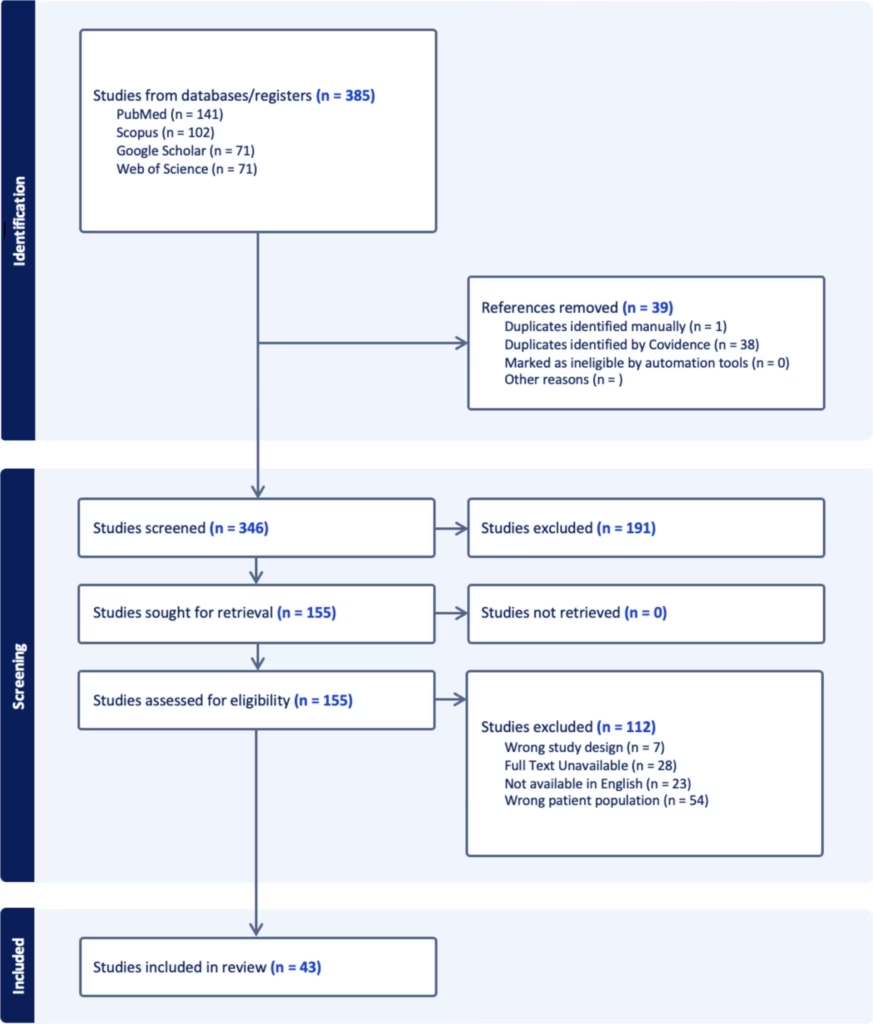
Flow of studies through the identification, screening, eligibility assessment and inclusion phases. Of 385 records identified, 346 were screened after removal of duplicates, 155 full-text articles were assessed for eligibility and 43 studies met the inclusion criteria for the final review. Figure 1 was generated using Covidence systematic review software (Veritas Health Innovation, Melbourne, Australia; www.covidence.org), which produces the PRISMA 2020 flow diagram directly from the screening record. No additional graphics software was used
PRISMA = Preferred Reporting Items for Systematic Reviews and Meta-Analyses.
Studies were eligible if they described human patients with cardiac tamponade and hypothyroidism, with both hypothyroidism confirmed by biochemical evidence of thyroid dysfunction and cardiac tamponade confirmed by cardiac imaging or hemodynamic findings. Tamponade was defined as pericardial effusion with at least one of the following: (1) echocardiographic features of hemodynamic compromise (chamber collapse, respiratory variation in flow velocities); (2) clinical signs of tamponade physiology (hypotension, pulsus paradoxus, elevated jugular venous pressure); or (3) hemodynamic instability requiring urgent drainage. Reports were required to provide extractable data on clinical presentation, diagnostic findings, management strategies or clinical outcomes. Articles were excluded if they lacked full text, were not in English, focused solely on pericardial effusion without evidence of tamponade physiology, attributed tamponade to a non-thyroid cause (cases with multiple possible etiologies were included if there was underlying hypothyroidism present) or did not present original individual-patient data (e.g. reviews, editorials or opinion pieces). Duplicate publications describing the same patient were removed.
Data extraction and processing
All studies meeting inclusion criteria underwent structured data extraction using a predefined framework. Two reviewers (FH and RH) independently extracted data from each report and subsequently reviewed and verified all extracted information to ensure accuracy and completeness.
Extracted variables included patient demographics and history such as age, sex, comorbidities including autoimmune diseases, genetic syndromes, prior thyroidectomy and other endocrine disorders, duration of known hypothyroidism and thyroid medication compliance history. Clinical presentation data included key presenting symptoms such as dyspnea, fatigue, edema, chest pain and syncope, duration of symptom progression, vital signs at presentation including heart rate, blood pressure, temperature and respiratory rate and physical examination findings such as jugular venous distention, muffled heart sounds, pericardial rub, Beck’s triad components and peripheral edema.
Diagnostic findings encompassed thyroid function test results including thyroid-stimulating hormone (TSH), free thyroxine (free T4), free triiodothyronine (free T3), and thyroid antibodies such as anti-TPO and anti-thyroglobulin; echocardiographic features including effusion size, right atrial collapse, right ventricular diastolic collapse, respiratory variation in mitral inflow, inferior vena cava characteristics and presence of swinging heart; electrocardiographic findings including QRS voltage, rhythm abnormalities, electrical alternans and corrected QT (QTc) interval; and chest radiographic findings. Pericardial fluid characteristics extracted included volume of fluid drained; appearance, including color and clarity; biochemical analysis, including protein content, lactate dehydrogenase, pH and cholesterol; cellular analysis, including white blood cell count, red blood cell count and differential; and microbiological and cytological results.
Management strategies documented included performance and timing of pericardiocentesis, volume of initial and repeat drainage, need for surgical interventions such as pericardial window or pericardiectomy, thyroid hormone replacement therapy including type, route of administration, initial dose and dose titration schedule, use of corticosteroids and other supportive measures. Clinical outcomes recorded included resolution of tamponade physiology, time to effusion resolution, hospital length of stay, recurrence of pericardial effusion, complications including pericardial decompression syndrome, myxedema coma and infection, mortality, and duration and quality of follow-up.
Risk of bias and quality assessment
Given the predominance of case reports and case series in this article, formal risk of bias assessment tools designed for interventional or observational studies (e.g. Cochrane Risk of Bias tool, Newcastle-Ottawa Scale) were not applicable. Instead, reporting quality was evaluated based on completeness of clinical data, clarity of diagnostic criteria for both hypothyroidism and cardiac tamponade, documentation of management decisions and adequacy of follow-up information. Two reviewers (FH and RH) independently assessed each report for biochemical confirmation of hypothyroidism with laboratory values, imaging or hemodynamic confirmation of tamponade, clear description of management approach and reporting of clinical outcomes.
Data synthesis
As a result of the heterogeneity of study designs and the predominance of case reports, quantitative pooling and meta-analysis were not feasible. Data synthesis was performed descriptively through (1) tabulation of patient characteristics, clinical features and outcomes; (2) narrative summary organized by thematic domains including pathophysiology, clinical presentation, diagnosis, management strategies and outcomes; (3) identification of patterns and variations across cases; and (4) highlighting unique or instructive individual cases that illustrate important clinical or physiologic principles.
Results
The analysis included 51 cases from 43 studies published between 1983 and 2025, with geographic representation across North America, South America, Europe, Asia and Africa.6,21–62 Most publications were single-patient case reports, with a small number of case series. Across included reports, the diagnosis of cardiac tamponade was based on the criteria used by the original authors and was variably based on echocardiographic findings, clinical hemodynamics or a combination of both. A comprehensive data extraction table is provided in Table S1.
Of 51 patients, 38 (74.5%) were female and 13 (25.5%) were male (female:male ratio 2.9:1), with a mean age of 43.0 years (range 5–81 years). The age distribution comprised 8 pediatric patients <18 years (15.7%), 36 adults aged 18–64 years (70.6%) and 7 elderly patients ≥65 years (13.7%). At the time of presentation, 42 patients (82.4%) had no prior diagnosis of hypothyroidism, while 9 patients (17.6%) carried a known diagnosis. Among those with known hypothyroidism, 7 of 9 patients (77.8%) reported medication non-adherence. Documented comorbidities included autoimmune disease in 15 patients (29.4%), Down syndrome in 4 patients (7.8%) and Sheehan syndrome in 3 patients (5.9%) (Table 1).
Table 1: Baseline characteristics of patients with hypothyroidism-related tamponade
| Variable | Value |
| Age |
|
| Mean (range) | 43.0 years (5–81 years) |
| Median | 45.0 years |
| Sex distribution |
|
| Female, n (%) | 38 (74.5%) |
| Male, n (%) | 13 (25.5%) |
| Female:male ratio | 2.9:1 |
| Age categories |
|
| Pediatric (<18 years), n (%) | 8 (15.7%) |
| Adults (18–64 years), n (%) | 36 (70.6%) |
| Elderly (≥65 years), n (%) | 7 (13.7%) |
| Duration of symptoms |
|
| Median (IQR) | 30 days (7–113 days) |
| Range | 0.5 h–10 years |
| Hypothyroidism diagnosis status |
|
| Newly diagnosed, n (%) | 42 (82.4%) |
| Known hypothyroidism, n (%) | 9 (17.6%) |
| Medication adherence |
|
| Non-adherent (among known cases) | 7/9 (77.8%) |
| Comorbidities |
|
| Coexisting autoimmune disease, n (%) | 15 (29.4%) |
| Down syndrome, n (%) | 4 (7.8%) |
| Sheehan syndrome, n (%) | 3 (5.9%) |
Baseline demographic and clinical characteristics of patients from the included studies (n=51 from 43 studies).
IQR = interquartile range.
Symptom duration varied widely, with a median of 30 days. The most common presenting symptoms were dyspnea in 43 patients (84.3%), edema in 25 patients (49.0%), profound fatigue or lethargy in 21 patients (41.2%) and chest pain or discomfort in 6 patients (11.8%). Physical examinations revealed muffled heart sounds in 40 patients (78.4%), jugular venous distension in 35 patients (68.6%), hypotension in 28 patients (54.9%), bradycardia in 22 patients (43.1%) and pulsus paradoxus in 15 patients (29.4%). Beck’s triad was inconsistently present, and several patients exhibited normal or elevated blood pressure (Table 2).
Table 2: Clinical and diagnostic features of tamponade in hypothyroidism
| Variable | n (%) |
| Physical examination findings |
|
| Hypotension at presentation | 28 (54.9%) |
| Bradycardia | 22 (43.1%) |
| Jugular venous distension | 35 (68.6%) |
| Muffled heart sounds | 40 (78.4%) |
| Pulsus paradoxus | 15 (29.4%) |
| ECG findings |
|
| Low-voltage QRS complexes | 45 (88.2%) |
| Electrical alternans | 8 (15.7%) |
| Echocardiographic findings |
|
| Large effusion (>20 mm or ‘large/massive’) | 48 (94.1%) |
| Right atrial collapse | 18 (35.3%) |
| Right ventricular diastolic collapse | 25 (49.0%) |
| Pericardial fluid analysis |
|
| Protein-rich effusion (>3 g/dL) | 38 (88.4%) |
| Negative culture | 51 (100%) |
Clinical examination findings, ECG findings, echo findings and pericardial fluid characteristics among patients from the included studies (n=51 from 43 studies). Large pericardial effusion was defined as an echo-free space >20 mm or as large/massive according to the reporting study.
Percentages in ‘pericardial fluid analysis’ section are calculated from the 43 patients who underwent drainage and had pericardial fluid analysis reported; all other percentages are calculated from the full cohort of 51 patients.
ECG = electrocardiogram; echo = echocardiogram; QRS = QRS complex.
Thyroid function testing demonstrated marked biochemical hypothyroidism in all cases. Among 38 cases with documented TSH values for primary hypothyroidism, the mean TSH was 151.9 mIU/L (range 10.0–845.6 mIU/L) with a median of 100.0 mIU/L. Twenty patients (52.6%) had TSH values ≥100 mIU/L, and three patients (7.9%) had TSH values ≥500 mIU/L. Free T4 levels were universally low and often near undetectable. Etiologies included Hashimoto thyroiditis, central hypothyroidism, postsurgical hypothyroidism, medication non-adherence and primary hypothyroidism of unclear origin. Thyroid antibody testing, when performed, demonstrated elevated anti-TPO or anti-thyroglobulin titers in the majority of cases.
Electrocardiography demonstrated low QRS voltage in 45 patients (88.2%), sinus bradycardia in most cases and electrical alternans in 8 patients (15.7%). Echocardiography revealed large or massive circumferential pericardial effusions in 48 patients (94.1%). Right ventricular diastolic collapse was documented in 25 patients (49.0%) and right atrial collapse in 18 patients (35.3%). Exaggerated respiratory variation in mitral inflow velocity (>25%) was noted in multiple cases. Left ventricular systolic function was generally preserved.
Pericardiocentesis was performed in 43 patients (84.3%), while 8 patients (15.7%) were managed conservatively with thyroid hormone replacement alone. Among cases that underwent pericardiocentesis, documented fluid volumes ranged from 150 to 4,815 mL, with a mean of 1,152 mL and a median of 1,000 mL. Five patients (14.7% of those with documented volumes) had <500 mL drained, 22 patients (64.7%) had 500–1,499 mL drained, and 7 patients (20.6%) had ≥1,500 mL drained. Pericardial fluid analysis was performed/reported in 43 cases that underwent drainage. Pericardial fluid was protein-rich and cholesterol-predominant, with protein levels >3 g/dL in 38 cases (88.4%), while the fluid variably met exudative criteria across reports. All cases (51/51, 100%) had negative microbiological cultures, including testing for bacteria, mycobacteria and fungi. Nine patients (17.6%) required surgical pericardial window creation due to recurrent accumulation or inadequate drainage (Table 3).
Table 3: Management strategies and outcomes
| Variable | n (%) |
| Interventional management |
|
| Pericardiocentesis performed | 43 (84.3%) |
| Surgical pericardial window | 9 (17.6%) |
| Conservative management only | 8 (15.7%) |
| Thyroid hormone replacement |
|
| Initial route – intravenous | 12 (23.5%) |
| Initial route – oral | 39 (76.5%) |
| All patients received oral maintenance | 51 (100%) |
| Adjunctive therapy |
|
| Corticosteroid use | 8 (15.7%) |
| Clinical outcomes |
|
| Hemodynamic improvement | 50 (98.0%) |
| Complete resolution of effusion | 47 (92.2%) |
| Recurrence of effusion | 4 (7.8%) |
| Mortality | 1 (2.0%) |
| Volume drained (when performed) |
|
| Median volume | ~1,000 mL |
| Range | 150–4,815 mL |
Therapeutic interventions, thyroid hormone replacement strategies and clinical outcomes among patients from the included studies (n=51 from 43 studies). Volume drained reflects the total volume of pericardial fluid removed when an invasive procedure was performed.
Thyroid hormone replacement was initiated with intravenous levothyroxine in 12 patients (23.5%) and oral levothyroxine in 39 patients (76.5%). All 51 patients (100%) received oral levothyroxine as maintenance therapy. Hydrocortisone or other corticosteroids were administered in 8 patients (15.7%), typically in cases with suspected adrenal insufficiency or features of myxedema.
Hemodynamic improvement following intervention or thyroid hormone initiation occurred in 50 patients (98.0%). Complete resolution of pericardial effusion was achieved in 47 patients (92.2%), typically over a period of 2 weeks to 2 months with restoration of euthyroidism. Recurrence of pericardial effusion occurred in four patients (7.8%). Mortality occurred in one patient (2.0%), attributed to pericardial decompression syndrome following surgical drainage. No recurrence was observed in patients who achieved and maintained euthyroidism during follow-up.
Discussion
Cardiac tamponade secondary to hypothyroidism remains an uncommon but clinically significant entity, and its recognition depends on both broad disease patterns and case-level nuance. Although rare overall, the 43 studies included here show that tamponade may represent the initial presentation of severe thyroid dysfunction or a late complication of longstanding untreated hypothyroidism.
Clinical recognition and diagnostic challenges
The clinical presentation of hypothyroidism-associated tamponade differs from classic acute tamponade.3 Among our cohort, 29.4% exhibited pulsus paradoxus, and 43.1% presented with bradycardia rather than the compensatory tachycardia typical of acute pericardial tamponade. Beck’s triad was inconsistently present. Several patients presented with hypertensive emergencies, including two cases complicated by intracranial hemorrhage.39,42 This atypical hemodynamic profile reflects the unique pathophysiology of hypothyroid tamponade, in which slow fluid accumulation permits pericardial adaptation and the metabolic effects of thyroid deficiency blunt compensatory responses.14,63,64
Symptom progression contributes to delayed recognition. The median symptom duration of 30 days and the predominance of non-specific complaints (e.g. dyspnea [84.3%], edema [49.0%] and fatigue [41.2%]) obscure the diagnosis until hemodynamic compromise is evident. This diagnostic challenge is compounded in children, in whom classic hypothyroid symptoms may be less apparent. Four children with Down syndrome presented with tamponade as the first recognized manifestation of hypothyroidism, reinforcing the importance of thyroid screening.22,26,34,43
Most patients (82.4%) had no prior diagnosis of hypothyroidism, and among those with known disease, medication non-adherence was documented in 77.8%. Autoimmune disease was present in 29.4% of patients, with cases demonstrating overlapping etiologies, including systemic lupus erythematosus, Hashimoto thyroiditis and panhypopituitarism.21,30,36–38,44,59,61 When multiple potential causes coexist, evaluation of each factor is necessary rather than attribution to a single etiology.38,44
Electrocardiographic findings, while non-specific, provide diagnostic clues. Low QRS voltage was present in 88.2% of cases, likely reflecting both the dampening effect of pericardial fluid and myocardial infiltration by mucopolysaccharides.65–67 Electrical alternans occurred in 15.7%.23,28,38,49,52,56 Echocardiography demonstrated large or massive circumferential effusions in 94.1% of cases, with right ventricular diastolic collapse in 49.0% and right atrial collapse in 35.3%. However, these echocardiographic features did not consistently correlate with hemodynamic instability, reflecting the gradual pericardial adaptation.29,40
Pathophysiologic mechanisms
Hypothyroidism causes pericardial effusion mainly through thyroid hormone-dependent changes in vascular permeability and lymphatic protein handling, producing a protein-rich transudate in the pericardial space.14 Human studies demonstrate increased transcapillary escape of albumin and increased extravascular albumin mass, indicating that low T3/T4 states disrupt endothelial barrier integrity and promote extravasation of low-molecular-weight proteins.14 Although molecular pathways were not delineated, the physiology is consistent with decreased thyroid hormone signaling, which reduces endothelial tight junction organization, nitric oxide-dependent tone and metabolic activity of capillary beds, thereby increasing permeability.68,69 As albumin accumulates in interstitial and serosal compartments, reduced oncotic pressure and impaired fluid reabsorption favor effusion formation. These mechanisms are supported by normalization of albumin kinetics and vascular permeability after L-thyroxine repletion, confirming direct endocrine dependence.14
A second major mechanism is impaired lymphatic clearance, which, in hypothyroid states, is unusually slow compared with other edematous disorders.70 Human perfusion studies show prolonged lymphatic transit times and inadequate return of extravasated proteins to the central circulation.14 This impaired drainage, combined with continuous albumin leak, drives progressive serosal fluid accumulation despite the absence of inflammation.3 Although measurement of pericardial glycosaminoglycans has not been reported, the systemic features of myxedema (glycosaminoglycan deposition and decreased mucopolysaccharide turnover) contribute to interstitial water binding and increase the viscoelastic resistance to serosal fluid mobilization.71,72 With slow, chronic accumulation, the pericardial sac remodels: compliance initially increases, allowing large effusions without acute hemodynamic compromise, but eventually reaches its limit or becomes structurally altered.6 Case reports of persistent effusions despite biochemical euthyroidism suggest that myxedematous infiltration or fibrosis may induce secondary, less reversible structural changes.65,73
At the myocardial level, hypothyroidism produces impaired relaxation, bradycardia and reduced metabolic activity. Human systolic interval studies show prolonged pre-ejection period, shortened left ventricular ejection time and reduced cardiac output, which improve with thyroid replacement.20,74 Decreased T3-mediated transcriptional regulation of sarco/endoplasmic reticulum Ca2+-ATPase2a (SERCA2a), β1-adrenergic receptors and mitochondrial oxidative capacity genes likely underlies the impaired lusitropy and low-flow hemodynamics that mask tamponade tachycardia.17,66,75,76 Downregulation of SERCA2a in hypothyroidism impairs diastolic relaxation by reducing calcium reuptake into the sarcoplasmic reticulum during diastole.75,77,78 Reduced β-adrenergic receptor expression and impaired sinus node automaticity blunt chronotropic and inotropic responses, explaining the bradycardia and paradoxical absence of compensatory tachycardia during hypothyroid tamponade.76,79,80 Although direct human data on mitochondrial oxidative capacity are limited, abnormal cardiac bioenergetics occur in hypothyroid cardiomyopathy and improve with thyroid hormone replacement.81 As the effusion enlarges, a stiff or infiltrated myocardium may be susceptible to diastolic compression and ventricular interdependence (Figure 2).82
Figure 2: Pathophysiology of hypothyroidism-associated pericardial effusion
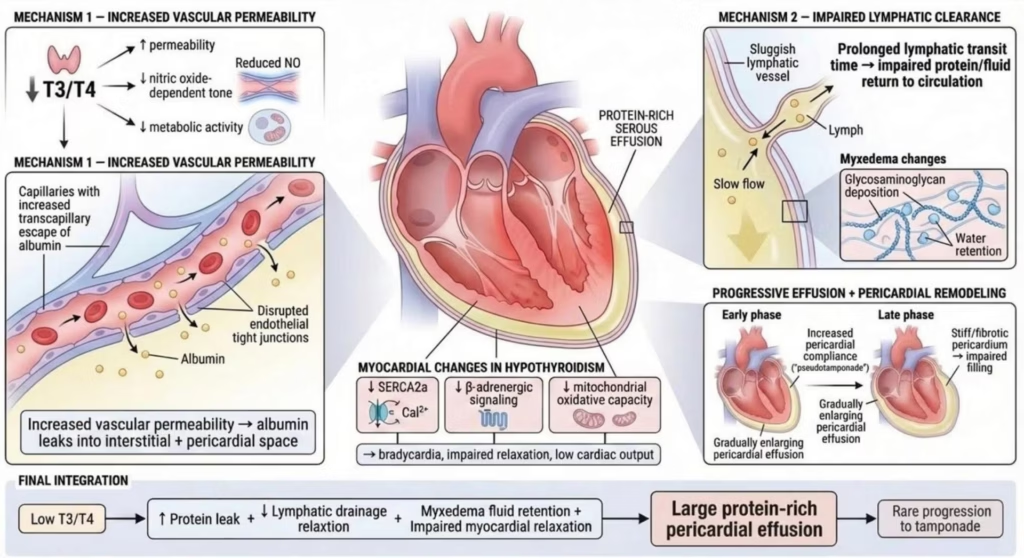
Original schematic illustrating the multifactorial etiology of effusion formation in hypothyroidism, including increased vascular permeability, impaired lymphatic clearance, progressive pericardial effusion formation, myocardial dysfunction and ultimately an elevated risk of cardiac tamponade. The figure was designed and assembled by the authors in Microsoft PowerPoint Microsoft Corporation, Redmond, WA, USA) and Adobe Illustrator (Adobe Inc., San Jose, CA, USA), with selected anatomical illustrations generated using Google Flow (Google Labs, Mountain View, CA, USA)
NO = nitric oxide; T4 = free thyroxine, T3 = free triiodothyronine; SERCA2a = sarco/endoplasmic reticulum Ca2+-ATPase2a.
Tamponade in hypothyroidism emerges not from rapid fluid accumulation but from the intersection of slow protein-rich fluid accretion, reduced serosal clearance, altered myocardial relaxation and changes in pericardial compliance.8 This unique physiology explains why tamponade is rare despite frequent pericardial effusion in severe hypothyroidism, why heart rates remain unexpectedly low during hemodynamic compromise and why many patients can be managed with thyroid hormone replacement alone without pericardiocentesis.6,8 Observational data suggest a graded association between hypothyroidism severity and pericardial effusion, with higher rates among patients with severe thyroid hormone deficiency compared with subclinical disease. The reversibility of these mechanisms with levothyroxine replacement underscores their dependence on thyroid hormone action, although a minority of cases with prolonged severe hypothyroidism may develop persistent structural changes requiring more intervention.65,73,83
Management considerations
Management of hypothyroidism-associated tamponade must be individualized based on hemodynamic stability, effusion characteristics and response to therapy.50,84,85 Our analysis demonstrates that 15.7% of patients were managed with thyroid hormone replacement alone, without pericardiocentesis. These cases involved hemodynamically stable patients with large effusions but without overt shock or refractory symptoms. Clinical and echocardiographic improvement occurred within weeks to months of levothyroxine initiation, with complete resolution in the majority.36,47,49
Conversely, 84.3% of patients required pericardiocentesis, performed urgently for hemodynamic instability or refractory symptoms. Volume drained ranged from 150 to 4,815 mL (median 1,000 mL), and fluid analysis demonstrated exudative characteristics with high protein content (>3 g/dL in 88.4% of analyzed samples) and negative microbiological cultures in all cases.47,59 These findings support the non-inflammatory, transudative nature of hypothyroid effusions despite their exudative biochemical profile. The absence of infectious etiologies in evaluated cases reinforces that empiric antimicrobial therapy is unnecessary unless clinical suspicion exists.86
Thyroid hormone replacement was initiated via the intravenous route in 23.5% of patients, typically those with severe hemodynamic compromise or inability to tolerate oral medication. All patients ultimately transitioned to oral maintenance therapy. Corticosteroids were administered in 15.7% of cases, generally in patients with suspected adrenal insufficiency or features of myxedema coma. This pattern of intravenous hormone repletion combined with glucocorticoid coverage in the most severely affected patients mirrors specific recommendations of the 2014 American Thyroid Association Task Force guidelines on thyroid hormone replacement, which, for patients with myxedema coma or an inability to tolerate oral therapy, recommend empiric intravenous glucocorticoid coverage prior to or concurrently with thyroid hormone repletion, an intravenous levothyroxine loading dose of 200–400 mcg, and a maintenance dose reduced to approximately 75% of the equivalent oral dose when the intravenous route is required.87
Surgical intervention with pericardial window creation or pericardiectomy was required in 17.6% of patients due to recurrent effusion or inadequate percutaneous drainage. A critical complication, pericardial decompression syndrome (characterized by acute pulmonary edema and hemodynamic collapse following rapid drainage), occurred in one patient and proved fatal.47 This rare but catastrophic event highlights the importance of gradual decompression, particularly in chronically distended pericardia.88 When surgical drainage is undertaken, careful perioperative endocrine management is essential, as one patient developed myxedema coma postoperatively.89 These management patterns are broadly concordant with the 2015 European Society of Cardiology guidelines for the diagnosis and management of pericardial diseases, which recommend pericardiocentesis for hemodynamically significant tamponade while directing definitive treatment toward the underlying etiology; our findings extend this framework by showing that, consistent with contemporary hypothyroidism management guidelines, disease-specific thyroid hormone replacement can resolve tamponade physiology without invasive drainage in appropriately selected, hemodynamically stable patients.1,9
Outcomes and prognosis
Overall prognosis with appropriate treatment was favorable. Hemodynamic improvement occurred in 98.0% of patients, and complete resolution of pericardial effusion was achieved in 92.2% within 2 weeks to 2 months as thyroid hormone levels normalized. Recurrence occurred in 7.8% of patients but was not observed in those who achieved and maintained euthyroidism during follow-up, indicating that thyroid replacement and medication adherence are critical for preventing relapse.6,29,39,45
Mortality occurred in only one patient, attributed to pericardial decompression syndrome.47 Pediatric patients recovered fully with hormone replacement and drainage when indicated.33,34,57 Adults with autoimmune or endocrine comorbidities experienced excellent outcomes once underlying disorders were addressed.30,56,59,61 These favorable results reflect the reversible nature of pericardial disease and the effectiveness of hormone replacement therapy.
However, a subset of patients demonstrated persistent effusions despite achieving biochemical euthyroidism, suggesting that myxedematous infiltration may induce structural pericardial changes requiring more prolonged resolution.6,29,39,45 Extended echocardiographic surveillance is warranted in such cases to monitor for recurrence and ensure complete resolution.
Limitations
All included studies were case reports or small series, precluding quantitative synthesis, assessment of true incidence or identification of risk factors. Publication bias favors reporting of unusual presentations or dramatic outcomes. Many reports provided incomplete data, limiting comparison across cases. The absence of standardized criteria for ‘tamponade’ across studies introduces misclassification, particularly in cases exhibiting echocardiographic features of chamber collapse without corresponding hemodynamic compromise. Restriction to English-language publications may have excluded relevant cases. The rarity of this condition and absence of prospective studies prevent generalization to all patients with hypothyroidism; these findings represent reported clinical experiences rather than epidemiologic patterns.
Conclusion
In this systematic review of 51 patients from 43 studies, hemodynamic improvement occurred in 98.0% and complete pericardial effusion resolution in 92.2% of patients following thyroid hormone replacement, with pericardiocentesis required in 84.3% of cases and thyroid hormone replacement alone sufficient in the remaining 15.7%; mortality was rare (2.0%) and occurred only in the setting of pericardial decompression syndrome, while recurrence (7.8%) was confined to patients who did not maintain euthyroidism. Cardiac tamponade secondary to hypothyroidism is a clinically heterogeneous entity with atypical presentations that challenge traditional diagnostic paradigms. The combination of bradycardia (43.1% of patients), low QRS voltage (88.2% of patients), large pericardial effusion (94.1% of patients) and absence of typical compensatory tachycardia should prompt immediate thyroid function testing. Most patients can be managed successfully with thyroid hormone replacement, either alone or combined with pericardiocentesis, with excellent long-term outcomes. Awareness of rare but serious complications (including pericardial decompression syndrome) is essential for optimal care. Recognition of this entity requires high clinical suspicion, particularly in patients with known hypothyroidism and medication non-adherence, those with autoimmune conditions and individuals from high-risk populations such as Down syndrome. Future prospective studies are needed to define optimal management algorithms and identify predictors of recurrence.