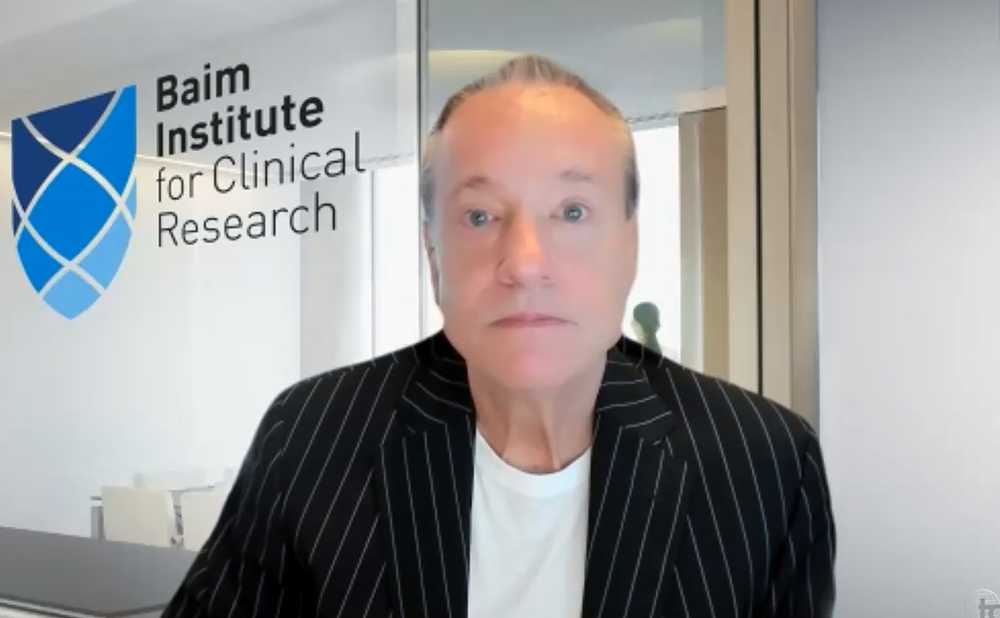
Prof. Arnoud van ’t Hof discusses the CELEBRATE trial, the potential benefits of administering antiplatelet therapy before patients with STEMI reach the catheterization laboratory, and what would be needed to translate this approach into clinical practice.

For patients with ST-segment elevation myocardial infarction (STEMI), restoring coronary blood flow as quickly as possible is critical. The CELEBRATE trial investigated a novel approach in which patients diagnosed with STEMI by ambulance teams received a single, easy-to-administer antiplatelet treatment before reaching hospital, with the aim of achieving earlier reperfusion.
 The CELEBRATE data were originally presented at AHA 2025 and were discussed further at ESC Congress 2026. Prof. Arnoud van ’t Hof (Maastricht University Medical Centre) spoke with touchCARDIO about the findings, why treatment in the prehospital setting could be important, and the practical challenges of implementing earlier therapy.
Don’t miss out on hearing about our latest peer-reviewed articles, expert opinions, conference news, podcasts and more.
Could you give us an overview of the CELEBRATE data?
The CELEBRATE trial really is a unique trial. It tested an investigational antiplatelet agent, zalunfiban, in patients with STEMI who were diagnosed at first medical contact – by ambulance personnel or at the hospital.
Patients had STEMI diagnosed by ECG, and a single, subcutaneous administration of the treatment was very simple to give. What we found was that it improved the patency of the infarct-related vessel. Patients who were treated with zalunfiban had improved reperfusion when they arrived in the catheterization laboratory.
I think that is a very important point, because we really want to treat as early as possible. Time is muscle, as we know. The better the reperfusion you already have with pretreatment, the better the outcome of your PCI will be.
The data were presented at AHA last year and the therapy is now being considered by regulators. What is the current approach to approval?
CeleCor Therapeutics, which developed the drug, is focusing on the FDA first, being a US company, and they spoke with the FDA before starting the study. They received FDA Fast Track status, , and then they will go to Europe later.
If approved, could this approach change clinical practice and the way ambulance teams manage patients with STEMI?
I think one of the major issues worldwide is that ambulance services are not equally well organized everywhere.
Especially when the time to expected PCI is long due to longer transportation or door-to-balloon times. The CELEBRATE trial can help to overcome these longer delays.
This definitely presents the opportunity to change how we treat patients with STEMI. Treatment delays for these patients have long been a barrier to recovery and survival. Now we have an approach that if approved, would help reduce that barrier.
What strategies could help us treat patients even earlier in the future?
I think the future strategy will be to diagnose even sooner. Perhaps, when a patient develops chest pain, they might even be able to diagnose themselves with an ECG using their iPhone or cell phone. I think that could be part of the future.
But if you have a well-organized ambulance system, where you can call the emergency services and the ambulance arrives within five or 10 minutes, that is also a very good option.
Cite: CELEBRATE: Could earlier antiplatelet treatment improve reperfusion in STEMI? touchCARDIO. September 1, 2026.
Disclosure: No funding was received in the publication of this article. Thank you to Prof. Arnoud van ’t Hof for providing his expert insights. Prof. Arnoud van ’t Hof is a consultant to CeleCor Therapeutics.
Editor: Nicola Cartridge, Director of Content