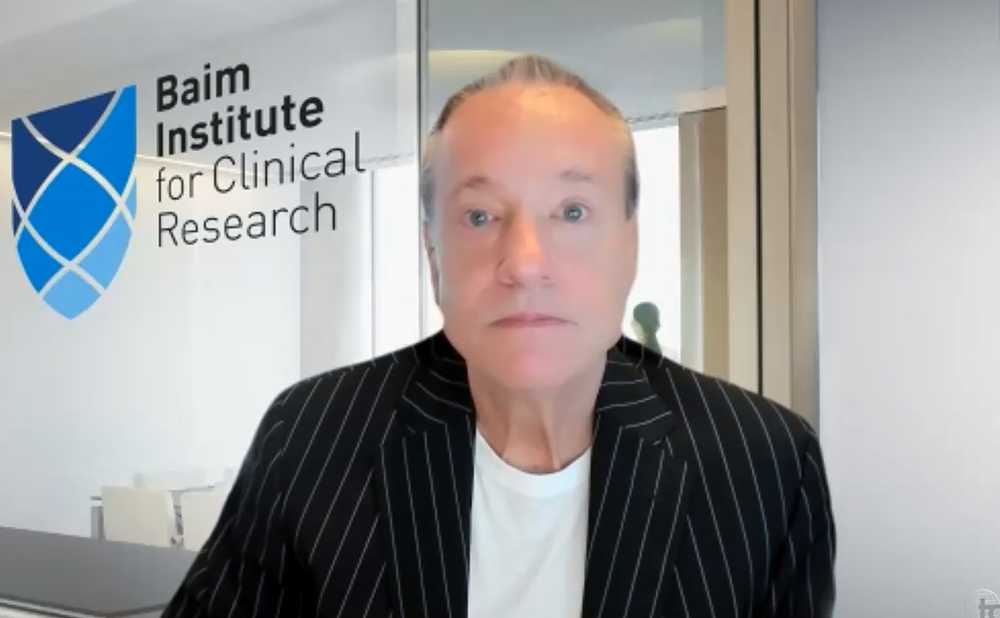
AMUNDSEN showed that immediate initiation of evolocumab after myocardial infarction substantially increased LDL-C goal achievement, but did not significantly reduce death or cardiovascular hospitalization at 1 year.

Starting evolocumab immediately after myocardial infarction (MI) more than doubled the proportion of patients achieving intensive low-density lipoprotein cholesterol (LDL-C) targets, according to results from the AMUNDSEN trial presented at ESC Congress 2026.
However, the improvement in lipid control did not translate into a significant reduction in early cardiovascular outcomes during the first year.
Don’t miss out on hearing about our latest peer-reviewed articles, expert opinions, conference news, podcasts and more.
The trial enrolled 2,161 patients with ST-elevation MI undergoing primary percutaneous coronary intervention (PCI) or non-ST-elevation MI requiring PCI and at least one additional high-risk characteristic.
Participants were randomized to evolocumab administered before PCI in addition to standard care or standard care alone.
At 12 months, 82% of patients receiving evolocumab achieved both a reduction in LDL-C of at least 50% and an LDL-C level below 55 mg/dL, compared with 40% receiving standard care (p<0.001).
Patients who achieved the LDL-C target reached it after a median of 9 weeks with evolocumab compared with 19 weeks with standard care.
Despite the marked improvement in lipid control, the primary intention-to-treat analysis found no significant difference in all-cause death or unplanned cardiovascular hospitalization at 1 year. The endpoint occurred in 14.6% of patients receiving evolocumab and 15.4% receiving standard care.
The findings demonstrate that initiating intensive PCSK9 inhibition during the acute MI admission can substantially accelerate and improve LDL-C target attainment. However, the trial did not demonstrate a significant reduction in clinical events at 1 year, and longer follow-up may be required to determine whether earlier LDL-C lowering translates into improved cardiovascular outcomes.
Reference
Presentation: Gilles Montalescot, Sorbonne University, Paris, France. AMUNDSEN: Evolocumab Before Percutaneous Coronary Intervention for Acute Myocardial Infarction. Presented during Hot Line 2 at ESC Congress 2026; August 29, 2026; Munich, Germany. The results were simultaneously published in JAMA.
Cite: Early evolocumab after myocardial infarction improves LDL-C target attainment but not 1-year outcomes. touchCARDIO. September 2, 2026.
Disclosure: This content has been developed independently by Touch Medical Media for touchCARDIO, utilizing AI as an editorial tool (Claude (Sonnet 5) [Large language model] https://claude.ai). No funding was received in the publication of this article.
Editor: Nicola Cartridge, Director of Content
touchCARDIO coverage of ESC Congress 2026: This content has been developed independently by Touch Medical Media for touchCARDIO. It is not affiliated with the ESC. Views expressed are the speaker’s own and do not necessarily reflect the views of Touch Medical Media.