Large language models, wearables and mobile health technologies are increasingly being explored across cardiovascular research and clinical care. At ESC Congress 2026, Dr Jazmin Aguado-Sierra discussed where these tools could add value, and where questions around reliability remain.

Artificial intelligence was a major focus at ESC Congress 2026, with this year’s Spotlight on Artificial Intelligence exploring how AI could support greater precision, speed and safety across cardiovascular care.
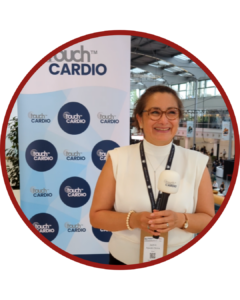 One area attracting growing attention is the use of AI within clinical trials and precision medicine. Dr Jazmin Aguado-Sierra, Lead Scientist at ELEM Biotech, moderated the session Artificial intelligence tools in clinical trials and precision medicine, which explored several emerging applications of the technology.
Among the areas highlighted was the increasing use of large language models (LLMs) by clinicians.
“There will be really interesting posters on LLM use and how clinicians are trying to use LLMs in their day-to-day work,” said Aguado-Sierra.
However, she emphasized that understanding the limitations of these tools is just as important as identifying their potential benefits.
“It’s going to be very interesting to see how it works, how it doesn’t work, and how much you can actually rely on them.”
This question of reliability is becoming increasingly relevant as AI tools move closer to routine clinical workflows. Understanding where these technologies perform well — and where clinical judgement remains essential — will be important as their use expands.
Wearable technologies represent another potential area for AI-enabled precision medicine. Aguado-Sierra highlighted research investigating how data from wearables, combined with AI, could support clinical decision-making around oral anticoagulation. She noted that it will be particularly interesting to explore “how wearables and AI can help you prescribe oral anticoagulation in a much faster and precise way.”
Mobile health technologies are also being used to investigate patient behavior and treatment adherence. Aguado-Sierra highlighted work examining differences in treatment adherence between men and women and how mHealth approaches could help researchers and clinicians better understand these patterns.
Together, these examples demonstrate the breadth of areas in which AI is beginning to influence cardiovascular medicine — from supporting clinicians in their everyday work to interpreting data from wearable devices and potentially helping to personalize treatment decisions.
As these technologies develop, the key question may increasingly shift from whether AI can be used in cardiovascular care to understanding where it adds meaningful clinical value, how reliably it performs, and how it can best complement clinical expertise.
Cite: How AI is moving into clinical trials and precision cardiovascular medicine. touchCARDIO. September 1, 2026.
Disclosure: No funding was received in the publication of this article. Thank you to Dr Jazmin Aguado-Sierra for providing her expert insights. Dr Jazmin Aguado-Sierra is Lead Scientist at ELEM Biotech.
Editor: Nicola Cartridge, Director of Content