“…we now have technology that may help to make some setups available for underdeveloped countries.”
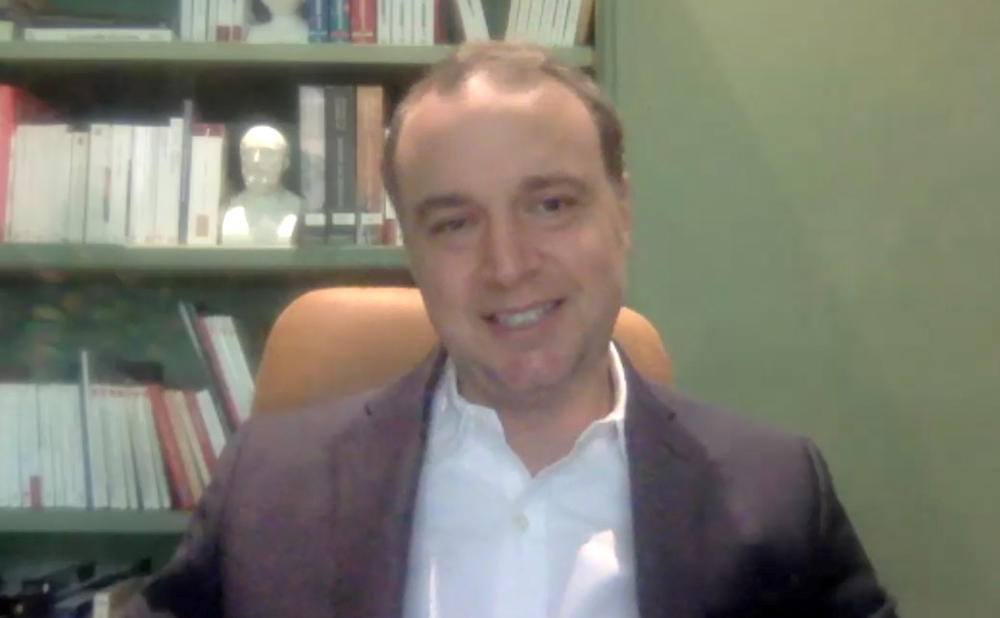
The ESC Congress 2025 in Madrid, held under the theme Cardiology Beyond Borders, highlighted not only scientific breakthroughs but also pressing global health and priorities. Among the many thought leaders at the meeting was Dr José Luis Merino, cardiac electrophysiologist at La Paz University Hospital in Madrid, past president of the European Heart Rhythm Association and member of our editorial board.
In this conversation, Dr Merino reflects on the most practice-shaping late-breaking trials, ranging from the REBOOT study on beta-blockers after myocardial infarction, to POTCAST on potassium optimization in patients with implantable cardioverter defibrillators (ICDs), and AQUATIC on aspirin use in anticoagulated patients. He also shares his perspective on the growing maturity of artificial intelligence in cardiology and how it is beginning to move from proof-of-concept into meaningful clinical application.
Q. What were your key highlights from ESC 2025 so far and your thoughts on this year’s spotlight on global health?
Starting with the theme of the congress, “Cardiology Beyond Borders,” I think it was a very fitting and timely choice. The congress focused attention on key global issues such as equity, the environment and digital health—truly reflecting the idea of crossing borders. For instance, air pollution is a well-established risk factor for cardiovascular disease, and it’s a global challenge that transcends national boundaries. Similarly, advances in technology now offer opportunities to bring essential diagnostic and therapeutic tools to underserved regions. So overall, I believe the theme was both meaningful and well-executed.
Q. Which single ESC 2025 presentation will most directly impact everyday cardiology practice within the next twelve months?
It’s a hard question to choose just one, as there are several sessions I truly enjoy—especially the Hotline Sessions, Late Breakers and clinical trials. These are my favourites at the congress because they provide a first look at the upcoming science. Since it’s difficult to pick just one, I’ll highlight at least two.
One is the REBOOT trial (ClinicalTrials.gov identifier: NCT03596385), a trial evaluating the role of beta blockers in patients after myocardial infarction but with abnormal or mildly depressed ejection fraction.1,2 And interestingly, especially in the group with normal ejection fraction, there was no signal of any potential benefit of beta blockers, and this will significantly affect practice.
In addition, I found the POTCAST trial (ClinicalTrials.gov identifier: NCT03833089) particularly interesting.3,4 This study focuses on patients with implantable cardioverter defibrillators (ICDs), a population that is especially relevant to me as both a cardiologist and electrophysiologist. They demonstrated that increasing plasma potassium levels—within the normal range but towards the upper limit—was associated with improved outcomes on a composite endpoint of mortality, ICD therapies and hospitalization. This effect was primarily driven by a reduction in ventricular events and arrhythmic episodes.
Finally, one particularly interesting study is the AQUATIC trial (ClinicalTrials.gov identifier: NCT04217447), which evaluates the role of adding aspirin on top of anticoagulation in patients with chronic coronary syndrome and atrial fibrillation.5,6 These patients are treated with anticoagulants, but many of them also receive aspirin; this trial proves that this is not a good idea because this increases bleeding, but also embolic events.
Q. This year’s ESC program placed strong emphasis on AI and precision cardiology. Do you think the technology has now reached the stage where it can meaningfully influence patient outcomes, or are we still in the proof of concept phase?
I believe we are now at an inflection point—a transitional phase where the technology has reached a certain level of maturity. In medicine, of course, we must remain cautious. For new clinical indications, robust evidence from randomized trials is essential to confirm efficacy and safety. However, for more practical, day-to-day applications—such as improving patient management or accessing medical information—we’re clearly in that implementation phase. I hope to see broader adoption in the near future. In fact, the ESC is actively working in this direction, and it’s one of the key priorities of the current president, Professor Thomas Lüscher. And the ESC has recently launched its own artificial intelligence app that is helping the clinician to quickly get answers to questions related to guidelines: “I have a patient with this disease – how should I treat this patient?”.7 And immediately, you get the answer by artificial intelligence. So I think this is the way to go.
References
- ClinicalTrials.gov. TREatment With Beta-blockers After myOcardial Infarction withOut Reduced Ejection fracTion”. ClinicalTrials.gov identifier: NCT03596385. Available at: https://clinicaltrials.gov/study/NCT03596385 (accessed 11 September 2025).
- Ibanez B. REBOOT-CNIC: betablockers after infarction with LVEF greater than 40%. Presented at ESC Congress 2025 Madrid, Spain, 30 August 2025. Available at: https://esc365.escardio.org/esc-congress/programme?text=REBOOT%2FBETAMI%2FDANBLOCK%2FCAPITAL-RCT%3A%20Beta-blockers%20after%20MI%20with%20mildly%20reduced%20EF%20%28an%20IPD%20meta-analy&docType=All&days&page=1&vue=cards&v=S14381-hot-line-3 (accessed 11 September 2025).
- ClinicalTrials.gov. Targeted Potassium Levels for Prevention of ICD Therapy. ClinicalTrials.gov identifier: NCT03833089. Available at: https://clinicaltrials.gov/study/NCT03833089 (accessed 11 September 2025).
- Jons C. POTCAST – a Randomized Controlled Trial of Arrhythmia prevention using targeted plasma potassium levels in ICD Patients. Presented at ESC Congress 2025 Madrid, Spain, 29 August 2025. Available at: https://esc365.escardio.org/esc-congress/programme?text=trial%20icd&docType=All&days&session_type=Hot%20Line&session_type=Late-Breaking%20Science&page=1&vue=cards (accessed 11 September 2025).
- ClinicalTrials.gov. Assessment of Quitting Versus Using Aspirin Therapy In Patients Treated With Oral Anticoagulation for Atrial Fibrillation or Other Indication With Stabilized Coronary Artery Disease (AQUATIC). ClinicalTrials.gov identifier: NCT04217447. Available at: https://clinicaltrials.gov/study/NCT04217447 (accessed 11 September 2025).
- Gilard M. The AQUATIC trial. Presented at ESC Congress 2025 Madrid, Spain, 31 August 2025. Available at: https://esc365.escardio.org/esc-congress/programme?text=aquatic&docType=All&days&page=1&vue=cards&v=S14384-hot-line-6 (accessed 11 September 2025).
- ESC. ESC Chat – Your guidelines companion. Available at: https://www.escardio.org/Guidelines/Clinical-Practice-Guidelines/Guidelines-derivative-products/Chat (accessed 11 September 2025).
Disclosure: Dr Jose Merino has received grant/research support from Abbott and honoraria from Biotronik, Microport and Zoll.
Cite: #ESC2025: Dr Jose Merino on the REBOOT, POTCAST and AQUATIC trials. touchCARDIO. September 19, 2025.
Interviewer: Caroline Markham, Head of Strategic Partnerships
Editor: Heather Hall, Managing Editor
This content has been developed independently by Touch Medical Media for touchCARDIO. It is not affiliated with the European Society of Cardiology (ESC). Views expressed are the speaker’s own and do not necessarily reflect the views of Touch Medical Media.
Browse all ESC 2025 content here.
SIGN UP to touchCARDIO!
Join our global community today for access to thousands of peer-reviewed articles, expert insights, and learn-on-the-go education across 150+ specialties, plus concise email updates and newsletters so you never miss out.