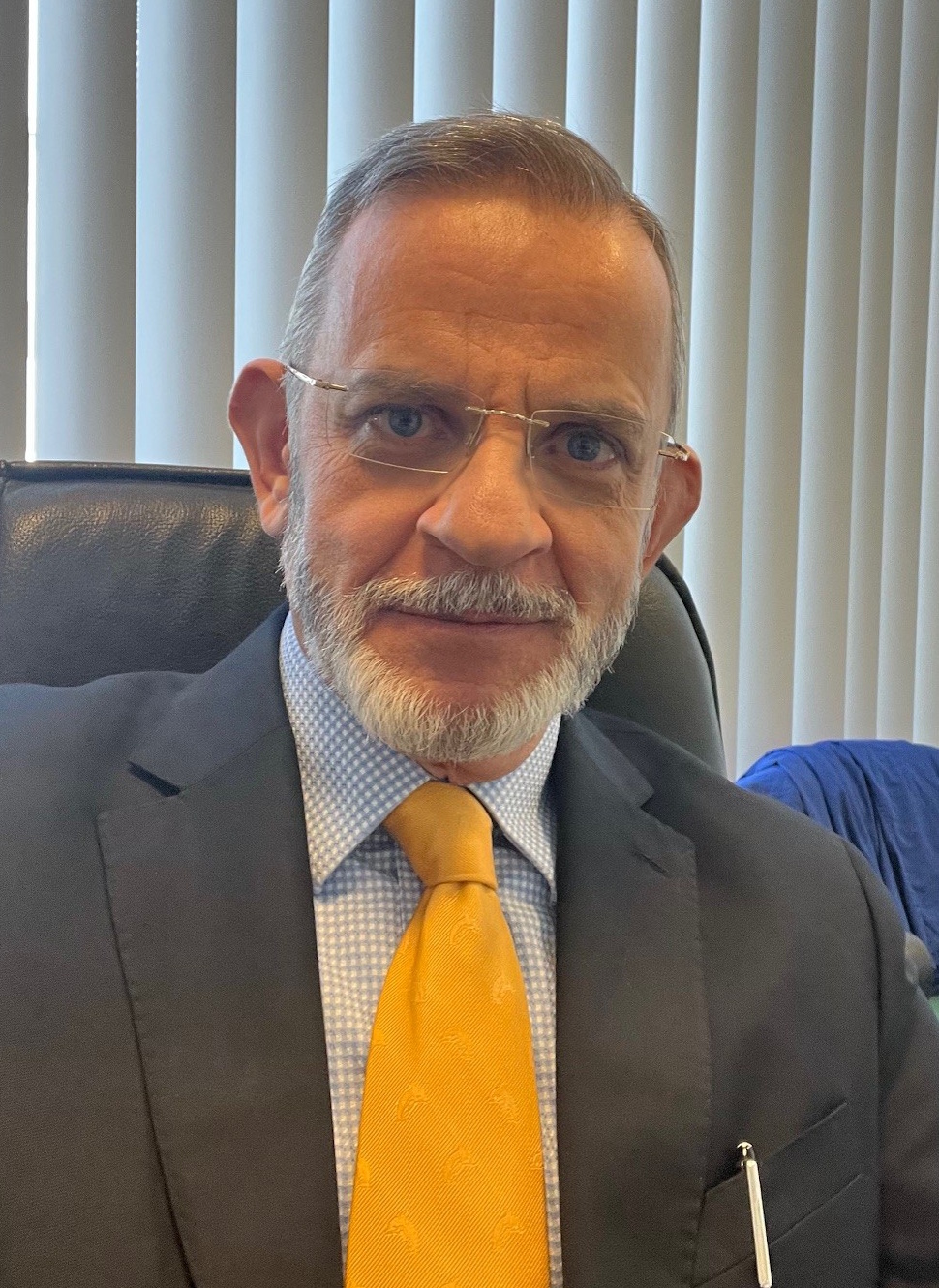
 “…in the last couple of years after the publication of CASTLE AF and CASTLE-HTx, I think there is a very solid scientific basis to promote atrial fibrillation ablation in heart failure patients, and this is growing”
Managing atrial fibrillation in patients with heart failure often raises questions about safety, recurrence, and the right timing for intervention. At ESC Congress 2025, Professor Joachim Ehrlich (St. Joseph’s Hospital in Wiesbaden, Germany) shared his views on how the field is evolving.
In this interview, Professor Ehrlich explains why concerns about complications in heart failure populations may be overstated, how single-shot cryoablation could reduce procedure times and ease pressures on busy electrophysiology centres, and why early ablation—supported by growing evidence and a strong safety profile—may be the key to better long-term outcomes.
Q. In heart failure populations, ablation strategies have often been limited by concerns over procedural risk and recurrence. How do you think single-shot cryoablation will address these concerns, particularly in reduced versus preserved ejection fraction?
Today, we’ve just presented data from the POLAR-HF study (ClinicalTrials.gov identifier: NCT04461691) led by Andreas Boehmer at the Young Investigator Award session. I’m happy to share some thoughts with you today.1,2
So generally, sometimes in discussions, colleagues shy away from ablation in heart failure patients because they think there might be an inadequately high rate of complications, which might interfere with the potential benefit. Overall, in the last couple of years after the publication of CASTLE AF (ClinicalTrials.gov identifier: NCT00643188) and CASTLE-HTx (ClinicalTrials.gov identifier: NCT04649801), I think there is a very solid scientific basis to promote atrial fibrillation ablation in heart failure patients, and this is growing.3-5
The fear of side effects over the potential benefits to my mind is over exaggerated, and we see in the POLAR-HF study, we had a very low complication rate of around 1% in each arm.
Q. ESC 2025 data suggest that single-shot technologies may reduce procedure times and resource utilization. Do you believe these efficiencies could shift referral patterns, especially for centres with limited electrophysiological capacity?
In Germany nowadays, the healthcare system is undergoing a reform, and we are very much urged to treat patients on an outpatient basis; so we need to discharge on the same day. This will be effective in 2026 and everybody’s preparing. Now there is ESC data that suggests that single-shot technologies do reduce procedure times and, accordingly, reduce resource utilization. And I think to that respect it is very important to have proof of concept in the way that we can show that heart failure patients may be safely ablated in the same way as non heart failure patients can.
This may be particularly important for large centres with high numbers and limited electrophysiology (EP) capacity.
Q. Cryoablation appears to have favourable safety profiles in several registries. In your view, does the evidence now justify expanding indications for single-shot cryoablation earlier in disease course?
Cryoablation does have a favourable safety profile compared to other forms of ablation. And in that view, it is very important to see that we can treat patients with heart failure with reduced ejection fraction (HFrEF) and atrial fibrillation safely, and we do treat them early. Early treatment is very important as evidenced by the EAST trial (ClinicalTrials.gov identifier: NCT01288352), and there were data just presented in the same Young Investigator Award session from a Danish registry where patients that were ablated within the first 3 years had a better long-term outcome than those being ablated later on.6,7 So, accordingly, I think the safety profile is important, and this will have implications for the use of cryoablation in the future.
References
- ClinicalTrials.gov. Cryoballoon Pulmonary Vein Isolation for Atrial Fibrillation With Heart Failure (POLAR-HF). ClinicalTrials.gov identifier: NCT04461691. Available at: https://clinicaltrials.gov/study/NCT04461691 (accessed 11 September 2025).
- Boehmer A. Pulmonary vein isolation only for atrial fibrillation with heart failure. Presented at ESC Congress 2025 Madrid, Spain, 30 August 2025. Available at: https://esc365.escardio.org?v=S15282-young-investigator-award-session-in-arrhythmias-pacing-and-electrophysiology (accessed 11 September 2025).
- Sommer P. Main 3-year outcomes of CASTLE-HTx. Presented at ESC Congress 2025 Madrid, Spain, 30 August 2025. Available at: https://esc365.escardio.org?v=S16778-late-breaking-clinical-science-therapeutic-innovations-in-heart-failure (accessed 11 September 2025).
- ClinicalTrials.gov. Catheter Ablation vs. Standard Conventional Treatment in Patients With LV Dysfunction and AF (CASTLE-AF). ClinicalTrials.gov identifier: NCT00643188. Available at: https://clinicaltrials.gov/study/NCT00643188 (accessed 11 September 2025).
- ClinicalTrials.gov. Catheter Ablation for Atrial Fibrillation in patientS With End-sTage Heart Failure and Eligibility for Heart Transplantation (CASTLE-HTx). ClinicalTrials.gov identifier: NCT04649801. Available at: https://clinicaltrials.gov/study/NCT04649801 (accessed 11 September 2025).
- ClinicalTrials.gov. Early Treatment of Atrial Fibrillation for Stroke Prevention Trial (EAST). ClinicalTrials.gov identifier: NCT01288352. Available at: https://clinicaltrials.gov/study/NCT01288352 (accessed 11 September 2025).
- Da Riis-Vestergaard L. Timing of first-time catheter ablation in patients with atrial fibrillation and heart failure – Insights from a Danish nationwide cohort. Presented at ESC Congress 2025 Madrid, Spain, 30 August 2025. Available at: https://esc365.escardio.org?v=S15282-young-investigator-award-session-in-arrhythmias-pacing-and-electrophysiology (accessed 11 September 2025).
Disclosure: Joachim Ehrlich is on an advisory board for, has received honoraria from and is a speaker’s bureau participant with Medtronic.
Cite: #ESC2025: Prof Joachim Ehrlich on atrial fibrillation ablation in patients with heart failure and single-shot cryoablation. touchCARDIO. September 19, 2025.
Interviewer: Caroline Markham, Head of Strategic Partnerships
Editor: Heather Hall, Managing Editor
This content has been developed independently by Touch Medical Media for touchCARDIO. It is not affiliated with the European Society of Cardiology (ESC). Views expressed are the speaker’s own and do not necessarily reflect the views of Touch Medical Media.
Browse all ESC 2025 content here.
SIGN UP to touchCARDIO!
Join our global community today for access to thousands of peer-reviewed articles, expert insights, and learn-on-the-go education across 150+ specialties, plus concise email updates and newsletters so you never miss out.