
Prof. Jens Cosedis Nielsen discusses the DANISH-CRT trial, why targeted electrical mapping did not improve outcomes, and the questions that remain around the future of cardiac resynchronization therapy.

Cardiac resynchronization therapy (CRT) can improve symptoms, quality of life and survival in patients with heart failure and conduction abnormalities, but a substantial proportion of patients do not experience benefit. Observational studies have suggested that placing the left ventricular lead at the site of latest electrical activation could potentially improve outcomes.
 DANISH-CRT tested that strategy in 1,000 patients with heart failure and left bundle branch block. After almost four years of follow-up, targeted placement did not reduce death or first unplanned heart failure hospitalization compared with standard anatomical placement, and the groups were also similar across several secondary outcomes.
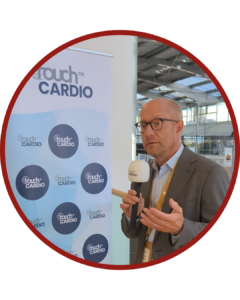
Prof. Jens Cosedis Nielsen, Aarhus University Hospital, Aarhus, Denmark, spoke with touchCARDIO about the findings and what comes next for CRT research.
Don’t miss out on hearing about our latest peer-reviewed articles, expert opinions, conference news, podcasts and more.
Could you give us an overview of DANISH-CRT and its key findings?
This was a national randomized controlled trial in which we included 1,000 patients who had a traditional indication for biventricular pacing. They were randomized to either the control or intervention group and followed for almost four years.
In the intervention group, we mapped the branches of the coronary sinus, identified the latest electrical activation and placed the left ventricular lead there. In the control group, we performed the procedure as it is traditionally done anatomically, placing the lead in a posterolateral, non-apical position.
The primary outcome was time to death or first unplanned hospitalization for heart failure. At the end of follow-up, there was no difference whatsoever between the two groups, and there was also no difference in the other clinical endpoints. At six months we measured ejection fraction, quality of life and New York Heart Association functional class, and the two groups were completely similar. So there was no difference between the intervention and control groups.
What do these findings mean for clinical practice?
This has been discussed for more than a decade: would it be beneficial to identify the latest site of electrical activation and put the lead there?
In almost all observational studies, if electrical activation is measured as late at the site of the LV lead, the patient has a better prognosis. But I think this is the first trial, and will probably be the only trial, showing that you should not use that approach within the individual patient to choose the site. You can place the lead anatomically in a posterolateral position and achieve very good results.
The trial also showed that ejection fraction increased by an absolute 14% after six months. That is really good.
Did any particular patient subgroup appear to benefit from targeted mapping?
We had a set of predefined subgroup analyses, and in none of these subgroups did mapping appear to be beneficial. So we could not identify a subgroup in which this approach should be retained. We also performed CT afterwards to look at where the leads had actually been placed, and they were placed in the same area in the two groups. That also helps explain why the results were as they were.
Has any other data at ESC Congress 2026 stood out to you?
We heard a trial presented by Australian colleagues in patients with moderately reduced ejection fraction but no indication for an ICD. On cardiac magnetic resonance imaging, these patients had scar in the heart. They were randomized either to a prophylactic ICD to prevent sudden death or to an implantable loop recorder. The trial was neutral for the primary outcome.
So we still cannot use CMR to identify these patients and then save them with an ICD.
What are the next important questions for CRT research?
Within biventricular pacing and cardiac resynchronization therapy, we now have to wait for the large trials investigating conduction system pacing, because that is what everybody is talking about.
Will conduction system pacing replace biventricular pacing?
Maybe it will in some patients, but we need the large trials. We will have them within three or four years, but it takes time because device therapy is therapy for life once you put it into patients. You need large trials and long-term follow-up. Otherwise, you cannot rely on the answers you get from those trials.
What are your thoughts on the growing role of artificial intelligence in research and clinical practice?
So far, I have not used it very much myself. That may come in the future.
Of course, I look forward to seeing how it can help us. But I also think we should try not to lose our own ability to think and phrase things because we let a machine do it.
My fear is that, in some years, AI writes the scientific papers and AI does the review. Then what do we end up with? Hopefully, we will find some way to balance it and stay part of the world.
Cite: Does targeted LV lead placement improve outcomes with CRT? Insights from DANISH-CRT touchCARDIO. September 1, 2026.
Disclosure: No funding was received in the publication of this article. Thank you to Prof. Jens Cosedis Nielsen for providing his expert insights. Prof. Jens Cosedis Nielsen has nothing to disclose in relation to this content.
Editor: Nicola Cartridge, Director of Content
touchCARDIO coverage of ESC Congress 2026: This content has been developed independently by Touch Medical Media for touchCARDIO. It is not affiliated with the ESC. Views expressed are the speaker’s own and do not necessarily reflect the views of Touch Medical Media.