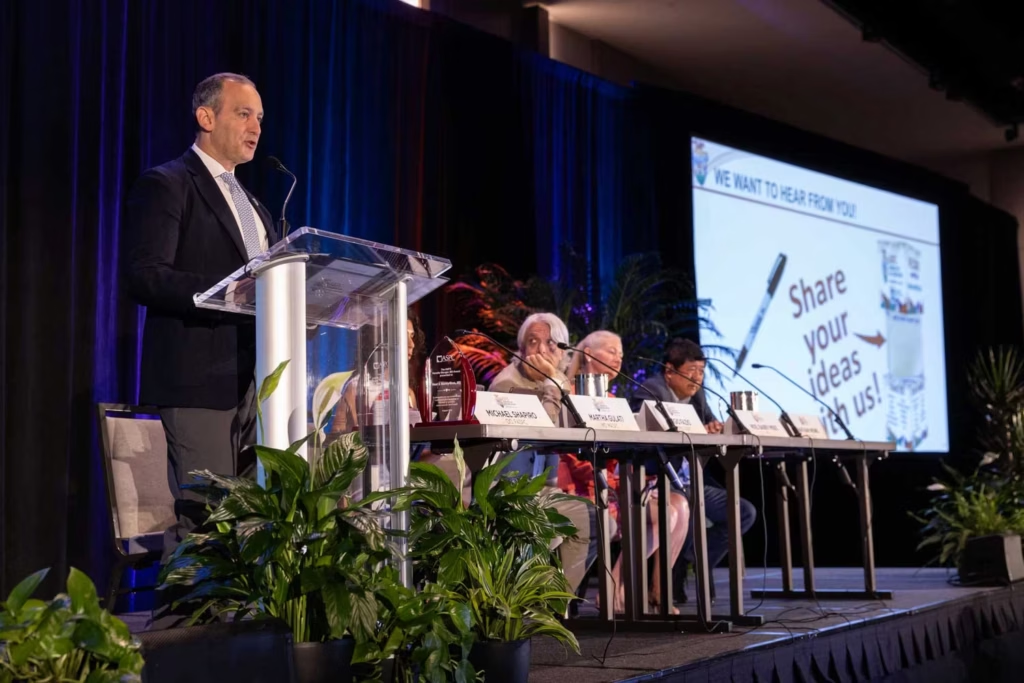
 This August, Boston will host one of the most influential gatherings in cardiovascular medicine as the American Society for Preventive Cardiology (ASPC) convenes its 2025 Congress on Cardiovascular Disease Prevention. Set for 1–3 August 2025 at the Omni Boston Hotel at the Seaport, Boston, MA, USA, the meeting will bring together global experts, showcase cutting-edge research, and feature more than 200 abstract posters.
A major highlight is the debut of the ASPC Cardiovascular Disease Prevention Training Academy, a new pre-conference course designed to equip early-career clinicians with core skills in preventive cardiology—part of ASPC’s growing investment in future leaders.
This year’s Scientific Sessions will include spirited debates on key controversies—from blood pressure targets to the use of colchicine—and a spotlight on advances in lipoprotein(a) management through a transatlantic collaboration with the European Atherosclerosis Society. ASPC will also honour three pioneers in prevention: Drs Helen Hobbs, Harmony Reynolds and Roger Blumenthal.

With record attendance expected and a packed agenda, ASPC 2025 is poised to shape the next chapter in prevention. In this Q&A, we spoke with the ASPC Executive Director Stacy Manthos about what makes this year’s meeting especially significant—and what it means for the future of heart health.
What key elements of the ASPC 2025 Congress program make it a must-attend event for those working in the field of cardiovascular disease?
The ASPC Congress on CVD Prevention is the only conference dedicated entirely to preventing cardiovascular disease, offering an intimate environment where attendees can engage with globally recognized faculty and acquire practical insights for immediate patient application.
How does the congress aim to foster professional growth?
The ASPC Congress emphasizes practical, evidence-based knowledge on cardiovascular disease prevention, equipping attendees with actionable strategies they can immediately apply in clinical practice. This focus on real-world application, combined with access to leading experts, enhances skills, deepens understanding, and supports career advancement in the field of preventive cardiology.
Are there any new initiatives being launched at this year’s meeting?
The ASPC is excited to introduce the ASPC Cardiovascular Disease Prevention Training Academy at this year’s Congress. This comprehensive one-day program offers an in-depth introduction to preventive cardiology, covering essential topics such as risk assessment, lipid management, interpretation of landmark clinical trials, and women’s heart health. Through case-based learning, interactive panel discussions, and sessions on emerging therapies and key issues in cardiovascular disease prevention, participants gain practical insights. The Academy also provides networking opportunities with faculty and ASPC leadership, fostering connections with experts in the field. The program wraps up with an overview of ASPC initiatives and guidance on how to get involved with the organization. Tailored for those looking to enhance their expertise, this Academy empowers participants to make meaningful contributions to the advancing field of preventive cardiology.
For further information on the scientific program and to register for APC 2025, visit our website: https://www.aspconline.org/events/aspc-2025-congress-on-cvd-prevention

About Stacy Manthos
Stacy Manthos is an experienced Executive Director in the nonprofit healthcare sector, skilled in organizational management, strategic planning, and building strong relationships. She has led the American Society for Preventive Cardiology for over 10 years and holds a B.S. in Nutrition and Fitness from Florida State University.
Disclosures: This short article was prepared by touchCARDIO and ASPC. No fees or funding were associated with the publication of this article.
Cite: Preventive Cardiology Takes Center Stage at ASPC 2025. touchCARDIO. 30 June 2025
Editor: Heather Hall, Managing Editor
SIGN UP to touchCARDIO!
Join our global community today for access to thousands of peer-reviewed articles, expert insights, and learn-on-the-go education across 150+ specialties, plus concise email updates and newsletters so you never miss out.