
Syncope
An Introduction to Syncope
Syncope refers to a sudden loss of consciousness, followed by a rapid and complete recovery. Vasovagal syncope can usually be treated by understanding potential triggers and taking precautions, but syncope due to underlying conditions, such as arrhythmias, require treatment targeting the diagnosed cause.
Browse the content below where leading experts discuss the latest data in video interviews and short articles from our conference hub, and browse the selection of peer-reviewed articles from our journal portfolio.
Our supporting partners do not constitute an endorsement of the content on this page.


Immediate 14-day ambulatory ECG monitoring did not significantly reduce recurrent syncope at 1 year in the ASPIRED trial, but it more than doubled the detection of clinically significant arrhythmias and enabled earlier diagnosis and treatment. Following the presentation, Prof. Matthew Reed, from the Usher Institute, University of Edinburgh, and the Emergency Medicine Research Group Edinburgh, spoke about the origins of ASPIRED, the importance of earlier investigation for patients with syncope, and how this approach might be incorporated into routine care.

touchCARDIO Future Leaders 2026 Following the successful introduction last year of our touchCARDIO Future Leaders, we are delighted to announce that nominations are now open for the 2026 edition. This initiative celebrates the next generation of pioneers in cardiology, those whose passion, ...
The touchCARDIO journal Heart International has once again seen an increase in its Journal Impact Factor (JIF), rising from 1.9 in 2024 to 2.3 in 2025.

Physician burnout is at a critical point. In this episode, Nicky speaks with Dr Alfred Atanda about why so many physicians are burning out and what can be done to change the trend. From personal experience to system-wide solutions, Dr Atanda shares valuable insights on improving physician well-being and building a more effective healthcare culture.

Postural tachycardia syndrome (PoTS) is a chronic condition, predominately affecting women between the ages of 15 and 50, and prevalence is estimated to be 0.2%.1,2 It is characterised by an abnormal response by the autonomic nervous system to changes in posture causing lightheadedness ...
Visionary Voices: Season 1, Episode 7 Join us in this episode as Trudie Lobban, Founder and Trustee of Arrhythmia Alliance, discusses the remarkable work of Pace4Life. This innovative charity repurposes cardiac electronic devices, delivering critical heart care to communities in low- ...

Vasovagal syncope (VVS), the most common cause of fainting, is predominantly caused by an overactive vagal tone, leading to asystole, sinus bradycardia, or atrioventricular block.1 This condition, a form of neurocardiogenic syncope, is characterized by a pronounced vagal reflex that ...

The Leiden University Medical Centre, Netherlands, has been recognized worldwide as a Center of Excellence for syncope, a common and yet all too often misdiagnosed symptom. Roland Thijs has received this prestigious award in recognition of its pioneering work for ...

Vasovagal syncope is common, and while it is usually associated with a benign prognosis, it results in significant physical and psychological morbidity for affected individuals. Despite comprehensive understanding of the underlying pathophysiology, there have been few definitive therapeutic advances until ...

Dr Artur Fedorowski (Associate Professor of Cardiovascular Research, Lund University, Lund, Sweden) gave us an update on what's new in Syncope, from the European Heart Rhythm Association (EHRA) Virtual Meeting 2021. Questions: How can we reduce the heterogeneity of syncope diagnosis ...

Coverage of the STAR Symposia: Session 1 - POTS (Part 1), chaired by Prof Richard Sutton and Prof Satish Raj. Filmed at the Heart Rhythm Congress (HRC) 2019 in Birmingham, UK, October 2019 in partnership with Arrhythmia Alliance. touchCARDIO.com is an independent information ...

Coverage of the STARS Symposia - Session 1: POTS (Part) presented at HRC 2019 and chaired by Prof Richard Sutton and Prof Satish Raj. View Part 1 here: Filmed at the Heart Rhythm Congress (HRC) 2019 in Birmingham, UK, October 2019 in partnership with Arrhythmia ...

Dr Nick Gall (STARS Medical Advisory Committee; King’s College Hospital, London, UK) spoke to us about surprising things that make you faint, as well as postural tachycardia syndrome and the use of medication as treatment at the 2019 Heart Rhythm ...

Professor Richard Sutton (STARS Medical Advisory Committee, National Heart and Lung Institute, Imperial College, London, UK and University of Lund, Lund, Sweden) spoke to us about vasovagal syncope, or the common faint, at the 2019 Heart Rhythm Congress (HRC) in Birmingham, ...

We enjoyed meeting Roopinder Sandhu, who had travelled all the way from University of Alberta, Edmonton, AB, Canada to present on the place of syncope units in Canada at HRC 2019. Here Dr Sandhu talks about the key take home messages ...
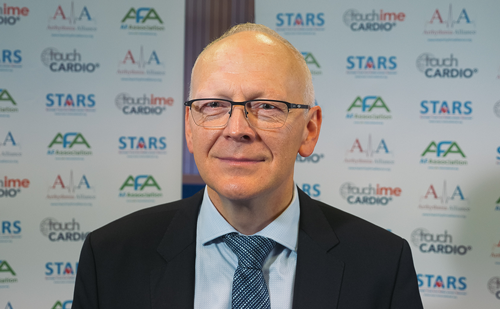
We spoke to Dr Artur Fedorowski (STARS Medical Advisory Committee and STARS Sweden Executive Committee; Department of Clinical Science, Lund University and Department of Cardiology, Skåne University Hospital, Malmö, Sweden) at the 2019 Heart Rhythm Congress (HRC) in Birmingham, UK, ...

London Syncope Meeting - Nicholas Gall Interview...
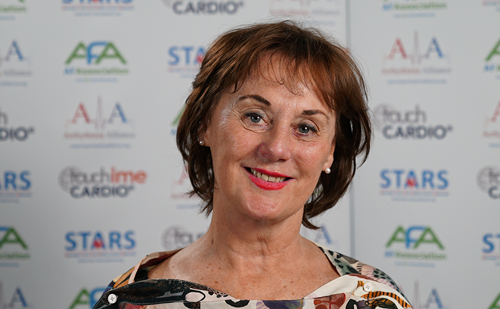
London Syncope Meeting 2019 - Rose Anne Kenny Interview...
Log into your Touch Account
Keep track of your clinical interests and newsletter subscriptions.
Sign up with an Email
Or use a .
Register now for FREE access
Already registered? Login below.
