 “…we need everybody, clinicians, industries and healthcare providers to work together and try just to improve our lifestyle”
From the late-breaking trials presented at EHRA 2026 that you have seen so far, which do you believe will most immediately influence clinical decision-making in arrhythmia management?
I think that, you know, probably for atrial fibrillation of ventricular arrhythmias, you know, are the two late-breaking trials that I attended were the most important. I think that, especially in the era of pulsed field ablation (PFA), it is important that we look ahead, and probably the major advancement in the technologies will allow us just to increase the success rate in patients over atrial fibrillation, especially in patients with a persistent atrial fibrillation. This is really a hot topic, very debatable, and we have been struggling for many years just how to approach these patients. And I think that the advance of PFA and new technologies, again, probably will give us the right to treat and cure, this category of patients.
As far as ventricular arrhythmias are concerned, I think that there’s another hot topic and we are still waiting for a novel catheter design to approach non-ischemic and ischemic ventricular tachycardia. So this is probably the field of the future because so far PFA has been created for atrial fibrillation and not really much, you know, for ventricular fibrillation. So the ventricular tachycardia, the ventricular arrhythmia need just to be approached properly and beyond the RAF, the radiofrequency source. Also we have PFE and this will probably be the future.
How have the latest advances in catheter ablation technologies and strategies shifted your approach to treating complex atrial fibrillation cases?
Again, I think that, you know many companies are in the field and they are offering a new catheter design, a new modality of apply PFA or maybe a catheter capable of application to both radiofrequency and PFA, and this is could be probably the great shift in the future. And again, I think that is not only patients with paroxysmal atrial fibrillation where you need to isolate pulmonary veins, but also, I might say, just working out the pulmonary veins and treating a patient with a persistent or long-lasting persistent atrial fibrillation. That means, you know, approaching the procedural wall or other anatomy location, which are deemed to be really crucial for the maintenance of atrial fibrillation.
If I can add something else, probably a few people are talking about hybrid ablation. That means putting the surgeon and the electrophysiologist together. And again, I do believe that the technological advancement in the last few years allows us to treat even, you know, those patients with a very long lasting, that means patients with more than two years in atrial fibrillation, and hybrid ablation should be considered for, you know, those patients, and the new technologies obviously would give us the opportunity just to treat them.
Were there any notable updates in device therapy, such as leadless pacing or ICD innovations, that could change current practice standards?
That’s a good question. Let’s start from the leadless pacemaker. I think that we already had a crucial advancement in the last few years, especially when we are able to implant the dual chamber leadless pacemaker. I think people still have concerns about how to use these new devices instead of a conventional endovascular pacemaker, but I do really think that this could be the future as long as the manufacturers are able just to increase the longevity of the leadless pacemaker. Then we are in the era of physiological conduction system pacing; that means approaching a patient who need to have a very good resynchronization. Beyond the conventional cardiac resynchronization (CRT) pacemaker or implantable cardioverter defibrillator (ICD)-CRT, now we are able just to treat this patient in planting the lead into the interventricular septum reaching the same result. So I think this is another portion of the field in which people are much more involved and try to simplify the resynchronization therapy by using just one catheter into the sector. And again, the leader pacemaker will be the future, even for physiological pacing, because we already have a prototype able just to be implanted in the septum, and this is probably one of the options that we have in the very near future.
What emerging data on risk stratification and prevention of sudden cardiac death stood out to you, particularly for high-risk patient populations?
This is a quite debatable issue. I think that, you know, sudden cardiac death is still there, and we have been struggling for, I don’t know how many decades. I think at least in Europe, the European Society of Cardiology, try just to identify which action we need to implement to reduce the risk of a sudden cardiac death: number one, I think that prevention is important. The education of a general population, even from a young age, and how to behave, how just to have good food intake, exercise. I understand that these are, you know, maybe normal conventional recommendations, but we still have this problem and find it hard to make people understand that prevention starts from the beginning. Then we have, obviously, a lot of modalities, like the stress test, the CT scan, the angiogram, and we try to figure out which patients need to be investigated quite early, especially, you know, people who belong to a family already well-known in respect to cardiovascular disease. So I think that it’s a long way to go and it’s not really easy, because sudden cardiac death still remains one of the main issues in the cardiovascular disease.
Looking ahead, which research gaps or unanswered questions highlighted at EHRA 2026 should be priorities for future clinical investigation?
Sudden cardiac death remains at the top of our priorities, even though we have data showing that there is a sort of decrease of cardiovascular death, of cardiovascular events in the last two decades. I do really believe that the epidemiology is really crucial because, I give you just one example: there is a quite, I’m not saying huge, but the difference between northern Europe, how the people over there behave, the food intake, which food they choose, and southern Europe. The Mediterranean style of living is still quite important just to increase the longevity of people, and then I think that the industries and the pharmaceutical industry as well need just to stay along with us and just try just to improve lifestyle and try just to emerge with drugs important for reducing, for example, the increase of diabetes, for example. We have too many obese people and what we call the metabolic diseases, which is quite important to define cardiovascular risk.
In other terms, I think that the epidemiology images and how to approach the general population in terms of cardiovascular risks still presents a gap. And I think that we need everybody, clinicians, industries and healthcare providers to work together and try to improve our lifestyle.
Already registered? Login below.
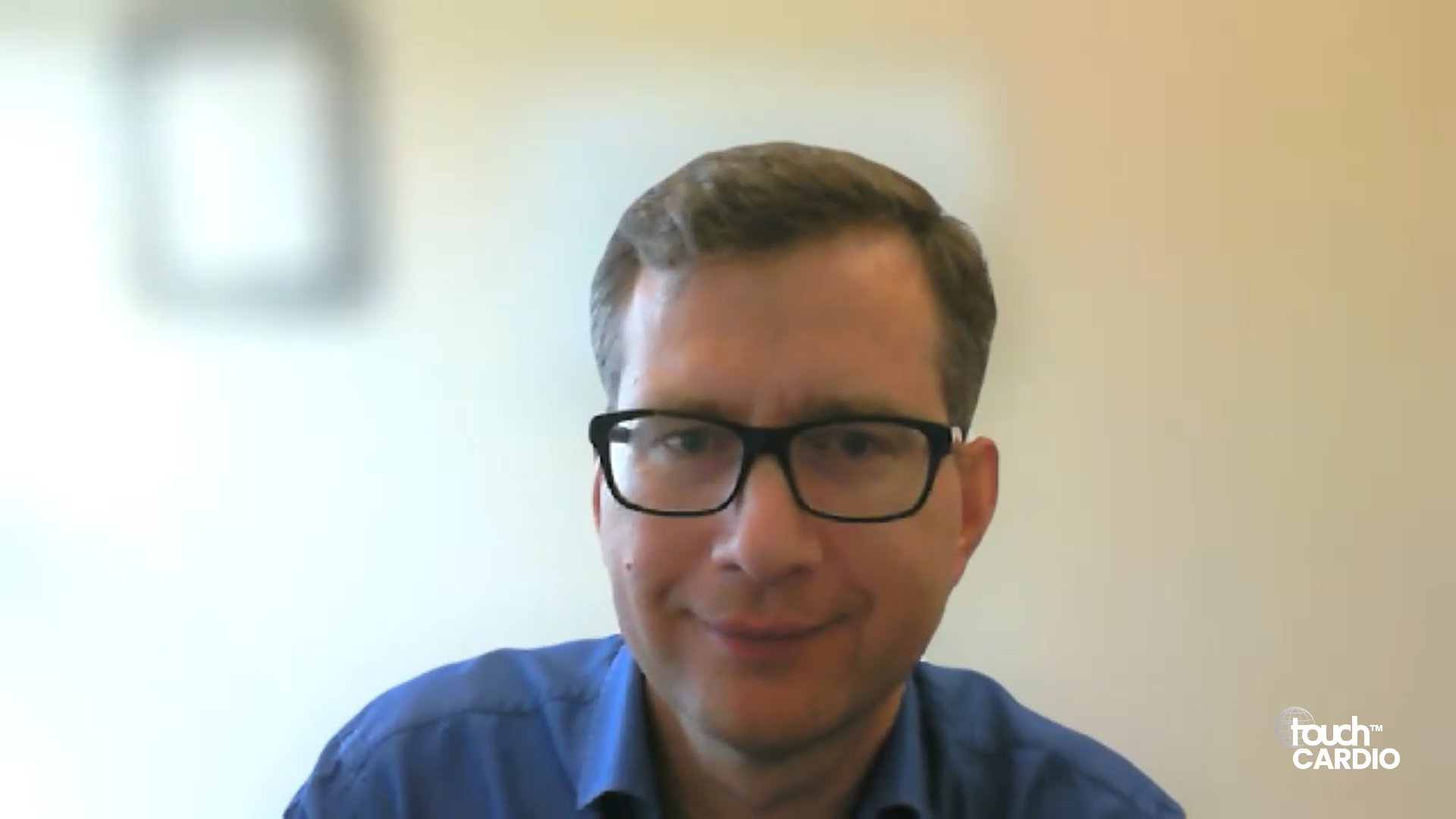
Cite: Tondo C. From Persistent AF to Ventricular Arrhythmias: EHRA 2026 Highlights Practice-Changing Advances. touchCARDIO. 8 June 2026.
Editor: Heather Hall, Managing Editor
Interviewer: Caroline Markham, Head of Strategic Partnerships
Disclosures: Claudio Tondo wishes to disclose advisory board work for Abbott Medical, Boston Scientific and Medtronic, honoraria from and speaker’s bureau participation with Abbott Medical and Boston Scientific. This interview was conducted as part of our coverage of the European Heart Rhythm Association (EHRA) 2026 conference and does not constitute endorsement from EHRA or the ESC. This article was edited by the touchCARDIO team utilizing AI as an editorial tool (ChatGPT (GPT-4o) [Large language model]. https://chat.openai.com/chat.) The content was developed and edited by human editors. Views expressed are the author’s own and do not necessarily reflect the views of Touch Medical Media. No funding was received in the publication of this article.
Related content:

SIGN UP to touchCARDIOLOGY!
Join our global community today for access to thousands of peer-reviewed articles, expert insights and learn-on-the-go education across 150+ specialties, plus concise email updates and newsletters so you never miss out.