Prof. Jonathan Kalman discusses the rapid uptake of pulsed field ablation, its potential advantages over thermal ablation, and how the role of AF ablation may continue to expand.

Atrial fibrillation ablation has changed substantially in recent years, with pulsed field ablation (PFA) increasingly replacing traditional thermal techniques such as point-by-point radiofrequency ablation and balloon cryoablation. The shift has been driven by evidence showing comparable efficacy alongside a different safety profile and shorter, more reproducible procedures.
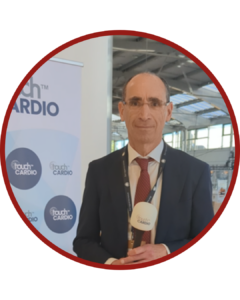 At ESC Congress 2026, Prof. Jonathan Kalman (Royal Melbourne Hospital and University of Melbourne) participated in the symposium State-of-the-art lecture on ablation for atrial fibrillation: new insights, better outcomes. He spoke with touchCARDIO about the rapid evolution of PFA, which patients may benefit, and how the indications for AF ablation could broaden further.
Don’t miss out on hearing about our latest peer-reviewed articles, expert opinions, conference news, podcasts and more.
What have been some of the most important recent advances in AF ablation?
It is certainly a really exciting time in atrial fibrillation ablation. Over the last few years, we have seen a sea change in the way we approach ablation in terms of the technology.
For many years this was thermal ablation — largely radiofrequency point-by-point ablation, but also balloon cryoablation for pulmonary vein isolation. In the last few years, this has been almost completely replaced by a new technique called pulsed field ablation.
Randomized trials have shown similar efficacy with pulsed field ablation compared with thermal ablation. Large registries now show that more than 75% of AF ablations are being performed with pulsed field ablation, and I would suspect that the figure is closer to 95% by late 2026.
In paroxysmal AF, randomized trials show that the efficacy of pulsed field ablation is comparable, and these are still the early iterations of the technology.
There are also specific safety factors. This technology is very specific to myocardial cells, so we do not see the same collateral damage. In large registries of more than 40,000 patients, for example, we have seen zero atrioesophageal fistulas, zero permanent or long-term phrenic nerve injuries and zero significant pulmonary vein stenosis.
The other important aspect is that it is a faster procedure. It is not that we are in a hurry; it is that the efficacy and reproducibility of the procedure are very good. It has democratized AF ablation because everybody can perform the procedure in a similar timeframe, and I think that is really important for waiting lists, planning and scheduling.
Are there particular patient groups who may benefit from pulsed field ablation?
We now have good randomized evidence in persistent atrial fibrillation, including the SPHERE persistent AF trial.
We also have a first-line randomized trial in persistent AF, with patients randomized to either ablation or medical therapy, showing much better outcomes with pulsed field ablation as first-line therapy. In the registries, we have seen more than a 50% increase in the number of AF ablations being performed over only around 14 months early in the uptake of pulsed field ablation.
I think that is partly because it is a shorter procedure, but also because we are probably expanding into patient subgroups that we may not previously have taken on as frequently — patients with larger atria and older cohorts. I think we will start to see evidence on the impact of that over the coming years.
How do you see the role of AF ablation evolving?
AF ablation has traditionally been very focused on symptom improvement, and now we are starting to see a signal that we can broaden that.
We now have a Class IA recommendation for AF ablation in patients with heart failure, with improvements in heart failure hospitalizations and improvements in ejection fraction over the long term. We also now have two trials looking at patients late after AF ablation indicating that it may be safe to stop oral anticoagulants because AF burden has been reduced so substantially that stroke risk has diminished tremendously.
These were ALONE-AF and OCEAN-AF. They are recent major publications that I think are starting to expand the population for ablation. When patients ask us, “Doctor, can I have this procedure and come off my blood thinners?”, in the past we would have said no, because that was not an indication for the procedure.
Now we have to say that, for significant populations, that may well be not only safe but the most appropriate thing to do.
What impact can AF ablation have on patients’ quality of life?
Many people really dislike being on oral anticoagulants. In terms of quality of life, symptom improvement has been the dominant reason to perform AF ablation. But we now also know more about the impact on psychological distress, anxiety and depression. Up to one-third of our AF patients have severe psychological distress.
Randomized data now show that ablation compared with medical therapy markedly improves people’s mental health, and I think that is another important big tick for AF ablation.
Cite: How is pulsed field ablation changing atrial fibrillation treatment? touchCARDIO. September 2, 2026.
Disclosure: No funding was received in the publication of this article. Thank you to Prof. Jonathan Kalman for providing his expert insights. Prof.Jonathan Kalman has nothing to disclose in relation to this content.
Editor: Nicola Cartridge, Director of Content
touchCARDIO coverage of ESC Congress 2026: This content has been developed independently by Touch Medical Media for touchCARDIO. It is not affiliated with the ESC. Views expressed are the speaker’s own and do not necessarily reflect the views of Touch Medical Media.