Introduction: The unpredictable and sporadic nature of arrhythmias can cause a challenging diagnosis during a single ECG test. Often a more comprehensive method to detect an arrhythmia is necessary. Wearable cardiac devices, such as the CardiacSense watch, have the ability to continuously monitor heart rate. CardiacSense also enables patients to record an on-the-spot ECG when they feel symptoms.
Methods: The patient has been experiencing episodes of palpitations, describing an increased heart rate, since November 2022. These events last up to 30 minutes and occur multiple times a day. Following these symptoms, the patient sought medical attention, attending A&E during another episode of palpitations. The patient reports that during the wait for medical advice at A&E, their palpitations subsided. Subsequently, during the ECG recording that the A&E department initiated, no abnormalities were revealed and the patient was dismissed. As symptoms restarted a day later, a further ECG test was completed at the patient’s general practice (GP) surgery.
The patient typically feels palpitations in the afternoon or evening time; therefore, as anticipated at their 7 am ECG appointment, no symptoms were felt and again the ECG test displayed no abnormalities. The symptoms were attributed to anxiety, rather than a cardiac condition.
The patient decided to purchase a CardiacSense watch (Figure 1) and was able to record an on-the-spot ECG test whenever they felt palpitations. Over the course of a week, whenever the patient felt palpitations, they initiated multiple ECG tests by selecting ‘record ECG’ on the device home screen and placing their thumb and index finger on the watch’s ECG sensors. The CardiacSense reports are immediately available to view via the mobile application.
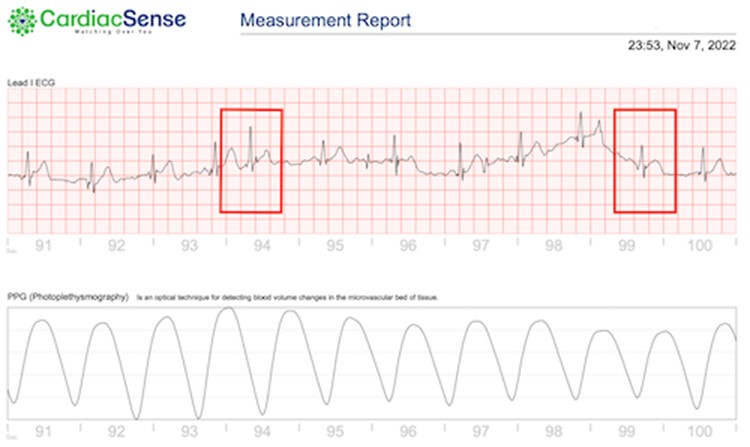
Results and conclusions: The ECG reports generated by the CardiacSense watch were analyzed by the patient’s GP. Four of the CardiacSense ECG reports displayed abnormal tracings (Figure 2), with results indicative of Wolff-Parkinson-White syndrome. The GP has since referred the patient to a specialized cardiac unit for further evaluation and treatment. This case study report signifies the potential of wearable devices to take ECG recordings during palpitations, which may enhance the detection of arrhythmias that are unable to be diagnosed with a single ECG recording. ❑
Figure 1: The CardiacSense medical watch
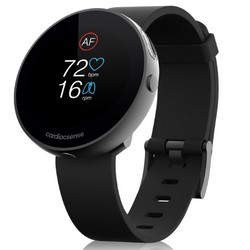
Figure 2: Page 10/23 of CardiacSense report showing slurring upstroke ‘delta’ wave
Disclosures: Declaration of conflict of interest, as CardioLogic distribute CardiacSense in the UK.