
Heart Failure
An Introduction to Heart Failure
Much progress has been made in the management of heart failure in patients with reduced ejection fraction (HFrEF) and the development of therapies for HF with preserved ejection fraction is ongoing. Promising new therapeutics in HF include a dual-acting angiotensin receptor-neprilysin inhibitor, soluble guanylate cyclase (sGC) stimulator and a cardiac myosin activator. It is hoped that gene therapy will be available for patients with HFrEF in the near future.
Browse the content below where leading experts discuss the latest data in video interviews and short articles from our conference hub, and browse the selection of peer- reviewed articles from our journal portfolio.
Our supporting partners do not constitute an endorsement of the content on this page.



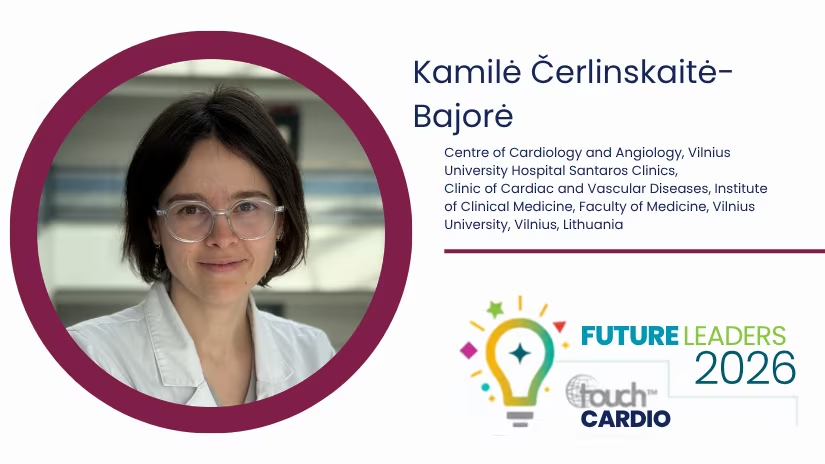
Dr Kamilė Čerlinskaitė-Bajorė is a cardiologist and touchCARDIO Future Leader 2026. In this interview, she discusses her journey into cardiology and heart failure, the mentors who have shaped her career, the challenges of caring for complex patients, and the importance of resilience and support from colleagues. She also shares her enthusiasm for advances in heart failure treatment and emerging research into heart failure with preserved ejection fraction.

Meet the cardiologists shaping the future of the specialty. Our touchCARDIO Future Leaders 2026 are rising stars nominated by the cardiology community for their contributions to research, clinical practice and innovation. Discover the clinicians and researchers challenging convention, advancing care and driving progress across cardiology.


Prof. Thomas Thum discusses Phase II findings from the HF-REVERT study, what they suggest about patient selection for RNA-based therapies, and how these approaches could offer new ways to treat heart failure.

Prof. Maria Bäck discusses the first dedicated ESC Guidelines on cardiac rehabilitation, why personalization and multidisciplinary care are central to their recommendations, and the importance of increasing referral to rehabilitation programs.

Dr Jazmin Aguado-Sierra discusses how computational models and digital twins are helping researchers understand different heart failure phenotypes, and how artificial intelligence can accelerate analysis and support more personalized approaches.

Phase IIb LUMINARA data presented at ESC Congress 2026 suggest that AZD5462 may improve cardiac remodeling and hemodynamics across different heart failure phenotypes, with the lowest dose producing the strongest remodeling signal in HFrEF.

Prof. Adriaan Voors discusses the evolving role of GLP-1 receptor agonists in heart failure, the importance of patient selection and monitoring, and how emerging evidence and new guidelines could influence clinical practice.

Eplontersen did not significantly reduce cardiovascular mortality and recurrent cardiovascular events compared with placebo in the overall CARDIO-TTRansform population, according to late-breaking results presented at ESC Congress 2026 in Munich, Germany.

New heart failure guidelines, practice-changing Hot Line data, artificial intelligence and new evidence in atrial fibrillation and cardiac amyloidosis are among the highlights to look out for on the opening day of ESC Congress 2026.


The FDA has granted orphan drug designation to AFTX-201 (Affinia Therapeutics; Waltham, MA), an investigational gene therapy, for the treatment of BAG3-associated dilated cardiomyopathy (BAG3-DCM), according to the company. The designation follows a recent FDA Fast Track designation for the same program.

Ionis Pharmaceuticals (Carlsbad, CA, USA) and AstraZeneca (Cambridge, UK) have announced that the phase 3 CARDIO-TTRansform trial (NCT04136171) of eplontersen (Wainua®; Ionis Pharmaceuticals and AstraZeneca) did not meet its primary efficacy endpoint in adults with transthyretin-mediated amyloid cardiomyopathy (ATTR-CM).

A new international expert consensus document has updated the universal definition of heart failure, with a greater focus on earlier detection, standardized classification and individualized risk reduction.

A proteomic analysis presented as late-breaking research at ENDO 2026 found that treatment with lorundrostat was associated with reductions in several circulating biomarkers linked to heart failure risk in patients with uncontrolled hypertension.

touchCARDIO Future Leaders 2026 Following the successful introduction last year of our touchCARDIO Future Leaders, we are delighted to announce that nominations are now open for the 2026 edition. This initiative celebrates the next generation of pioneers in cardiology, those whose passion, ...
Log into your Touch Account
Keep track of your clinical interests and newsletter subscriptions.
Sign up with an Email
Or use a .
Register now for FREE access
Already registered? Login below.
