
Electrophysiology
An Introduction to Electrophysiology
Electrophysiologists specialise in the diagnosis and treatment of arrhythmias. Advances in diagnostic techniques, such as implantable loop recorders, which have advanced to smaller and more reliable devices, and more recently the introduction of injectable loop recorders, have improved patient satisfaction and outcomes. Treatments such as ablation therapy are constantly evolving and research into the timing and treatment sequencing is ongoing.
Browse the content below where leading experts discuss the latest data in video interviews and short articles from our conference hub, and browse the selection of peer-reviewed articles from our journal portfolio.
Our supporting partners do not constitute an endorsement of the content on this page.

touchCARDIO Future Leaders 2026 Following the successful introduction last year of our touchCARDIO Future Leaders, we are delighted to announce that nominations are now open for the 2026 edition. This initiative celebrates the next generation of pioneers in cardiology, those whose passion, ...

At EHRA 2026, new research presented by Professor Elaine Chew explores how music-based digital tools can enhance arrhythmia detection and enable personalized, AI-driven approaches to cardiovascular diagnosis and therapy.
Dr Andreas Boehmer joins the Heart International Editorial Board with expertise in electrophysiology
We are pleased to announce the appointment of Dr Andreas Boehmer to the Heart International Editorial Board. Dr Boehmer is an Electrophysiology Fellow at St. Josefs-Hospital Wiesbaden in Germany, where he works within the Department of Cardiology and conducts research focused on interventional therapies for cardiac arrhythmias and the treatment of patients with tachycardiomyopathy.

In this Q&A, Dr Camm shares his thoughts on how meaningful impacts can be made by early career cardiologists, the possibility of artificial intelligence (AI) for the future of cardiology and the entirety of medicine, and his hopes for the future.

We are delighted to introduce touchCARDIO Future Leader 2025, Dr Jenna Spears, currently in her final year of electrophysiology fellowship training at the Hospital of the University of Pennsylvania, Philadelphia, PA, USA. Originally from Oakville, Ontario, Dr Spears completed her medical ...
The touchCARDIO journal Heart International has once again seen an increase in its Journal Impact Factor (JIF), rising from 1.9 in 2024 to 2.3 in 2025.

Physician burnout is at a critical point. In this episode, Nicky speaks with Dr Alfred Atanda about why so many physicians are burning out and what can be done to change the trend. From personal experience to system-wide solutions, Dr Atanda shares valuable insights on improving physician well-being and building a more effective healthcare culture.
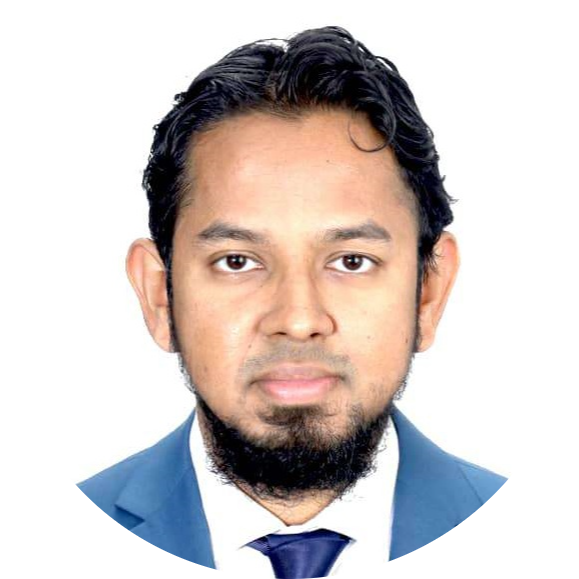
In this Q&A, he shares insights into his career journey, the experiences that shaped his path and what excites him most about the future of cardiology.
The first-in-human implantation of a leadless pacing system occurred already more than 10 years ago.1 The first-generation ventricular leadless pacemaker could provide only asynchronous ventricular pacing (ventricular, ventricular, inhibited [VVI], or ventricular, ventricular, inhibited, rate response [VVIR]), limiting its indications to ...
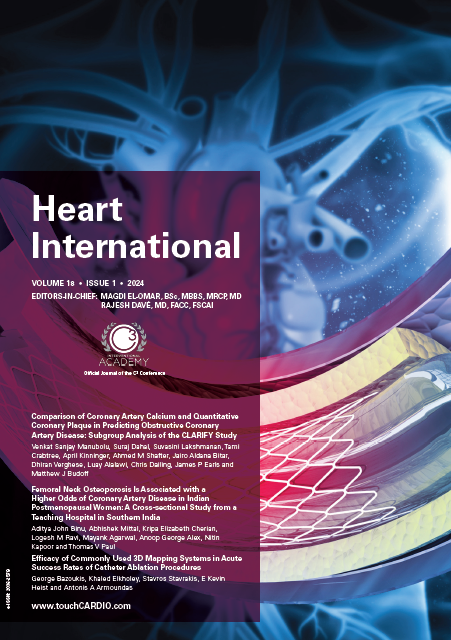
touchCARDIO is delighted to announce that Heart International has received an impressive new Impact Factor of 1.9 in the 2024 Journal Citation Reports (JCR). This achievement marks a notable increase from last year’s Impact Factor of 0.2 and highlights the journal’s growing influence in the cardiology field.

The third European Pacing Symposium (EPS) meeting took place on Friday 1 December 2023 in London, UK. The event, which brings together an international faculty to discuss the latest advances in cardiac pacing and implantable cardioverter-defibrillators (ICDs) provides attendees with practical sessions ...

Highlights Failure to target and deliver durable radiofrequency lesions to all functionally critical areas has been identified as an important cause of ventricular tachycardia recurrence and is particularly challenging in deep midmyocardial or very extensive substrate where point-by-point radiofrequency ablation ...

Dr Andrew Krahn, President, Heart Rhythm Society (HRS), discusses the upcoming Heart Rhythm 2023 meeting (May 19-21, 2023, New Orleans, LA, USA), and the HRX 2023 conference (September 21-23, 2023, in Seattle, WA, USA) hosted by the Heart Rhythm Society (HRS), a non-profit organization ...
Dr Andrew Krahn, President, Heart Rhythm Society (HRS), presents the HRS aims and goals for the coming year, and their dedication to improving the care of patients with heart rhythm disorders through innovation, education, research, and advocacy. Dr Krahn also ...

Prof Ben Freedman (The Heart Research Institute, Newtown, Australia) shares the key strengths of the Arrhythmia Alliance, why the society is so unique and why he is proud to be a supporter. He particularly praises their patient advocacy and endeavours ...

It was a pleasure to talk to Dr Sanjiv Narayan (Stanford University, Stanford, CA, USA) around the implementation of artificial intelligence and machine learning models in the field of arrhythmias and cardiac electrophysiology. Questions What are the major challenges in ...
We were delighted to talk to Dr Sanjiv Narayan (Stanford University, Stanford, CA, USA) around the applications of computer modelling and machine learning in the field of arrhythmias and cardiac electrophysiology. Questions What are artificial intelligence or machine learning and ...
Background: Conduction system pacing has the potential to offer improved outcomes compared with other forms of pacing. His bundle pacing (HBP) can be technically more difficult to achieve and pacing thresholds can be unreliable compared with left bundle branch area ...
Log into your Touch Account
Keep track of your clinical interests and newsletter subscriptions.
Sign up with an Email
Or use a .
Register now for FREE access
Already registered? Login below.
