
Arrhythmia
An Introduction to Arrhythmia
Advances in the understanding of arrhythmias has improved diagnosis and led to the discovery of new therapies. Large-scale studies into the direct oral anticoagulation treatment paradigm continue to improve patient selection, and technological advances such as hand-held ECG devices and implantable loop recorders have been shown to aid in arrhythmia detection.
Browse the content below where leading experts discuss the latest data in video interviews and short articles from our conference hub, and browse the selection of peer- reviewed articles from our journal portfolio.
Our supporting partners do not constitute an endorsement of the content on this page.

...

Immediate 14-day ambulatory ECG monitoring did not significantly reduce recurrent syncope at 1 year in the ASPIRED trial, but it more than doubled the detection of clinically significant arrhythmias and enabled earlier diagnosis and treatment. Following the presentation, Prof. Matthew Reed, from the Usher Institute, University of Edinburgh, and the Emergency Medicine Research Group Edinburgh, spoke about the origins of ASPIRED, the importance of earlier investigation for patients with syncope, and how this approach might be incorporated into routine care.

Dr Jonathan Piccini discusses rhythm control in patients with atrial fibrillation and heart failure with preserved ejection fraction, the growing role of catheter ablation, and the evidence still needed to define its impact on cardiovascular outcomes.

Prof. Jonathan Kalman discusses the rapid uptake of pulsed field ablation, its potential advantages over thermal ablation, and how the role of AF ablation may continue to expand.

Dr Bjarne Nes discusses findings from the NEXAF trial, which showed that a one-year exercise program reduced atrial fibrillation burden in patients with non-permanent AF.

Direct oral anticoagulant (DOAC) therapy reduced adverse clinical events compared with no anticoagulation in patients with atrial fibrillation (AF) at intermediate risk of stroke, according to results from the SINGLE-AF trial presented during a Hot Line session at ESC Congress 2026.1


ESC Congress 2026 begins in Munich on August 28, bringing four days of new cardiovascular research, clinical guidance and discussion. Early data released ahead of the meeting provide a first look at some of the science to come.

At EHRA 2026, Professor Claudio Tondo presents his highlights on advances in ablation and device technologies, led by pulsed field ablation, showcasing a rapidly evolving landscape in the treatment of complex arrhythmias.

Ventricular fibrillation (VF) is characterized by rapid (>300 beats a per minute), irregular electrical activation with variable electrocardiographic waveforms that prevents coordinated myocardial contraction, resulting in immediate loss of cardiac output.1 It most commonly occurs in the context of coronary ...
touchCARDIO Future Leaders 2026 Following the successful introduction last year of our touchCARDIO Future Leaders, we are delighted to announce that nominations are now open for the 2026 edition. This initiative celebrates the next generation of pioneers in cardiology, those whose passion, ...

At EHRA 2026, new research presented by Professor Elaine Chew explores how music-based digital tools can enhance arrhythmia detection and enable personalized, AI-driven approaches to cardiovascular diagnosis and therapy.
Dr Andreas Boehmer joins the Heart International Editorial Board with expertise in electrophysiology
We are pleased to announce the appointment of Dr Andreas Boehmer to the Heart International Editorial Board. Dr Boehmer is an Electrophysiology Fellow at St. Josefs-Hospital Wiesbaden in Germany, where he works within the Department of Cardiology and conducts research focused on interventional therapies for cardiac arrhythmias and the treatment of patients with tachycardiomyopathy.


The official abstracts from the Heart Rhythm Congress (HRC) 2025

S3E1_What impact does sleep have on physicians and their patients? We all know sleep is important, but what happens when physicians don’t get enough? In this episode of Visionary Voices, we welcome Associate Professor Grace Vincent from ...
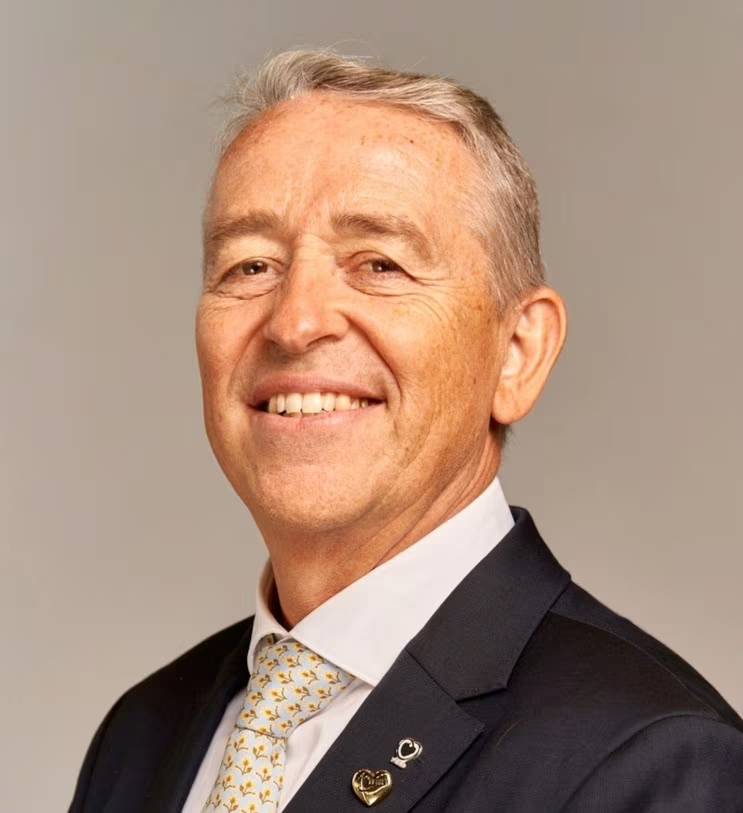
Late-breaking data from ESC 2025 are set to reshape daily cardiology practice, with Dr José Luis Merino highlighting trials that challenge long-standing use of beta blockers, underscore the value of potassium optimization in ICD patients, and caution against routine aspirin in anticoagulated individuals, while also pointing to artificial intelligence as an emerging tool in clinical decision-making.

Log into your Touch Account
Keep track of your clinical interests and newsletter subscriptions.
Sign up with an Email
Or use a .
Register now for FREE access
Already registered? Login below.
