
As 2025 draws to a close, we’re celebrating another remarkable year of growth, collaboration and innovation at touchCARDIO.
From thought-provoking expert interviews and peer-reviewed research to dynamic conference coverage and an expanding portfolio of medical education, this year has been defined by meaningful conversations and impactful learning. We’ve had the privilege of engaging with leading clinicians, researchers and partner societies across the globe – bringing together diverse voices to support the cardiology community with timely, accessible and authoritative content.
As we reflect on the past 12 months, we’re proud to highlight the moments, milestones and stories that shaped our year.
Here are just some of the standout highlights from 2025.
Conference and news coverage
We’ve been hard at work this year covering leading international conferences, including ESC, ObesityWeek®, and AHA, highlighting ground-breaking policy, and the latest clinical updates. From news roundups to rapid-fire news blasts, we’ve made staying informed about the latest in cardiovascular care quicker and easier than ever.
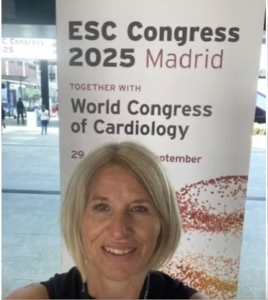 This year our Head of Strategic Partnerships, Caroline Markham, attended the ESC 2025 meeting onsite. Speaking on the conference, Caroline said:
“I had the great privilege to attend #ESC2025 and meet with some amazing leading voices in the field. The unifying theme of this year’s meeting was “Cardiology Beyond Borders,” looking at how cardiovascular disease is woven into broader global health challenges — from disparities in care access to climate, pandemics and social determinants of health. touchCARDIO was delighted to be a part of the largest global cardiology congress with the focus on the cardiology community coming together to prevent, diagnose and treat cardiovascular disease.”
Top 5 most viewed interviews
1. ESC2025: Dr Haran Burri on the late-breaking trials in cardiac implantable electronic devices
Cardiac implantable electronic devices are undergoing rapid change, with conduction system pacing and new strategies for resynchronization therapy challenging long-standing standards. At ESC 2025, Dr Haran Burri highlights late-breaking trial data that could redefine best practice and underscores the importance of careful technique and training to translate these advances into meaningful patient benefit.
The POLAR-HF trial shows that early, simplified pulmonary vein isolation is safe and effective in patients with atrial fibrillation and reduced ejection fraction, reinforcing the importance of timely rhythm control without the need for complex ablation strategies.
3. Héctor Bueno on the 2025 ESC consensus statement on mental health and cardiovascular disease
Mental health disorders are highly prevalent in patients with cardiovascular disease, and Dr Héctor Bueno underscores the need for systematic screening, multidisciplinary “psycho-cardio” teams and stronger evidence to guide integrated care and future guidelines.
Long-term results from the DanGer Shock trial confirm that early mechanical circulatory support can improve survival in STEMI-related cardiogenic shock. Professor Peter Clemmensen highlights the need to individualise treatment, particularly in elderly patients, and calls for greater emphasis on prevention and global cardiovascular health to ensure advances translate across diverse healthcare settings.
5. Dr Jose Merino on the REBOOT, POTCAST and AQUATIC trials
Late-breaking data from ESC 2025 are set to reshape daily cardiology practice, with Dr José Luis Merino highlighting trials that challenge long-standing use of beta blockers, underscore the value of potassium optimization in ICD patients, and caution against routine aspirin in anticoagulated individuals, while also pointing to artificial intelligence as an emerging tool in clinical decision-making.
Top viewed news articles

-
- ESC calls for vaccination to be recognized as a pillar of cardiovascular prevention
- ObesityWeek® 2025: A new era for cardiovascular-kidney-metabolic health
- Ifetroban improves heart function in Duchenne muscular dystrophy: Promising phase II trial results from FIGHT
- Takeaways from AHA 2025: Key clinical trials shaping the future of cardiovascular care
Launch of the ‘Future Leaders’ initiative
Introducing the touchCARDIO Future Leaders 2025
 As touchCARDIO approaches 20 years of providing education for busy cardiologists, we are looking ahead—and the future certainly looks bright. This year marks the launch of our first-ever touchCARDIO Future Leaders initiative, created to recognise the outstanding emerging talent shaping the field. Our inaugural cohort represents a group of innovators and rising experts who are poised to influence and transform cardiology in the years to come.
Following the success of this year’s programme, we’re excited to announce that nominations for the 2026 cohort will open early next year.
Journal highlights
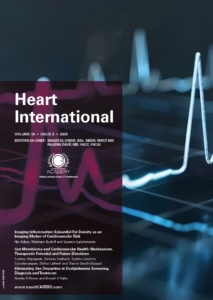 Heart International marked a second consecutive rise in its Journal Impact Factor (JIF) this year, increasing from 1.9 in 2024 to 2.3 in 2025. The JIF reflects the average citations of articles published, highlighting the journal’s growing influence.
The Winter 2025 issue of Heart International is now online here.
Top 5 most viewed articles
Drug-coated balloon (DCB)-only angioplasty is a ‘leave nothing behind’ approach, necessitating a modified percutaneous coronary intervention strategy and mindset to accept coronary dissection during lesion preparation while simultaneously achieving an optimal angiographic outcome. Drawing from the lessons learned during the plain old balloon angioplasty era, it is imperative to re-familiarize ourselves with the strategies of dissection avoidance, recognition and management. With our increasing clinical and research experience in DCB angioplasty, we present our approach to managing dissections, emphasizing the distinction between safe and unsafe dissections, techniques for modifying unsafe or indeterminate dissections into a safe category and the appropriate consideration of bailout stenting (BOS). We provide examples of each dissection category, including those that can be safely left, those requiring BOS and those that necessitate modification through techniques such as further dilatation with specialized balloons (such as non-compliant, scoring and cutting balloons) and prolonged balloon inflation.
2. Advancements in Leadless Pacemakers: What the Second-generation Micra AV2 Brings to Cardiac Care
Leadless pacemakers are considered one of the major technological advancements in cardiology in recent years. Many efforts are made to provide physiological atrio-ventricular (AV) pacing. With the first-generation leadless ventricular, dual, dual (VDD) pacemaker, Micra AV (Medtronic, Inc., Minneapolis, MN, USA), a high variability in AV synchrony was reported. A second generation, Micra AV2, is now available for clinical use, promising smarter and higher automatic AV synchrony. This article reviews the different improvements proposed for this new device.
Cardiovascular disease (CVD) remains a leading cause of morbidity and mortality among women, particularly those of childbearing age and middle-aged women, who face heightened risks due to physiological changes, stress and systemic barriers. Women of colour and those from low socioeconomic backgrounds are disproportionately affected. This article evaluates the effectiveness of community-based participatory research (CBPR) in reducing CVD risk among midlife women, emphasizing the cultural relevance of interventions as a critical factor for success.
4. Coronary Dissection – Back to the Future – Finding Good in the Bad!
It has been recognized for decades that dissections occur as a mechanism of balloon angioplasty. A successful angioplasty result contains some degree of intimal splitting and disruption, which usually heals well. Nonetheless, some dissections are extensive, leading to serious ischaemic complications. The concept of therapeutic coronary dissection started evolving in the 1970s and seems to be a favourable mechanism for drug delivery in the current era of drug-coated balloons.
This article will primarily focus on studies undertaken to understand the mechanism of balloon angioplasty and the morphological changes in the plaque post-balloon angioplasty. In the early days of balloon angioplasty, there was an enormous interest in dissections, mainly to prevent acute vessel closure events and to address the importance of their occurrence in relation to vessel restenosis. We will review the historical background, studies defining the clinical, angiographic and morphological patterns of the dissection spectrum and various currently evolving management strategies.
5. Understanding Diabetic Cardiomyopathy: Insulin Resistance and Beyond
Diabetic cardiomyopathy (DC) is a syndrome of heart failure occurring in patients with diabetes mellitus (DM), independent of other risk factors. It is a relatively underdiagnosed condition with a prolonged subclinical phase. There is an abundance of studies put forward to explain the underlying pathogenic mechanisms observed in this condition. This review aims to summarize the evidence available in contemporary medical literature with regard to the molecular mechanisms, abnormalities in signalling and metabolism and structural and functional abnormalities manifesting as DC.
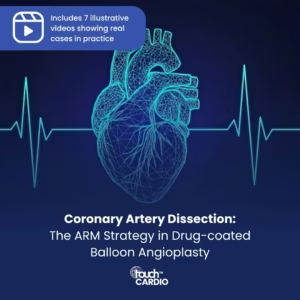 Check out our first Heart International article to include a series of illustrative videos showing real cases in practice: “Coronary Artery Dissection Series – Back to the Future II: The ARM Strategy in Drug-coated Balloon Angioplasty”.
Videos 1–2: Safe-to-leave dissections
Videos 3–4: Need-to-stent dissections
Videos 5–6: Modifying dissections into a safe category using repeated balloon dilatations or prolonged high inflations
Video 7: Need-to-stent after failed modification attempts
Visionary Voices podcast
At Touch, we understand that healthcare professionals learn in different ways. Visionary Voices expands our content variety, ensuring we offer educational resources that cater to all learning preferences. Season 2 recently wrapped, with series 3 on the way…
Top 5 most viewed episodes
1. Why are so many physicians burning out, and how can we break the cycle?
Physician burnout is at a critical point. In this episode, Nicky speaks with Dr Alfred Atanda about why so many physicians are burning out and what can be done to change the trend. From personal experience to system-wide solutions, Dr Atanda shares valuable insights on improving physician well-being and building a more effective healthcare culture.
2. Pace4Life: A sustainable mission to save lives globally
Join us in this episode as Trudie Lobban, Founder and Trustee of Arrhythmia Alliance, discusses the remarkable work of Pace4Life. This innovative charity repurposes cardiac electronic devices, delivering critical heart care to communities in low- and middle-income countries. Trudie shares powerful stories from their missions in Bangalore and Nigeria, highlighting how recycled devices are saving lives and bringing hope to those in need.
3. What impact does sleep have on physicians and their patients?
We all know sleep is important, but what happens when physicians don’t get enough? In this episode of Visionary Voices, we welcome Associate Professor Grace Vincent from CQUniversity’s Appleton Institute. A leading expert on sleep and shift work, Grace explores how disrupted sleep affects physician health in both the short and long term, as well as its impact on safety and performance. We also discuss what this means for patient outcomes and share practical strategies to manage sleep loss.
4. Could senolytics change the treatment landscape of age-related diseases?
In this episode, Nicky speaks with Prof. Georgina Ellison-Hughes from King’s College London about the groundbreaking field of senolytics and their potential to advance the treatment of age-related diseases. From understanding the science behind cellular senescence to how senolytic drugs work and what early clinical trials reveal, this episode explores an exciting frontier in longevity medicine.
5. What’s on the horizon for continuing medical education? Insights from touchIME
In this episode, we explore the future of continuing medical education (CME) with the team behind touchIME. Hannah Fisher and Matthew Goodwin share insights into global and US trends, the importance of patient inclusivity and how educational outcomes are evolving to better measure the direct impact of learning on clinical practice and patient care.
Highlighting society partnerships
Our collaborations with leading professional societies continue to be a cornerstone of our work.
This year, we strengthened these partnerships to amplify expert voices, support emerging leaders and bring forward the latest developments shaping cardiovascular care. Below are some of the key moments from our society collaborations in 2025.
Preventive Cardiology Takes Center Stage at ASPC 2025
From debates on blood pressure targets to the launch of a brand-new Training Academy, the 2025 Congress on CVD Prevention is shaping up to be ASPC’s most impactful yet. We spoke with ASPC’s Executive Director, Stacy Manthos on what to expect.
Pulsed field ablation receives NICE backing for atrial fibrillation
NICE officially recommended pulsed field ablation for treating atrial fibrillation. In collaboration with Arrhythmia Alliance, we spoke to Dr Richard Bala about what this means for the future of AF care.
Early-career cardiologists and researchers face a complex landscape: they must navigate the increasing clinical complexity of cardiovascular disease, stay abreast of rapid scientific developments and manage the pressures of clinical, academic and personal responsibilities. Recognising the need for greater support, collaboration and knowledge sharing among young professionals in the field, the EAS Young Fellows launched AtheroTalk – a podcast created by and for early-career healthcare professionals and researchers.
Highlighting meeting proceedings
Our proceedings from the CVI Fellows Program 2025 and Heart Rhythm Congress 2025 highlight the cutting-edge work driving progress in cardiovascular medicine and electrophysiology. Together, they reflect our commitment to amplifying new scientific contributions and supporting the next generation of cardiology leaders.
As we wrap up an exciting year of growth, new content formats and meaningful collaborations, we’re immensely proud of the progress made across touchCARDIO. With even more innovations, insights and educational initiatives on the horizon, we look forward to bringing you an even stronger year of cardiology content in 2026.
Cite: touchWRAPPED 2025: Your top reads, watches and listens in cardiology. touchCARDIO. 5 December 2025.
Editor: Victoria Smith, Senior Content Editor.
Disclosures: This article was created by the touchCARDIO team utilizing AI as an editorial tool (ChatGPT (GPT-4o) [Large language model]. https://chat.openai.com/chat.) The content was developed and edited by human editors. No funding was received in the publication of this article.
Related content:

SIGN UP to touchCARDIOLOGY!
Join our global community today for access to thousands of peer-reviewed articles, expert insights and learn-on-the-go education across 150+ specialties, plus concise email updates and newsletters so you never miss out.