



Hypertension knowledge gaps: A patient–caregiver comparison from a tertiary care centre in Northern India
Hypertension is the leading modifiable risk factor for global cardiovascular disease, responsible for an estimated 10.8 million deaths and more than 200 million disability-adjusted life years annually.1 Despite the availability of effective pharmacological and lifestyle interventions, prevalence continues to rise, particularly in low- and middle-income countries (LMICs), where over three-quarters of all cases now occur.2 The condition’s […]
Who’s on your bench? The five people every high performer needs
Your clinical career is shaped not only by what you know, but by who helps you navigate what comes next. Join us for the final episode in our mini-series exploring non-clinical skills that can help you thrive in your clinical career. Today we explore how to develop the right team around you to support your […]
Artificial Intelligence to Enhance Detection of Sudden Cardiac Death
At EHRA 2026, Ben Petrazzini discussed new research that shows AI can improve identification of sudden cardiac death in electronic health records, enabling more accurate large-scale studies and advancing prevention strategies.
Optimizing the role of balloon aortic valvuloplasty in the TAVI era
Balloon aortic valvuloplasty (BAV) has experienced a complex evolution in clinical practice, transitioning from an early therapeutic innovation to limited use, and more recently to a redefined role in the era of transcatheter aortic valve implantation (TAVI). In the first of our new practice pearls series, In Rhythm, Dr Gustavo Samaja (Sanatorio Colegiales, Buenos Aires, Argentina) shares practical insights into the contemporary role of BAV, including patient selection, procedural strategies, and its use as both a bridge and a decision-making tool. He also discusses how evolving healthcare systems and resource considerations continue to shape the balance between BAV and TAVI in everyday clinical practice.
01. Hypertension knowledge gaps: A patient–caregiver comparison from a tertiary care centre in Northern India
02. Who’s on your bench? The five people every high performer needs
03. Artificial Intelligence to Enhance Detection of Sudden Cardiac Death
04. Optimizing the role of balloon aortic valvuloplasty in the TAVI era
Hypertension is the leading modifiable risk factor for global cardiovascular disease, responsible for an estimated 10.8 million deaths and more than 200 million disability-adjusted life years annually.1 Despite the availability of effective pharmacological and lifestyle interventions, prevalence continues to rise, particularly in ...
Your clinical career is shaped not only by what you know, but by who helps you navigate what comes next. Join us for the final episode in our mini-series exploring non-clinical skills that can help you thrive in your clinical ...

Sudden cardiac arrest (SCA) in young adults (typically defined as individuals younger than 40 years) has emerged as an important yet under-recognized public health concern. Recent estimates suggest an incidence of approximately 1–4 cases per 100,000 person-years, underscoring the clinical and epidemiological relevance ...
After decades of debate, patent foramen ovale (PFO) closure is now a well-established strategy to reduce recurrent stroke in patients aged 18–60 years who have had a PFO-associated stroke.1 Patients who underwent PFO closure continue to have a higher stroke risk ...


We often focus on clinical excellence, but spend less time developing broader skills that could help us better lead with purpose and build more fulfilling, impactful careers. In this episode, part of a mini-series in partnership with LEADderm, Dr Jennifer Soung and Denise Mann explore how clinicians can engage with the media to educate, empower and extend their impact beyond the clinic.

Hypertension affects over 1.4 billion adults worldwide and remains the leading modifiable risk factor for global cardiovascular (CV) morbidity and mortality. It is responsible for an estimated 10.8 million deaths annually and contributes significantly to the global burden of ischaemic heart disease, ...

Hypertension has been associated with increased cardiovascular morbidity and mortality, as well as with overall elevated all-cause mortality.1 Prevalence increases with age, affecting 28.5% of US individuals aged 20–44 years, 58.6% of those aged 45–64 years and 76.5% of those aged 65 years and older.2 In ...

Whether you’re working in an agency, in a clinical role, or in academia, many healthcare professionals wonder what lies behind the doors of the pharmaceutical industry. In this episode, Gina is joined by Sian Kneller, Director of Global Content Design at GSK and Founder of The Agency Advantage, to unpack exactly what it takes to make the leap. With over 20 years’ experience, from medical writer to leading global medical affairs strategy, Sian now helps others make a successful move into pharma. In this episode she shares what the transition really looks like, which transferable skills matter most, and how you can stand out in a competitive field.

Cardiovascular medicine continues to advance at a remarkable pace, driven by innovation, interdisciplinary collaboration and an ever-deepening understanding of disease mechanisms. As patient populations age and chronic conditions become increasingly complex, the field stands at the intersection of precision therapy, ...

Heart failure (HF) is a complex and progressive clinical syndrome that significantly impacts morbidity, mortality and quality of life (QoL).1 On a global scale, HF has become an escalating public health concern, affecting more than 64 million individuals in 2017, and this ...
Heart failure (HF) is a global health burden, with a 2019 prevalence of 711.90 per 100,000 population, totalling 56.19 million cases and 5.05 million years lived with disability, despite only modest declines since 1990.1 Recent years have shown an uptick in prevalence, driven by ageing populations ...
The Evolut Low Risk trial (Transcatheter Aortic Valve Replacement With the Medtronic Transcatheter Aortic Valve Replacement System In Patients at Low Risk for Surgical Aortic Valve Replacement; ClinicalTrials.gov identifier: NCT02701283) provides reassuring evidence that transcatheter aortic valve replacement (TAVR) ...

Epicardial adipose tissue (EAT) is a fat collection directly adjacent to the myocardium and coronary vasculature, lacking any separation and sharing the same circulation.1,2 This anatomy enables direct signalling between EAT and the surrounding tissue, positioning EAT as a central ...

Cardiovascular disease (CVD) is one of the major causes of morbidity and mortality throughout the world.1,2 While traditional risk factors are managed intensively, many individuals continue to have considerable residual risk, and emerging factors such as inflammatory mediators are being ...

In this episode, Nicky speaks with Prof. Georgina Ellison-Hughes from King’s College London about the groundbreaking field of senolytics and their potential to advance the treatment of age-related diseases. From understanding the science behind cellular senescence to how senolytic drugs work and what early clinical trials reveal, this episode explores an exciting frontier in longevity medicine.

Coronary artery dissection is a common occurrence during lesion preparation and after drug-coated balloon (DCB) inflation.1 Recent DCB studies focusing on coronary dissections have shown a few key findings: Their angiographic incidence varies between 35 and 60%. Non-flow-limiting dissections left untreated had ...


Learn about barriers to effective long-term weight management and pharmacological treatment options for obesity.

Introducing the touchCARDIO Future Leaders 2025
This year, we are celebrating our inaugural touchCARDIO Future Leaders to recognize the outstanding talent that has entered our field in recent years. These individuals are set to innovate and transform cardiology in the years to come.
Selected by our expert Editorial Board and contributing faculty, we are excited to highlight their achievements so far and explore what the future holds for them. We had the pleasure of learning about their unique journeys, career motivations, and the inspirations that have shaped their paths. They also shared their perspectives on the most exciting advancements in ophthalmology today and their hopes for the future of the field.

“In my experience, meaningful impact comes from a combination of three things: finding an issue that is meaningful (not just to you but to the wider community), committing to that issue, and bringing people with you on that journey. Issues could be clinical, academic, societal or beyond. We only have so much time to contribute, and so selecting meaningful projects is so important.”

“Cardiology remains a dynamic specialty, with rapid advancements essential to addressing cardiovascular disease, which continues to be a leading cause of mortality worldwide.”

“Women remain understudied, underdiagnosed and undertreated when it comes to cardiovascular disease. Changing the paradigm is critically important, and I am committed to help drive that change.”

“What inspires me most is the complete research journey—from initial conception through development to seeing work evolve into meaningful scientific contributions. While I’ve been extraordinarily fortunate to achieve career highlights like presenting at prestigious conferences and publishing in leading journals, the true joy lies in the personal growth throughout the process: acquiring new skills, exchanging innovative ideas and the creative freedom of blue-sky thinking.”

“Our interventions can be life-saving, restore cardiac function and dramatically improve quality of life. What stays with me the most, however, are the moments after the procedures, sitting with patients in clinic, hearing them say they’re able to walk their dog again, travel, or play with their grandchildren. Those stories remind me why this work matters.”

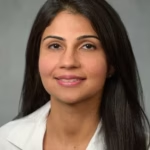


Editorial Board
Introducing the Editorial Board of Heart International, who support our mission to advance medical knowledge and practice by ensuring the integrity, relevance, and impact of the content we publish. Together, we strive to foster a vibrant academic community and contribute to the continuous improvement of healthcare worldwide.

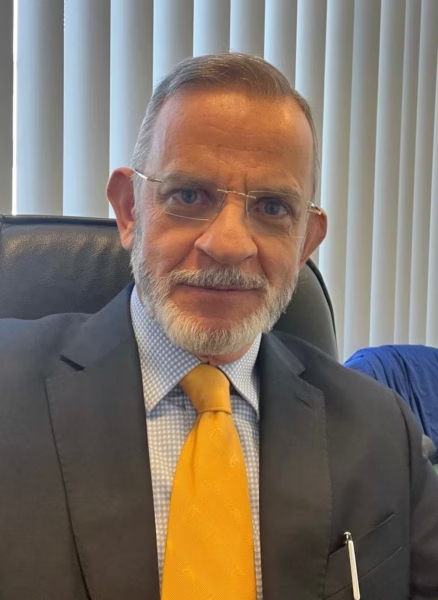
Magdi El-Omar
Manchester, UK
Interventional Cardiology
Biography
Dr Magdi El-Omar is a consultant interventional cardiologist at the Manchester Heart Centre and an honorary senior lecturer at the University of Manchester, Manchester, UK. He graduated from St Bartholomew’s Hospital, London, UK, in 1988 and undertook his postgraduate general medical training in London and Oxford. He then completed his general cardiology training in Birmingham, Oxford and Wales before subspecializing in coronary intervention. The latter included a 2.5-year clinical/research fellowship in interventional cardiology at the Cardiovascular Research Foundation and the New York University Medical Centre, New York, NY, USA. During his time there, he worked closely with leaders in the field, including doctors Greg Stone, Martin Leon, Gary Roubin, Frederick Feit and Aaron Marcus. Dr El-Omar has been involved in research for over 25 years. He undertook a 2-year British Heart Foundation Junior Research Fellowship in basic science (diabetic cardiomyopathy in a rat model) in 1997–8, which led to the award of an MD degree from the University of London. He has since been actively involved in clinical research, especially in the fields of acute coronary syndromes and coronary intervention. He has authored more than 70 peer-reviewed articles, mostly in high-impact journals. He has been a local principal investigator for several landmark, international, multicentre trials (e.g. HORIZONS-AMI, INFUSE-AMI, TOTAL, TWILIGHT, etc.). He is actively involved in education and training and is a course co-director of the International Complex Cardiovascular Catheter Therapeutics Conference in the USA.

Gustavo Samaja
Editorial Board member

Gustavo Samaja
Buenos Aires, Argentina
Interventional Cardiology
Biography
Professor Gustavo Samaja PhD is an interventional cardiologist from Argentina, with more than 25 years in the field of coronary and peripheral and structural interventions. He is the Chief of Department of Interventional Cardiology at Poba and Head of Cath Lab at Sanatorio Colegiales, in Buenos Aires Argentina. He has an extensive career as docent and active participation as faculty and member of scientific committees at the important cardiology and interventional cardiology congresses around the world. He has published in reputed journals and has been serving as an editorial board member of repute.
Magdi El-Omar
Editor-in-Chief
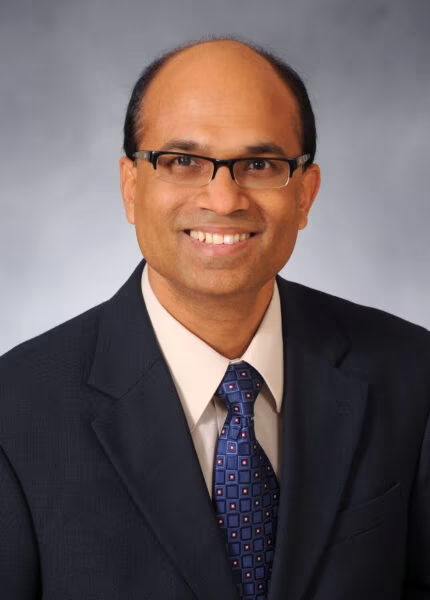
Timir Paul
Editorial Board member
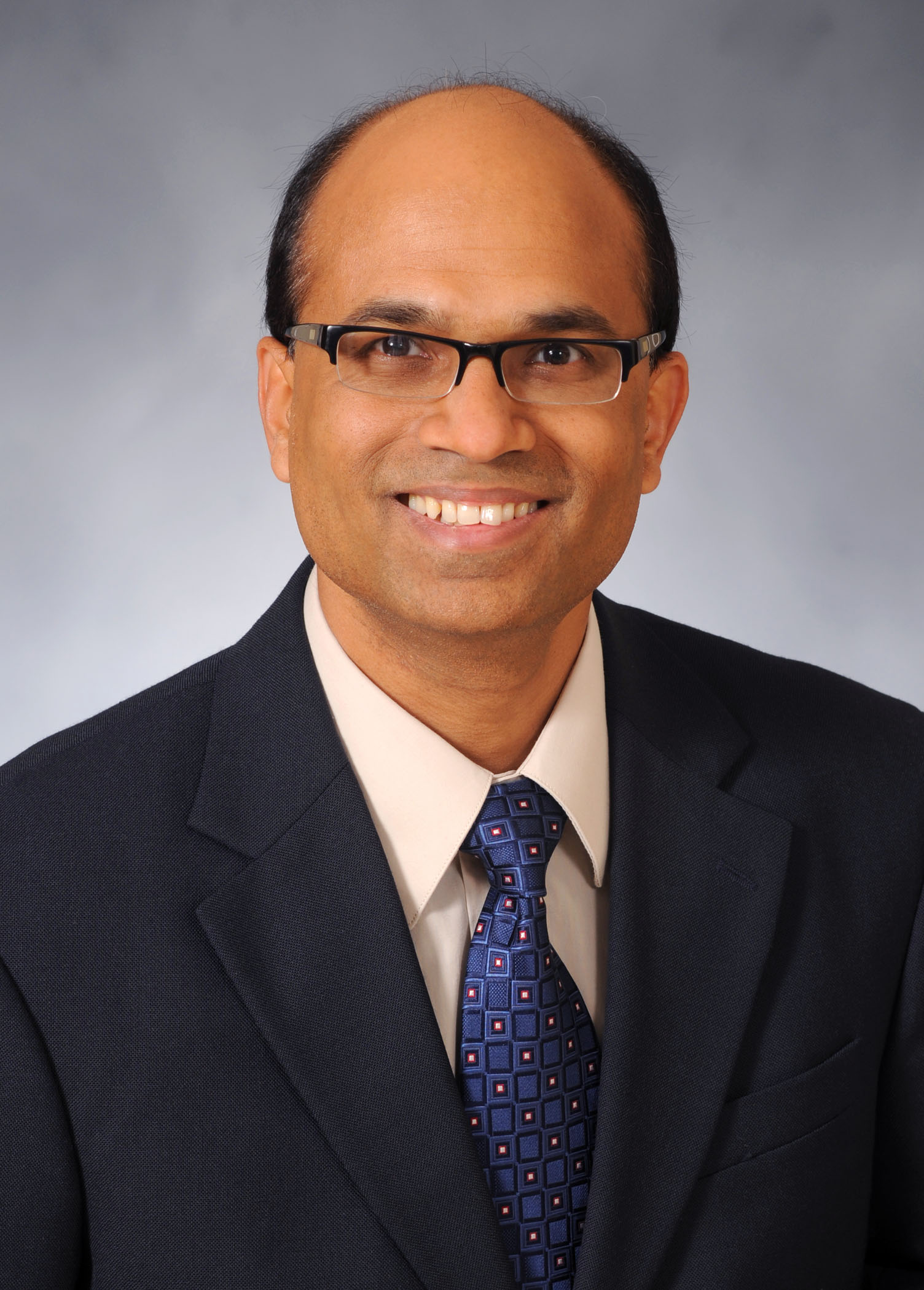
Timir Paul
Nashville, TN, USA
Cardiovascular disease
Biography
Dr Timir Paul is a Professor of Medicine and Founding Program Director for Cardiology Fellowship at University of Tennessee Health Sciences Center at Nashville. After receiving MD, he was awarded PhD and MPH in Cardiovascular Epidemiology by Tulane University. He has served as the Founding Co-Director of the Center for Cardiovascular Risk Research at East Tennessee State University. He has authored and coauthored more than 200 publications and book chapters. He serves as an academic editor for PLOS ONE Journal and on the Editorial Board for several Cardiology Journals including Journal of the Society of Coronary Angiography and Intervention, Catheterization and Cardiovascular Intervention, Cardiovascular Revascularization Medicine and Heart International. His research and recommendations changed the 2021 ACC/AHA 2021 and 2018 European Society of Cardiology guidelines on coronary revascularization by downgrading the use of embolic protection device in vein graft intervention from Class I to Class IIa. He received several grants including a PCORI grant and a 4.5 million dollars AHRQ grant as a co-investigator. His research interests include vein graft interventions, embolic protection devices in coronary and peripheral interventions, subclinical atherosclerosis, coronary microvascular disease, and renal artery interventions. He was recognized as SCAI-Emerging Leader Mentorship Program Circle member and Young Leader by the Cardiovascular Revascularization Technologies. He is an invitee of the 2022 and 2023 ACC Leadership Forum. He received the best teaching award given by cardiology fellows for the 4 consecutive years. He was inducted by Alpha Omega Alpha Medical Honor Society as a faculty member. He received Dean’s distinguished research award. He is an invited faculty for national and international scientific conferences including SCAI, ACC, AHA and CRT. He serves on the SCAI QI and International Committee and ACC PDGME Leadership Council.
Gustavo Samaja
Editorial Board member
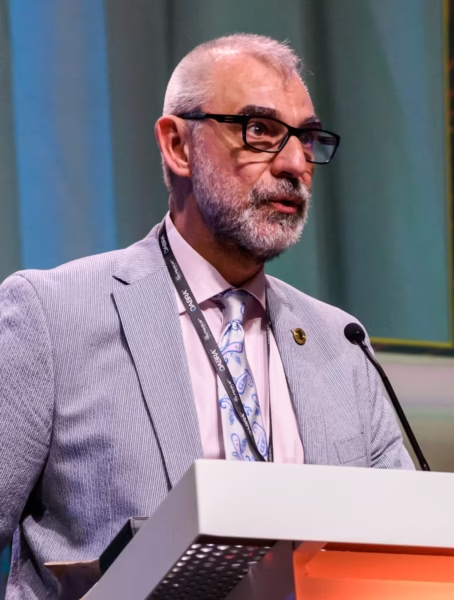
Bryan Kluck
Editorial Board member

Bryan Kluck
Camp Hill, PA, USA
Interventional Cardiology
Biography
Bryan W Kluck, DO, FACC, FSCAI is a practicing interventional cardiologist in Allentown and Harrisburg, PA, USA, for 40 years. Strong interest in both fellow and continuing education as the 15 year Co-Director of the C3 International Cardiovascular Conference and 4 time teacher of the year at Lehigh Valley Hospital. Current clinical interests include endovenous intervention and treatment of patent foramen ovale and atrial septal defect.
Timir Paul
Editorial Board member
Magdi El-Omar
Editor-in-Chief

 touchCARDIO
Register Now!
Explore the latest in medical education and stay current in your field. Create a free account to track your learning.
- Save your progress for video
- Keep track of your CME credits
- Add personalised learning notes
- Receive updates from course leaders and faculty
- Be the first to hear about new and exciting interactive learning opportunities
Log into your Touch Account
Keep track of your clinical interests and newsletter subscriptions.
Sign up with an Email
Or use a .
Register now for FREE access
Already registered? Login below.
